Hoarding Scene Cleanup: Industry Insights
Operational analysis of hoarding scene cleanup documentation, property-type differences, technology limits, environmental decisions, and provider business models—without invented case histories.
Industry posts explain how the hoarding cleanup business works behind the estimate. You will learn how national networks and franchises pass calls to local companies. You will learn why some junk removal firms add hoarding services without biohazard training. You will see how hazard cleanup companies team up with pest control, mold inspectors, and haulers who hold the right disposal permits. Articles also describe industry training, such as courses on hoarding disorder and biohazard handling. They explain how those programs differ in depth.
Get an email reply about hoarding scene cleanup
Send a short message to the follow-up inbox. A coordinator can reply by email. This form does not send emergency help; call 911 first if anyone is in danger.
Knowing the business side helps you make sense of what you are told. The company answering the phone may not be the one sending the crew. A lower quote may reflect different disposal choices, not better efficiency. Posts cover new practices too. These include working with mental health experts and task forces that bring code enforcement and social services together. They also include follow-up visits that aim to keep the home from filling up again.

How Hoarding Scene Cleanup Practice Has Changed
From forced clean-outs and dumpsters to harm reduction, task forces and trauma-aware crews: how hoarding cleanup practice has changed and why it matters.
Hoarding cleanup has shifted from one-time forced clean-outs, often ordered by a city or landlord, toward approaches that treat hoarding as a mental health condition. Modern practice pairs hazard control and sanitation with resident involvement, harm reduction, careful sorting, documentation for agencies and coordination with clinicians and community task forces, because research showed that clearing a home without support rarely lasts.
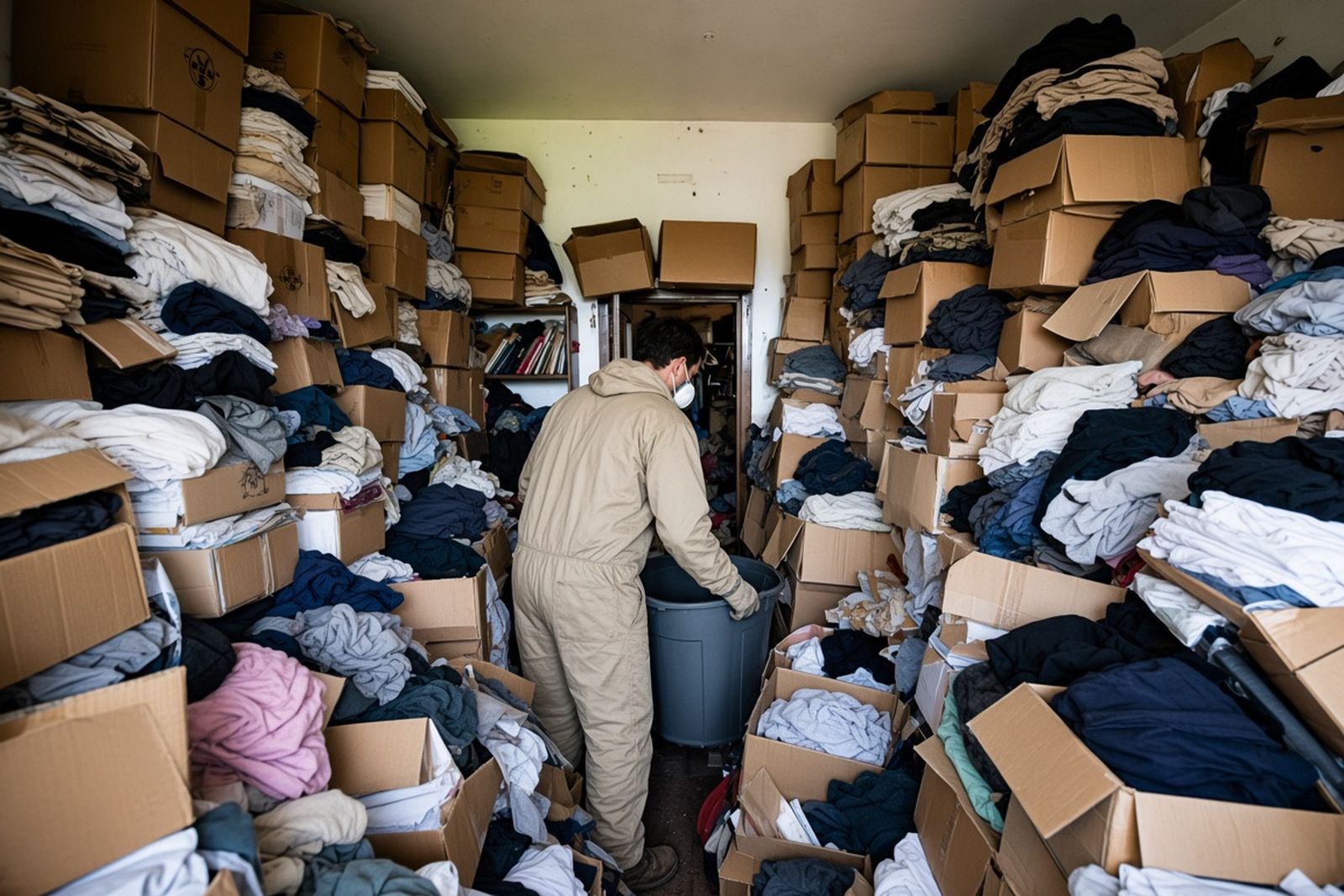
Hoarding Scene Cleanup for Property Managers: What You Need to Know
A practical guide for landlords and managers facing a hoarded unit: inspections, notices, tenant rights, fire risk, phased cleanup scopes and records to keep.
As a property manager, your job in a hoarded unit is to protect the building, other residents and the tenant's rights at the same time. Document conditions with care, follow your lease and local notice rules, involve social services when the tenant is vulnerable, hire a provider who works in phases with the tenant, and keep a clear record of every step.
Hoarding Scene Cleanup Planning Example: Building a Defensible Scope
A fictional hoarding cleanup walked through step by step, showing how consent, hazards, phases, keep lists and handoff checks become a scope no one can dispute.
A defensible hoarding cleanup scope is written before anything leaves the house. It records who can authorize decisions, the hazards found at the walkthrough, which rooms are handled in which phase, what must be kept or searched for, how waste, donations and biohazards are separated, and what the home should look like at handoff. This fictional example shows each piece in practice.
Commercial vs Residential Hoarding Scene Cleanup
How hoarding cleanups differ in homes versus shops, offices, storage units and group residences: who decides, which rules apply and how the work is scheduled.
Residential hoarding cleanups center on one person's home, consent and emotional pace. Commercial cases, such as a cluttered shop, office, warehouse, storage unit or shared residence run as a business, add employees, customers, fire code inspections, business records and contract obligations. The core work of sorting, removal and sanitation is similar, but authority, scheduling, documentation and applicable rules often differ.

Environmental Responsibility in Hoarding Scene Cleanup
How a hoarding cleanup can keep usable items out of landfills, handle household hazardous waste safely and still respect the resident's choices and pace.
An environmentally responsible hoarding cleanup sorts belongings into keep, donate, sell, recycle, hazardous and trash streams instead of sending everything to a dumpster. It routes paint, chemicals, batteries, electronics and medications to proper disposal, limits unnecessary chemical use during cleaning, and documents where things went. Doing this well also supports the resident, who often finds letting go easier when items will be reused.
Sourced figures on industry insights
- 18.7%
18.7% with clinical hoarding symptoms reported moderate-to-extreme work/school difficulty versus 11.8% with reported depression history.
Read with care: Volunteer registry; symptom screens rather than universal clinical diagnoses; no causality.
Source: Nutley et al. (2022)16,312 adults in the internet-based Brain Health Registry.
- 0.85%
A meta-analysis of 85,681 English households over 13 years estimated the point prevalence of domestic squalor at 0.85%, with rentals and lower-income homes at higher risk.
Read with care: Squalor overlaps with but is not identical to hoarding disorder; UK data.
Source: BMC Public Health (2024)English Housing Survey data
- 8
Eviction or eviction threats attributed to hoarding were reported in 8–12% across respondent groups.
Read with care: Self-selected and mostly female; related research programme to S002; not representative prevalence.
Source: Tolin et al. (2008)864 self-identified hoarding participants and 655 family informants online; research-criteria subsets analysed.
These figures are public research and agency data, not this network's own job records. Keep each number with its population, year and limits; none of them predicts cost, timing or outcome at a specific property.
What research has found
Findings from published studies of people and properties in situations like this one. They describe what researchers observed in a specific group; they are not predictions for your case.
Housing staff described barriers to obtaining specialist mental-health involvement.
Financial changes created housing insecurity and health concerns.
Industry Insights: common questions
Why do some hoarding cleanup companies advertise nationally but send local crews?
Many work as referral networks or franchises. They take calls in one place and pass jobs to local businesses they partner with. This can offer wide coverage, but the quality depends on the local company. Ask who will really do the work and whether they are employees or subcontractors. Ask how the network handles complaints if something goes wrong during the project.
What are hoarding task forces and how do they relate to cleanup providers?
Some communities form task forces to plan responses together. These bring in code enforcement, fire prevention, social services, animal control, and mental health experts. Cleanup providers may be invited to take part or may get referrals. These groups often favor gentle approaches done in stages over forced cleanouts. Industry posts explain how to find out whether your area has one.
Are maintenance visits after a cleanup becoming more common?
Many providers and support groups now offer check-ins from time to time after the first cleanup. These help the person keep exits clear and manage new items coming in. The format ranges from short visits to sorting sessions done together. Industry articles describe how these setups work. They also cover what to ask so the service supports the person instead of just watching them.
Are hoarding cleanup companies usually specialists or general cleaners?
Both types exist. Some companies focus mainly on hoarding and related work. Others offer it alongside junk removal, biohazard cleanup, or repair after damage. Specialists may have more experience with the emotional and safety sides. But general companies can also do good work. Ask about their experience with hoarding in particular and how they change their methods for it.
Why do some companies partner with professional organizers?
Professional organizers can help people build systems for managing their things. That supports lasting change after the cleanup. Some cleanup companies team up with organizers to offer this as part of their service. If help with organizing matters to you, ask whether the provider works with organizers, especially ones who know hoarding. Also ask how that service is priced.
How are cleanup providers adapting to aging populations?
Many providers say they work more often with older adults now. That has led to more attention to mobility, memory, and health needs during cleanups. Some work more closely than before with aging services, home health, and family caregivers. When hiring, ask how the company adjusts its pace, the way it talks with people, and safety for older people.
What challenges do hoarding cleanup providers face?
Common challenges include balancing safety with the person's pace and keeping costs down for families with little money. They also include working with many agencies and handling hazards no one can predict. Crews also face physical and emotional strain. Knowing these challenges can help families set realistic expectations. It can help them work with providers as partners, not just as hired vendors.
Related community polls
Every count is a real visitor vote; nothing is seeded or padded. One vote per poll per device, and you can change your answer.
If a relative's home had become unsafe, what would be your first step?
How much control should the occupant keep over what leaves the home?
More on hoarding scene cleanup
Hoarding Scene Cleanup services
Learn how a first look at the home, sorting with consent, biohazard handling, and deep cleaning fit together in a step-by-step plan.
Costs explained
What drives the price, published cost ranges, and how to read a written quote line by line.

Insurance and payment
Which policies may respond, how to document a claim, and what to do if coverage is denied.
Planning tools
Use planners made for families and caseworkers. Sort out costs, questions for providers, insurance steps, first-day actions, waste types, and DIY risk.
Community polls
See how relatives, landlords, people who hoard, and professionals think about consent, pace, and agency help. Compare your own gut feelings with theirs.
Knowledge quiz
Check what you know about hidden hazards, who can decide, dust control, cleaning and killing germs, waste, and records before you start to help.
City guides
Find providers near you who know hoarding cases. Before you hire anyone, check their training, insurance, and way of working yourself.