Short answer
An environmentally responsible hoarding cleanup sorts belongings into keep, donate, sell, recycle, hazardous and trash streams instead of sending everything to a dumpster. It routes paint, chemicals, batteries, electronics and medications to proper disposal, limits unnecessary chemical use during cleaning, and documents where things went. Doing this well also supports the resident, who often finds letting go easier when items will be reused.
Why does a hoarding cleanup raise environmental questions at all?
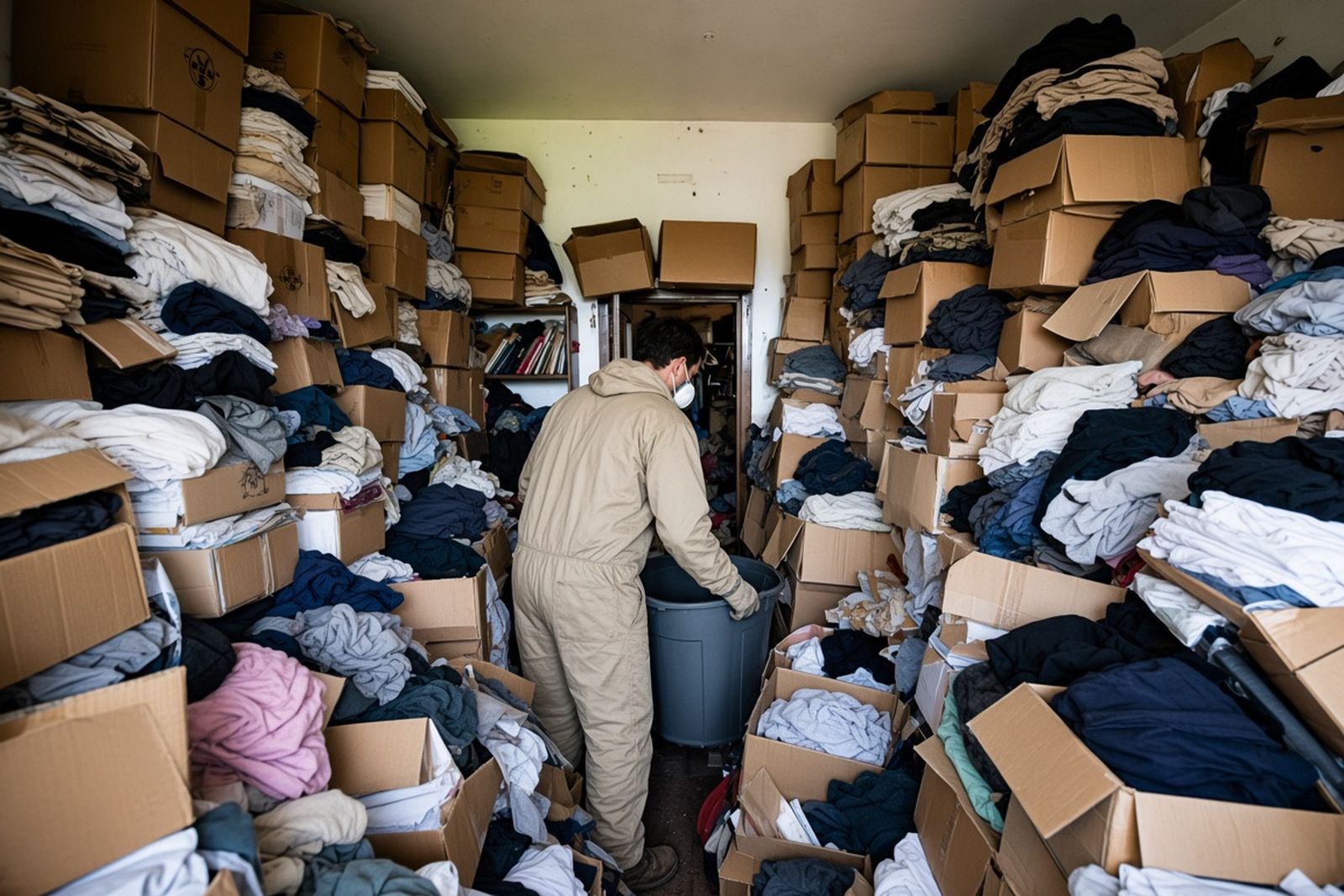
A hoarded home can hold years or decades of accumulated material, and a full cleanout may fill several large roll-off containers. The quickest approach is to shovel everything into the dumpster and haul it to a landfill. That is also the approach most likely to waste reusable goods, send hazardous products into the wrong waste stream and upset the person whose belongings are leaving.
Environmental responsibility in this work is less about slogans and more about sorting well, knowing local disposal rules and being honest about what can realistically be saved.
Sorting for reuse without pressuring the resident
Many people who hoard feel a strong sense of responsibility toward objects. Throwing something away may feel wasteful or even wrong to them, and that feeling is one of the reasons items accumulate in the first place.
Knowing that a coat will go to a shelter, books to a library sale or tools to a community workshop can make letting go easier. Some residents are more willing to part with items when they can choose the charity or see a donation receipt. A provider who takes donation seriously is often a provider who gets more cooperation.
The resident's decisions still come first. Environmental goals should never be used to pressure someone into giving away items they want to keep, and a crew should not quietly reclassify keep items as donations because they would be useful to someone else.
What waste streams should a good cleanup separate?
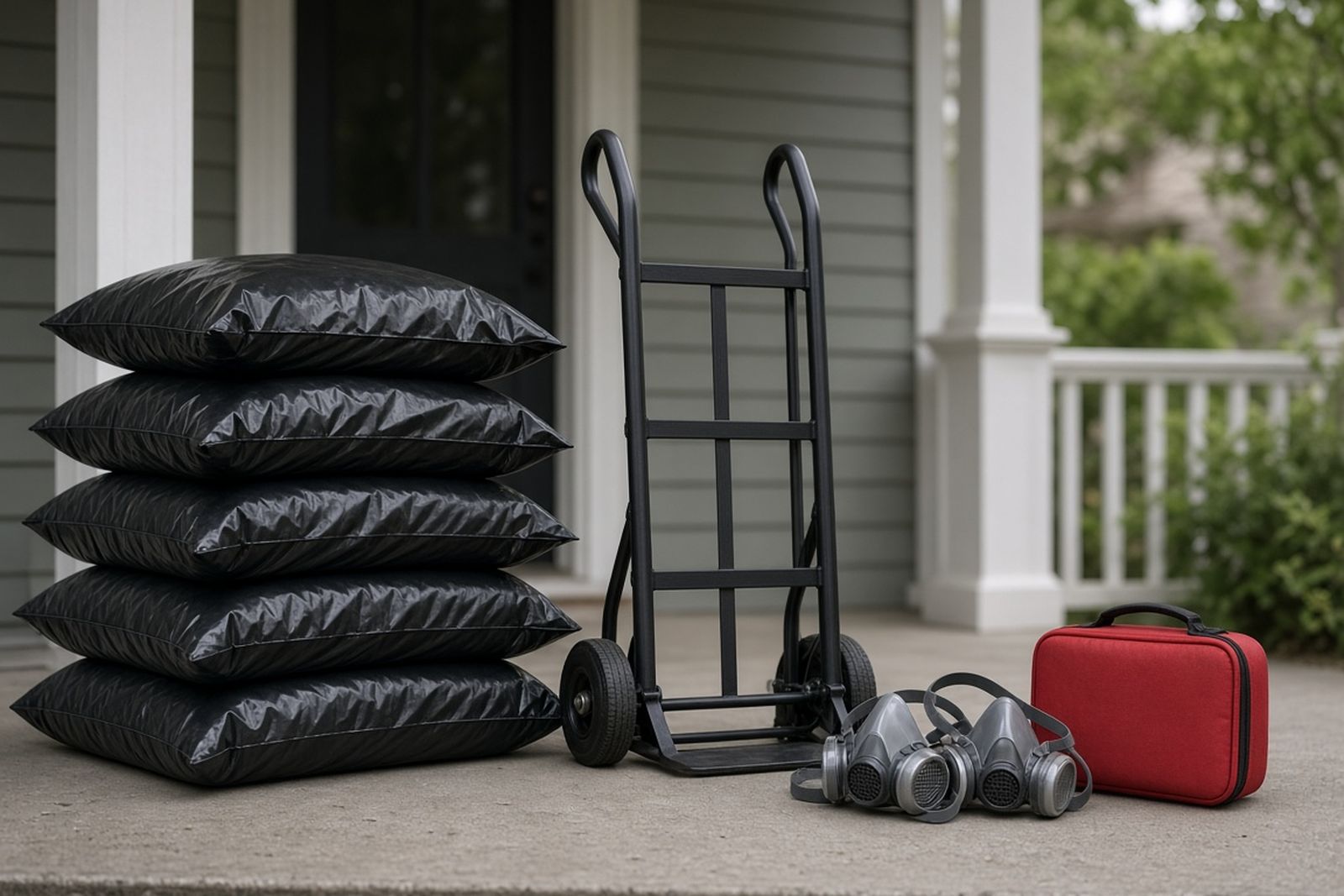
Separation works best when containers and labels are set up before sorting begins, so crew members are not making disposal decisions item by item under pressure. Common streams include the following.
It also helps to confirm acceptance rules before the first box is filled. Charities often decline mattresses, stained upholstery, car seats, older cribs and damp or smoky clothing. Recyclers may reject paper that is wet or contaminated with droppings. Knowing those limits in advance keeps donation bins from quietly becoming a second trash pile.
- Keep: items the resident has chosen, set aside in labeled boxes.
- Donate: clean, usable clothing, household goods, books, furniture and tools accepted by local charities.
- Sell or consign: items with resale value, if the resident or owner wants that option.
- Recycle: paper, cardboard, metals, certain plastics and glass, following local program rules.
- Electronics: computers, televisions, phones and small appliances, often handled by designated e-waste programs.
- Household hazardous waste: paints, solvents, pesticides, pool chemicals, automotive fluids, batteries and fluorescent bulbs.
- Medications and sharps: routed to take-back programs or approved disposal, never into regular trash loose.
- Contaminated material: items soiled by animal waste, mold, rodents or bodily fluids, bagged and disposed of as the local authority directs.
- General trash: what remains after the other streams are pulled out.
Hazardous items that tend to turn up
Because items have been stored for years, containers may be old, rusted or leaking. Crews often find half-used paint cans, cleaning products stored together that should not be mixed, propane cylinders, lighter fluid, garden chemicals, motor oil, old batteries, mercury thermometers and prescription medications from many years ago.
These products should be identified and set aside rather than thrown into a dumpster, where they can leak, react or injure sanitation workers. Many communities run household hazardous waste collection sites or events, and some accept items only from residents of that jurisdiction.
Call your county's household hazardous waste program before the first load to ask which items it accepts, whether a contractor may deliver them on the resident's behalf and whether any products, such as certain pesticides, need special handling.
Treat unlabeled or unreadable containers with extra caution. Crews should not open, sniff or combine mystery liquids to figure out what they are. Setting them upright in a secondary container and asking the hazardous waste program how to proceed is the safer path.
How do you balance sanitation with limiting chemical use?
Sanitation is not optional where there is spoiled food, rodent contamination, animal waste or mold. Cleaning and disinfection protect the resident and future occupants. But it is possible to be thoughtful about how much and which products are used.
Good practice starts with thorough cleaning to remove soil, because disinfectants work better on clean surfaces and less product is needed. Crews should choose registered products suited to the specific concern, follow label directions for dilution and contact time, and avoid fogging an entire house when targeted application to affected surfaces would do.
Ventilation matters for both health and environmental reasons. Opening windows and using fans where appropriate reduces the buildup of cleaning vapors, and it is often welcome in a home that has been closed up for years.
Animal waste and pests
Homes with many animals may have heavy urine and feces contamination in flooring and subfloors. Materials saturated with waste usually need to be removed and disposed of according to local rules, and the subfloor may need cleaning and sealing. Rinse water and cleaning solutions should go to the sanitary sewer where permitted, not into storm drains or yards.
Pest control is often part of the job. Coordinating with a licensed pest control operator who uses targeted treatments, such as baits and traps placed where activity was found, generally involves less chemical than broad spraying. Removing food sources and clutter during the cleanup also reduces the need for repeated treatment.
If animals were living in poor conditions, animal control or a humane organization may be involved. Their guidance on handling animal remains and waste should be followed.
Mold: remove the source, not just the stain
Mold deserves the same restraint. Porous materials with visible growth are usually removed rather than soaked with biocide, and the underlying moisture source, such as a roof leak or plumbing drip, has to be fixed or the problem simply returns.
One house, many waste streams: an illustration
The family below is invented; the routing choices are the point. After her father moves into assisted living, a woman arranges a cleanup of his three-bedroom house, which is filled with newspapers, clothing, woodworking tools and decades of household goods. He is comfortable with most items leaving but wants his tools to be used rather than thrown away.
The provider sets up labeled areas in the garage for each stream before sorting starts. Newspapers and cardboard go to a paper recycler. Wearable clothing goes to a thrift store that supports a local shelter. The father chooses a community college's carpentry program for his tools, and the daughter arranges pickup.
The crew finds old paint, pesticides and a box of batteries in the basement and takes them to the county's household hazardous waste site. Expired medications go to a pharmacy take-back kiosk. Mouse-contaminated mattresses and upholstered furniture are bagged and sent to the landfill as the county directs.
The final report lists each stream, where it went and receipts where available. The father receives a thank-you letter from the carpentry program, which he keeps on his nightstand.
How can you tell if a provider takes this seriously?
Ask how the provider sorts materials and which local charities, recyclers and hazardous waste programs they work with. Ask whether they provide donation receipts and a summary of where items went. A vague answer such as "we donate when we can" is less reassuring than specific partners and procedures.
Ask how they handle hazardous products and medications, and how they choose cleaning and disinfection products. Ask whether they will adjust the plan if the resident wants a particular charity to receive certain items.
Be realistic, too. Contaminated or badly damaged items cannot be donated, and some communities have limited recycling options. A good provider will tell you honestly what can be diverted in your area rather than promising impossible numbers.
You can also ask about transport. Consolidating loads, using appropriately sized containers and planning drop-offs so trucks are not making half-empty trips across town all reduce fuel use, and they usually reduce cost as well.
The takeaway for families and property owners
Responsible disposal is part of doing a hoarding cleanup well, not an optional extra. It protects sanitation workers and the environment, keeps useful goods in circulation and often makes the process easier for the resident.
Plan the waste streams before sorting starts, respect the resident's choices, route hazardous items correctly and ask for documentation. Those steps take a little more time, but they leave everyone with a clearer conscience and a clearer record.