Short answer
Start by sorting hoarding cleanup waste into groups. Most of what comes out is regular household trash. But paint, solvents, bug and weed killers, batteries, electronics, fridges and air conditioners, tires, medicines, needles and animal waste often have their own rules. Check with your state environmental agency and local trash office for each group. Ask your hauler where loads go. Keep receipts that show how special items were handled.
Why does hoarding cleanup waste need its own research?
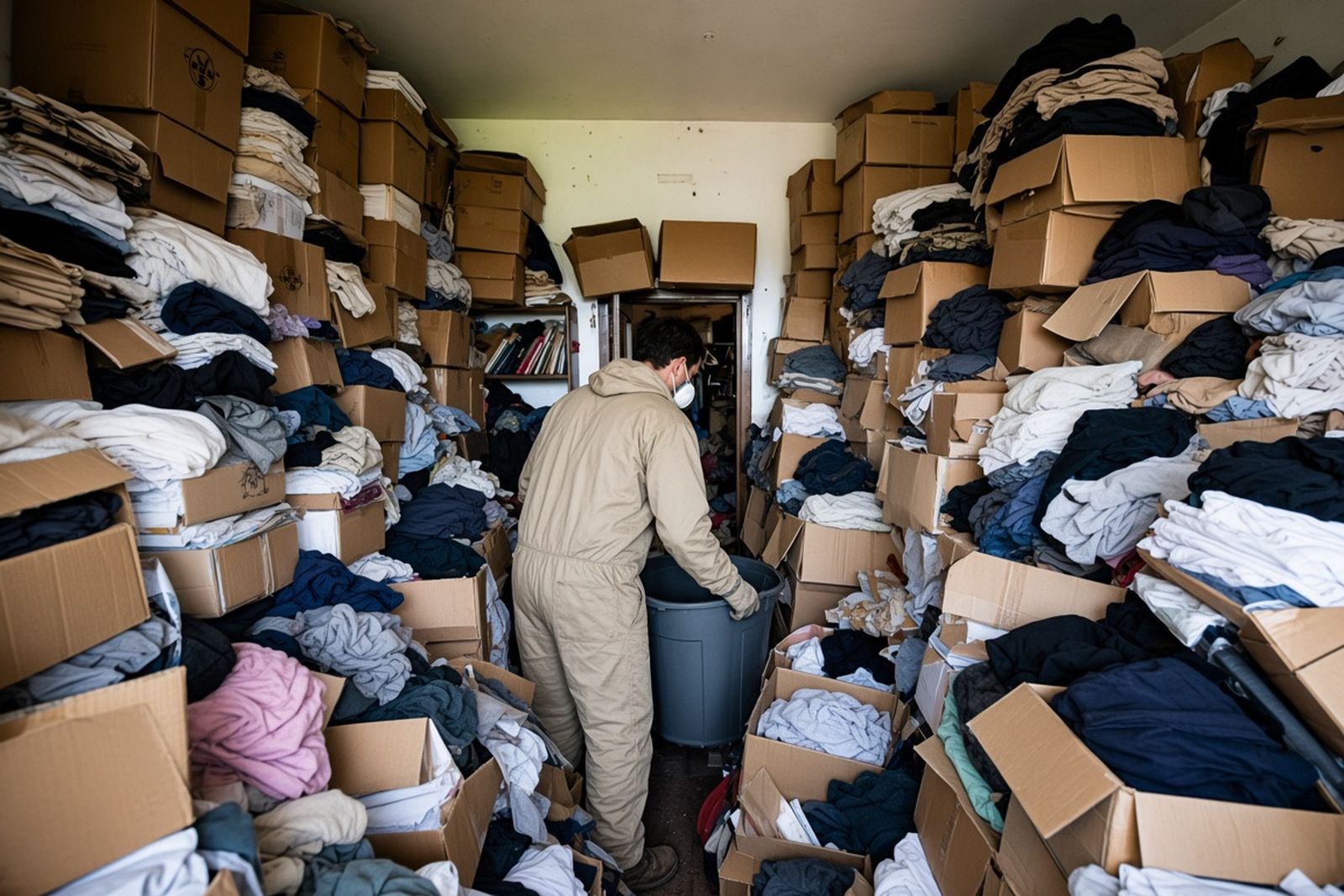
A hoarding cleanup can remove more stuff from one home than most families throw out in years. Most of it is usually paper, clothing, packaging, furniture and everyday household goods. But mixed into all of that are items landfills and transfer stations often will not take in regular loads. There are also items that can be donated, recycled or returned.
Federal law treats most household waste differently from factory waste. Under EPA's rules, waste made by households is generally left out of federal hazardous waste rules, even when it contains chemicals. That does not mean anything goes. States, counties and landfills set their own rules for household chemicals, electronics, appliances and other special items.
Looking up those rules before the cleanup starts helps a crew sort as it goes, instead of digging through dumpsters later. It also keeps loads from being turned away at the landfill, which adds cost and delay.
Waste streams that usually come out of a hoarded home
Start by listing the kinds of waste you expect to find. A walk-through with the cleanup company can help. Still, hoarded homes often turn up new kinds of waste as each layer comes out.
Two groups are easy to miss. Personal papers such as bank statements, tax records and medical files should be shredded, not tossed loose into a dumpster. This protects the family from identity theft and respects the privacy of the person whose home it was. And items that look fine to donate may not be. Clothing, stuffed furniture and books from rooms with bedbugs, roaches, mold or animal waste can spread those problems to a charity or the next owner. So many groups will not take them.
- Regular household trash: paper, clothing, packaging, broken furniture and general trash.
- Reusable goods: items fit to donate, resell or give to family.
- Recyclables: cardboard, metal, some plastics and scrap.
- Household chemicals: paint, solvents, bug and weed killers, pool chemicals, fuels, cleaners and spray cans.
- Electronics: TVs, computers, printers and small devices.
- Appliances: fridges, freezers, window air conditioners and dehumidifiers that hold coolant gases.
- Batteries, fluorescent bulbs and items that contain mercury.
- Tires and car fluids.
- Medicines and sharps, including needles and finger-prick lancets.
- Spoiled food, animal waste and, in some homes, dead animals.
How should household hazardous waste be handled?
Household chemicals are often the most important group to set apart. Old paint cans, bug and weed killers, solvents, fuel cans and cleaning products may be leaking, rusted or unlabeled after years in a cluttered space. Mixing them into a dumpster can cause spills, fires or chemical reactions. It may also break local landfill rules.
Many counties and cities run drop-off sites for household chemicals or hold collection days from time to time. Some limit how much one household can bring or require appointments. Some do not take waste brought in by a cleanup company. Ask your local trash office how a large amount from one home should be handled.
Crews should never mix unknown chemicals or open containers to check what is inside. Anything they cannot identify should be set aside in an area with fresh air and handled as local guidance says.
Older homes raise a question about building materials. The cleanup may grow into removing flooring, drywall, pipe wrap or ceiling materials. In houses of a certain age, those materials could contain asbestos or lead paint. Testing and handling rules for them are separate from household trash rules. So ask before any tearing out begins.
Electronics, appliances and batteries
Many states have electronics recycling programs. Some ban certain electronics from landfills. Check your state environmental agency's website for a list of covered devices and approved drop-off sites or recyclers.
Appliances that hold coolant gases, such as fridges, freezers and window air conditioners, fall under federal rules. The gas must be removed before the appliance is thrown away. In practice, this usually means taking them to a scrap yard or appliance recycler that can prove the gas was removed. You can also set up a pickup through your utility or a local program.
Batteries, fluorescent tubes and devices with mercury, such as some thermostats, often have their own drop-off options. Lithium batteries in particular can start fires in garbage trucks. They should never go into a general load.
How should medications and sharps be disposed of?
Hoarded homes often hold large amounts of expired or unused medicines. Drug take-back programs are generally the best choice. These include drop boxes at pharmacies and police stations and national take-back days held from time to time. FDA also publishes advice on how to get rid of certain medicines when take-back is not available.
Used needles, lancets and pen needles should go into a hard container that needles cannot poke through. Rules for household needle disposal differ by state and town. Some allow sealed containers in household trash. Others require drop-off at set sites or mail-back programs.
Cleanup crews should write down any medicines or needles they find, however many, and work with the family on disposal. Controlled drugs need special care. Families should not carry large amounts without understanding local rules.
If the person who lived in the home is still living, include them or the person acting for them in choices about medicines. Some prescriptions may still be needed. A doctor or pharmacist can help sort what to keep from what to throw away.
Animal waste and remains
Homes where many animals were kept often have large amounts of feces, urine-soaked items and litter. In most places, this can be bagged and thrown out with household trash. But some landfills set limits for large amounts, and local health departments may give specific advice.
Dead animals are handled differently. Local rules may require disposal through animal control, a vet, a pet cemetery or a rendering or cremation service. If the animals were part of an investigation, you may need to check with the agency in charge first.
Mouse and rat droppings and nests should be wetted with disinfectant before removal, not swept or vacuumed dry. This follows public health advice. Then bag them tightly.
Planning the waste before work starts
Most disposal problems are prevented while planning. During the walk-through, a supervisor should note the special items already in view. Examples are shelves of old paint and garden chemicals in the garage, fridges or freezers, boxes of electronics, bags of expired medicines and clothing clean enough to donate.
Before work begins, the supervisor can check the county's trash website and call its household chemical program. Good questions to ask: Must cleanup companies bring chemicals by appointment? Where must fridges and air conditioners go? Are electronics banned from the local landfill? Medicine drop-off and donation pickups can be set up at the same time.
During the job, a separate staging area for each group keeps items from being mixed back together. At the end, the family should get receipts from each place used. That could include the landfill, appliance recycler, electronics recycler and household chemical site. Any family can ask a company to work this way.
Which office to call for each stream
Use these steps to find the rules for each group before the cleanup starts. Your cleanup company may already know most of the answers. But checking them yourself helps you understand the plan and the costs.
Also ask whether the dumpster itself needs a permit. Many cities require one when a container sits on a street or sidewalk. Homeowner associations may have their own limits on where it goes and how long it stays.
- Local trash office or public works department: landfill rules, bulk pickup and household chemical programs.
- State environmental agency: programs for electronics, batteries, mercury and tires, and any landfill bans.
- Appliance recyclers or utilities: removing coolant gases and picking up appliances.
- Pharmacies and police: medicine take-back options.
- State or local health department: needle disposal rules and advice on animal waste and dead animals.
- Charities and resale shops: what they take and whether they pick up.
What should you expect from your cleanup company?
Ask how the company keeps special waste apart on site. Ask which places it uses for each group and whether it will give you receipts. A company that sends everything to one dumpster may be faster. But it may also be breaking local rules or creating fire and spill risks.
Hoarded homes can hold real fire and environmental dangers. Removing chemicals, fuel and batteries with care is part of lowering that risk for the crew and neighbors.
Rules vary by state and county; verify with the local authority before the first load leaves. What landfills will accept can differ even between nearby landfills. Keep the receipts and a short summary of what went where with your estate or property records. Those papers show the cleanup was handled responsibly. They can also answer questions later from landlords, buyers, code officers or family members.