Short answer
OSHA standards protect the employees who clear and clean a hoarded home. Depending on what is inside, that can mean respirator rules for ammonia, mold or dust, the Bloodborne Pathogens Standard for sharps and bodily fluids, PPE hazard assessments, and the General Duty Clause for collapse, fire and lifting risks. Ask any contractor how its written safety program fits the conditions in your home.
Why would OSHA matter in a family member's cluttered home?
A hoarded home is a private residence, and OSHA does not inspect your relative's living room. What OSHA does govern is the employer that sends workers into that home. Once a cleanup company arrives, those technicians are at work, and their employer is responsible for protecting them from the hazards they encounter there.
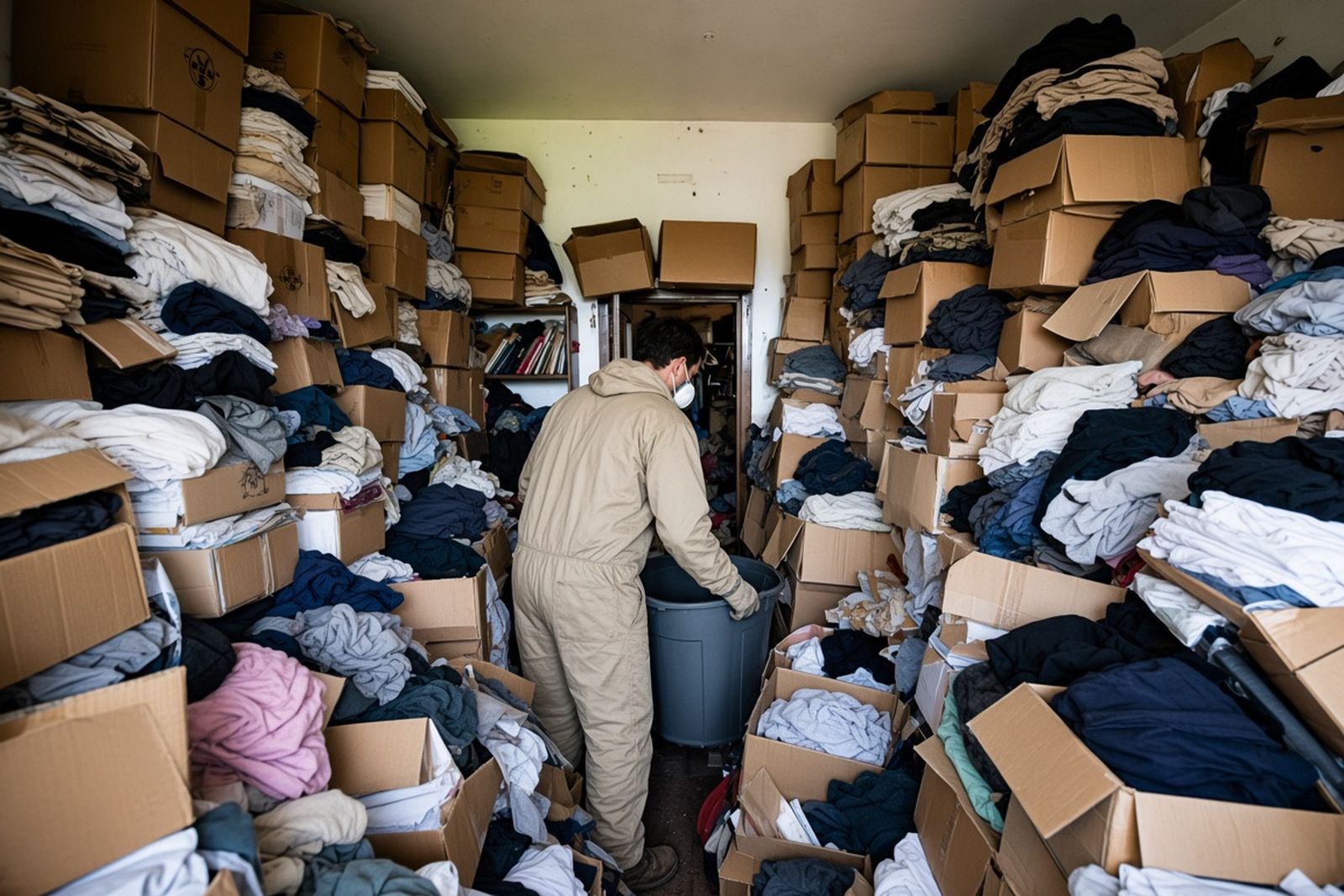
Those hazards can be significant. Years of accumulation can hide animal waste, spoiled food, mold growth, pest activity, used needles, unstable piles and blocked exits. The crew may spend days lifting, bagging and carrying material through narrow paths in rooms with poor air.
Understanding the worker-safety rules helps you in two ways. It shows you what a well-run company should already be doing, and it explains why a careful crew may move more slowly or insist on steps that seem excessive to a family that just wants the house cleared.
OSHA standards most likely to apply
No single OSHA standard is written for hoarding cleanup. Instead, several general industry standards apply depending on what the crew finds. A good contractor maps the conditions in your home to the rules that fit them.
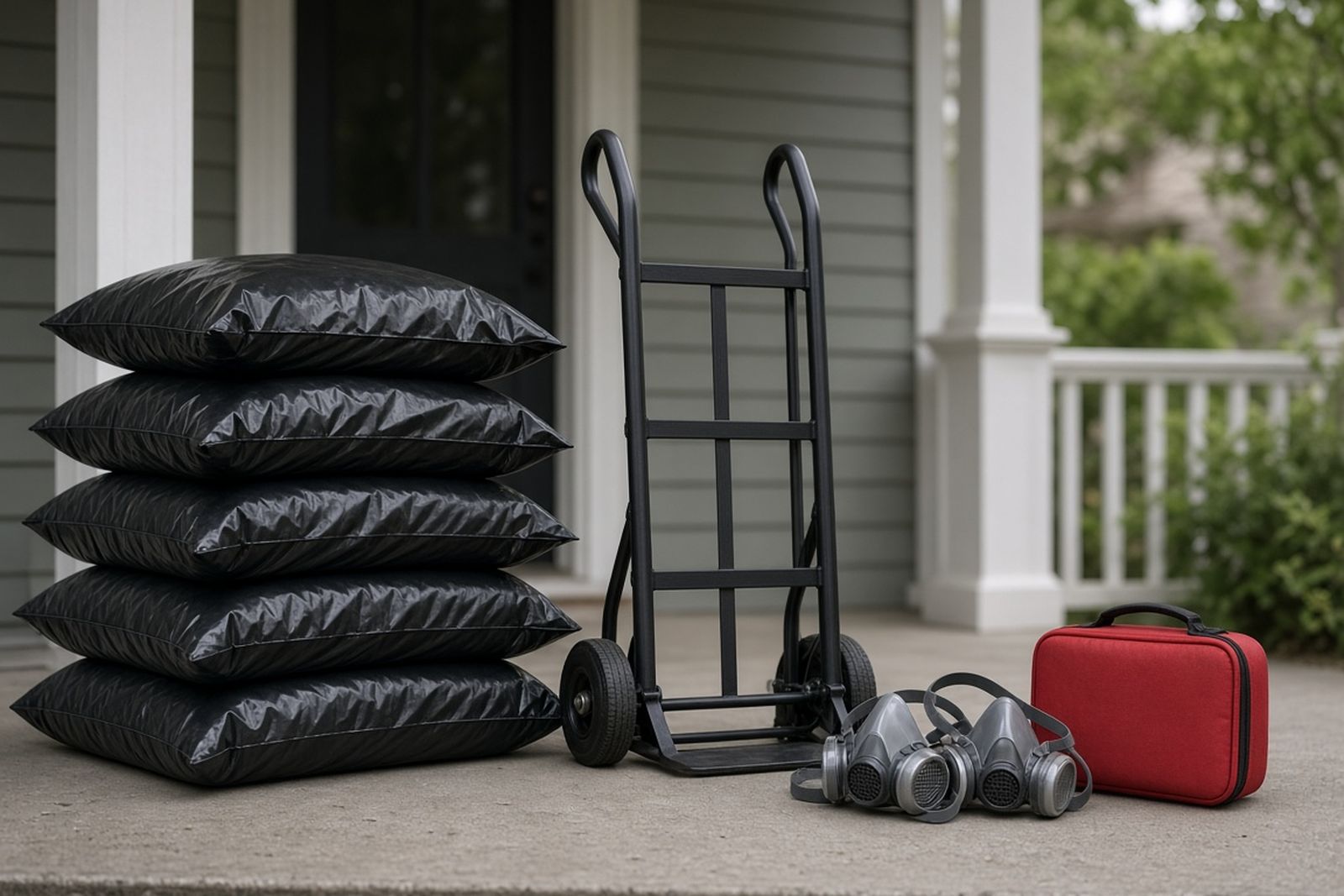
- Personal Protective Equipment, 29 CFR 1910.132: a written hazard assessment that explains why crews wear specific gloves, suits, boots and eye protection in your home.
- Respiratory Protection, 29 CFR 1910.134: medical clearance, fit testing and a written program when ammonia from animal urine, mold spores or heavy dust require respirators.
- Bloodborne Pathogens, 29 CFR 1910.1030: training, vaccination offers and sharps handling when needles, blood or other potentially infectious materials are present.
- Hazard Communication, 29 CFR 1910.1200: labels, safety data sheets and training for disinfectants, enzyme cleaners and deodorizers brought onto the property.
- Walking-Working Surfaces, 29 CFR 1910 Subpart D: slip, trip and fall protection where floors are buried, damaged or wet.
- The General Duty Clause: protection from recognized serious hazards such as collapsing piles, overexertion injuries and structural weakness.
Respirator rules and the first days of work
Air quality in a hoarded home is often the first hazard crews notice. Urine from pets or rodents can release ammonia, water leaks can feed mold behind piles, and disturbed debris throws dust into the air. When droppings from wild rodents are present, crews also think about hantavirus and avoid dry sweeping or vacuuming that could put particles in the air.
If the employer's assessment says respirators are needed, the respiratory protection standard requires more than handing out masks. Each technician needs a medical evaluation, a fit test for the model they wear and training on its limits. Filters and cartridges must match the hazard, which is why a crew may switch equipment as they move from a cluttered bedroom into a room used by animals.
Ventilation planning goes along with this. Opening windows, using negative air machines or staging work so the worst rooms are handled early can all reduce exposure. None of that replaces a proper respirator program, but it helps everyone, including family members who later return to sort belongings.
What about needles, bodily fluids and animal waste?
Some hoarded homes contain used syringes from diabetes care or other medication, human waste in containers, or areas where someone was ill or died. When blood or other potentially infectious materials are involved, the Bloodborne Pathogens Standard applies to the workers who handle them. That means annual training, the offer of hepatitis B vaccination, sharps containers and a plan for what happens after a needlestick.
Animal waste is a different category but still a serious one. OSHA expects the employer to evaluate it under the PPE and general duty provisions, and public health agencies publish guidance on cleaning rodent droppings and heavy pet contamination. A crew that treats animal waste as ordinary dirt is not following that guidance.
Crews are trained to never reach blindly into piles, bags or drawers. That rule is as much about sharps as about pests, and it is one reason the sorting process takes time.
Fire and structural hazards are worker-safety issues too
Heavy piles load floors that were never designed for them, and water damage hidden underneath can weaken joists or subflooring. Blocked doors and hallways make it hard to escape if something goes wrong. These conditions threaten crews directly, which is why the General Duty Clause comes into play even though no specific standard mentions hoarding.
Fire adds to the danger. Dense paper and fabric near heaters or damaged cords give a fire plenty of fuel, and blocked routes make escape harder for anyone inside, including the crew.
For a crew, that means clearing an exit path before anything else, checking for space heaters, damaged cords and stored fuel, and never working alone in a room with a single blocked exit. You may see the crew spend the first hours making the home safer to work in rather than visibly emptier.
Why a crew might pause on day two: an illustration
The details below are invented. An adult son hires a company to clear his mother's two-story house after she moves to assisted living. The first day goes smoothly on the ground floor, where most of the clutter is paper, clothing and boxed purchases.
On the second day, the crew opens an upstairs bedroom and finds a strong ammonia odor, cat waste under several layers of bedding and a sagging area of floor near a window where a roof leak had gone unnoticed. The supervisor stops work in that room. Technicians switch to respirators with cartridges suited to the conditions, a structural check is arranged for the floor and the room is re-sequenced to the end of the job.
The son is frustrated by the delay until the supervisor explains that the company's hazard assessment required the change and that sending workers onto a weakened floor without evaluation would be unsafe. The sequence shows how OSHA obligations can reshape a schedule once hidden conditions appear.
Questions to ask about a safety program
You do not need to be a safety expert to ask good questions. A contractor that runs a real program will answer these easily and may offer documentation.
- Do you complete a written PPE hazard assessment for each home, and will you update it if conditions change?
- Are your technicians medically cleared and fit tested for the respirators they will use here?
- Have they had bloodborne pathogen training within the past year, and how do you handle sharps?
- How will you address animal waste, rodent droppings and possible mold?
- What is your plan for exits, lifting, floor loading and fire hazards?
- Which products will you use, and can I see their safety data sheets?
- Do you carry workers' compensation so an injury in this home is covered?
Do state rules add anything beyond federal OSHA?
Many states operate their own OSHA-approved plans that may add requirements for employers working in those states. Separately, local code enforcement, fire marshals and health departments may be involved in hoarding cases, especially where a complaint has been filed or a home has been declared unsafe. Those agencies focus on the property and occupants rather than the crew, but their orders can affect how and when work happens.
Waste from a hoarded home is often mostly household debris, yet some items, such as sharps, certain chemicals or bodily fluid waste, may fall under separate state programs.
Your contractor should know which agencies have a role in your area and should never ask you to take on a task its own workers are not equipped to do.
Supporting safe work without slowing it down
Families help most by sharing what they know. Tell the crew about pets, medical conditions, medications that might mean sharps, past leaks and any rooms the occupant avoided. Point out items you want preserved so the crew can plan how to sort them safely.
Resist the urge to join in without protection. Relatives who dig through piles in street clothes face the same hazards as the crew without the training or gear. If you want to participate in sorting keepsakes, ask the company to set up a cleaner staging area where you can review items once they have been removed from the worst rooms.
A careful, compliant company protects its workers, your relative's belongings and your family's health at the same time. That combination is worth more than the fastest possible finish.