Free hoarding scene cleanup tool
Hoarding Scene Cleanup First 24 Hours Planner
Tell the planner a few facts about the situation and get an ordered list of who to call, what not to touch, and what to photograph.
Hoarding problems often come to light through a crisis. It might be a fall that brings paramedics into the home, a fire department visit, or a landlord's inspection. It might be a welfare check or a relative who finally sees inside. The hours after that moment are full of emotion. Choices made under pressure can hurt both the person and the path forward. The First 24 Hours Planner asks you to pick the facts of your situation. Have emergency crews finished and released the home? Is the person there? Are there strong odors? Have you seen needles or other sharp items? Are there animals in the home? Is it a rental? Then it gives you an ordered list of who to call, what not to touch, and what to photograph.
The planner is built to slow you down in the right places. If the person is there, it starts with their urgent needs and with a conversation, not with bags. If animals are involved, it deals with their care early. If needles or waste are visible, it tells you where not to reach and why a family cleanup should stop. For rentals, it prompts you to talk with the landlord about safety and a plan, not blame. The photo prompts cover only what helps with safety and later planning. Examples are blocked exits, heat sources near things that can burn, dampness, and animal areas. The tool reminds you to ask the person's permission where you can. Nothing on the list involves throwing belongings away.
How to use it
- 1Answer each question truthfully. Include whether the person is there and whether emergency crews have left.
- 2Work down the list in order, completing the safety and welfare steps before any documentation.
- 3Respect the do-not-touch guidance on sharps, animal areas, unstable stacks, and blocked exits.
- 4Save or print the list. Use the photo prompts, with the person's permission where you can, to record conditions for the next talk.
Prefer to ask a person?
Your request is sent to the follow-up inbox. A coordinator can reply by email. Not for emergencies; call 911 first if anyone is in danger.
Plan the first 24 hours
Hoarding Scene Cleanup: first 24 hours planner
Answer a few questions and the planner orders the next steps. It does not dispatch help and cannot replace emergency services.
Your ordered plan (6 steps)
- 1
Keep people and pets out of the affected area
Close the door and keep the area sealed until a qualified provider assesses it.
- 2
Photograph from the doorway before anything moves
Take wide shots first, then closer shots of stains, damage and belongings. Do not step into the area to do it. These photos support insurance and estate records.
- 3
Report the loss to your insurer and get a claim number
Ask the adjuster whether they need to inspect before materials are removed, and whether they have a list of approved remediation providers. Coverage depends on the policy and the cause of loss.
- 4
Call a qualified remediation provider for an assessment
Describe what happened, the rooms involved, and any odor, fluids or sharps. Ask which OSHA standards apply to hoarding scene cleanup and for proof of training and insurance before work starts.
- 5
Start a written log
Record who you spoke to, when, and what they said. Keep receipts for lodging, boarding, locks and any emergency purchases.
- 6
Look after the people involved
If a death or violent event is involved, victim assistance programs, hospice bereavement teams and the 988 Suicide & Crisis Lifeline can help. You do not need to manage this alone.
A worked example
Suppose a hypothetical neighbor calls an adult son because his mother fell and paramedics had trouble reaching her through the hallway. She is now at the hospital for observation and will be discharged in a day or two. He opens the planner and selects: responders finished, occupant not present, odor present, no sharps seen, one dog in the home, not a rental. The list starts with the dog: check on its water and food, and arrange for it to stay with someone or at a boarding facility while the home is assessed. It then tells him not to begin throwing things out, explaining that his mother has the right to decide about her possessions and that a surprise cleanout would damage her trust. It directs him to call the hospital's social worker or discharge planner to ask about home safety resources and whether adult protective services should be involved. It prompts him to photograph the blocked hallway, the space heater beside a stack of newspapers, and the area the dog has been using, from the doorway. Finally it suggests writing down what he wants to say to his mother, beginning with her safety and her dog rather than the house. He prints the list and brings it to the hospital meeting the next morning.
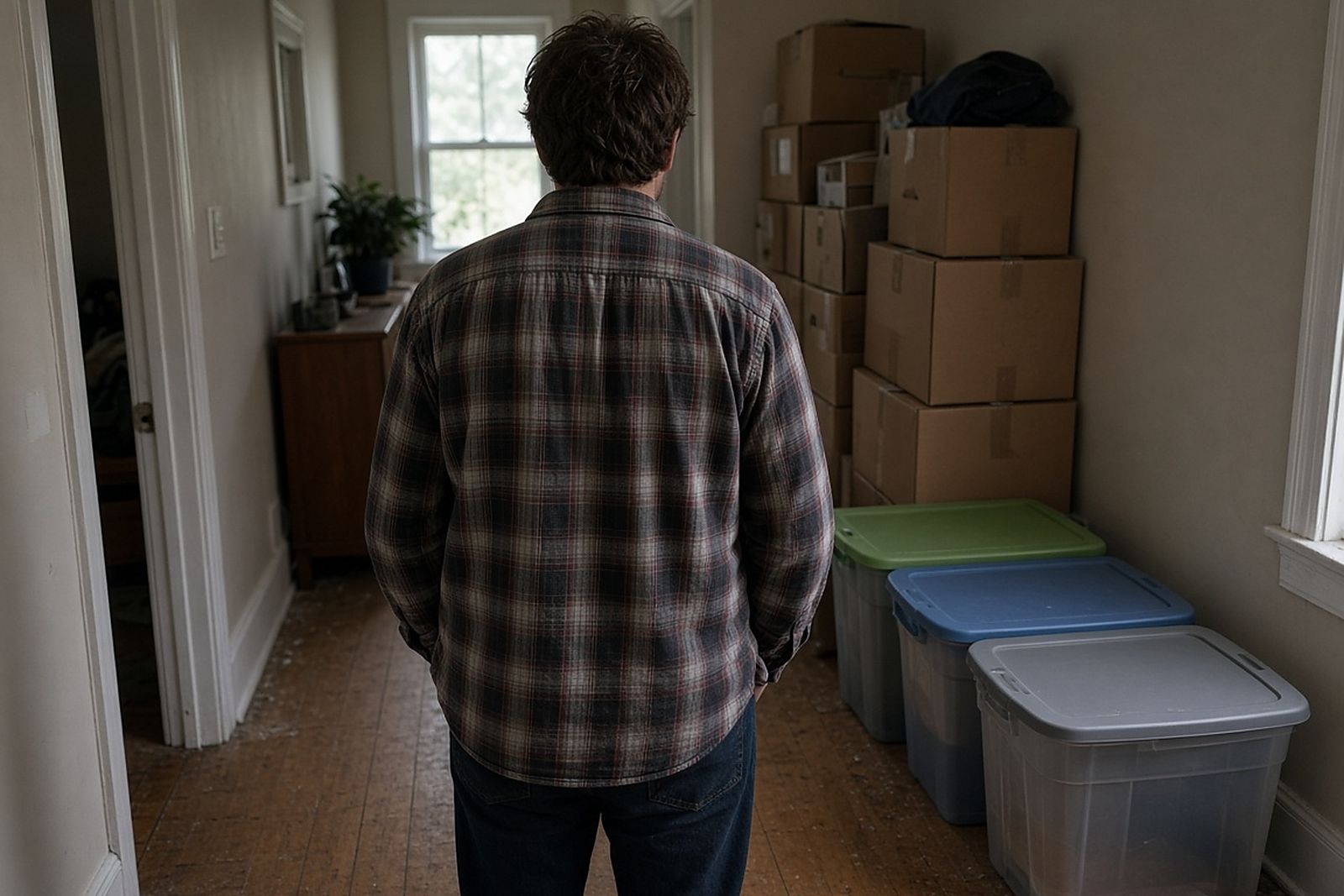
Numbers behind 24-hour planner decisions
- 24% of preventable fire deaths
Over ten years, 48 hoarding fires in Melbourne were only 0.25% of residential fires but 10 were fatal, accounting for 24% of all preventable residential fire deaths.
Read with care: Australian data; hoarding fires were likely under-identified in records.
Source: Worcester Polytechnic Institute / Metropolitan Fire Brigade (Lucini, Monk & Szlatenyi) (2009)Melbourne Metropolitan Fire District, Australia, roughly 1999–2009
- 5-fold
Hoarding participants had a five-fold higher rate of mental health service use than comparison women and were nearly three times as likely to be overweight or obese as family members.
Read with care: Cross-sectional associations, not causation.
Source: Psychiatry Research (Tolin et al.) (2008)Comparison with National Comorbidity Survey participants
- 20.4%
US poison centers received 45,550 exposure calls related to cleaners and disinfectants in January-March 2020, a 20.4% increase over the same period in 2019.
Read with care: Reflects calls, not confirmed poisonings, and covers an unusual pandemic period with surging disinfectant use.
Source: CDC (2020)United States, National Poison Data System, January-March 2020 vs 2019
- 24–48 hours
EPA advises drying water-damaged areas and items within 24 to 48 hours to prevent mold growth.
Read with care: The window is shorter in warm, humid conditions.
Source: US EPA (2026)Residential guidance, United States
These figures are public research and agency data, not this network's own job records. Keep each number with its population, year and limits; none of them predicts cost, timing or outcome at a specific property.
First 24 Hours Planner questions for hoarding scene cleanup
The person is present and upset. What comes first?
Their wellbeing. Sit down, listen, and avoid statements about the house. Address immediate physical needs such as medication, water, and a clear path to the bathroom. The planner places conversation and reassurance ahead of any action on belongings, because trust built in the first hours determines whether anything else becomes possible.
Should I call adult protective services right away?
If the person is an older or disabled adult and seems unable to stay safe, a call makes sense. You can ask the office what a referral involves before you give any details. If the person is able to decide and is willing to work with family, a referral may not be needed right away. Rules and agency roles vary by state and county.
Can I at least clear a path so it is safer?
Making a narrow walkway by moving items aside, without throwing anything away, is usually fine. Do it with the person's agreement. Do not lift heavy stacks, reach into piles, or disturb animal areas or anything that might hide needles. If the path means moving large amounts, wait for a professional walk-through.
What should I not photograph?
Avoid images that serve no safety purpose, such as personal documents, medications, or anything that would humiliate the person if shared. Photograph exits, heat sources, moisture, structural concerns, and animal areas. Ask permission where you can, keep the images private, and explain that they help plan help rather than prove a point.
The landlord is threatening eviction today. What do I do?
Ask the landlord in writing for the specific concerns and any deadline, and respond with a short plan that shows you are addressing safety. Many landlords will pause when they see credible action. Tenants have rights that vary by state and county, so consult a tenant assistance organization or attorney before agreeing to anything.
What if I live far away and cannot get to the home quickly?
You can still take useful steps from a distance. Call the occupant to check on their wellbeing, contact a trusted neighbor or friend who can visit, and speak with any agency or landlord involved. Gather documents and contact information by phone or email. The planner's first steps focus on safety and communication, which can often be arranged remotely.
Should the first day include calling cleanup providers?
It can, if the occupant's safety is addressed and you have a sense of the home's conditions. Early calls help you learn availability and what information providers need. You do not need to hire anyone on the first day. Use the planner to note questions and hazards, then schedule walkthroughs once the immediate situation is stable.
Related community polls
Every count is a real visitor vote; nothing is seeded or padded. One vote per poll per device, and you can change your answer.
If a relative's home had become unsafe, what would be your first step?
How much control should the occupant keep over what leaves the home?
Other hoarding scene cleanup tools
Cost Range Estimator
Set the affected area, surface types, severity and extras to see an educational cost range and the factors that move it.
OpenProvider Vetting Checklist
Fifteen questions to ask any remediation provider, a readiness score, and a copyable list of what is still unanswered.
OpenInsurance Claim Organizer
A guided checklist from finding the policy to tracking the carrier decision, with a printable summary of where the claim stands.
OpenWaste & Disposal Classifier
Five questions about the material point to the likely waste category and which authority to confirm the rules with.
OpenDIY or Call a Pro? Risk Check
Eight yes-or-no questions that produce a risk level and explain when professional help is the safer choice.
OpenMore on hoarding scene cleanup
Hoarding Scene Cleanup services
Learn how a first look at the home, sorting with consent, biohazard handling, and deep cleaning fit together in a step-by-step plan.
Costs explained
What drives the price, published cost ranges, and how to read a written quote line by line.
Insurance and payment
Which policies may respond, how to document a claim, and what to do if coverage is denied.
Community polls
See how relatives, landlords, people who hoard, and professionals think about consent, pace, and agency help. Compare your own gut feelings with theirs.
Knowledge quiz
Check what you know about hidden hazards, who can decide, dust control, cleaning and killing germs, waste, and records before you start to help.
Articles and resources
Read about helping a loved one, working with adult protective services, what landlords must do, and lessons from cleanups done in stages in real homes.
City guides
Find providers near you who know hoarding cases. Before you hire anyone, check their training, insurance, and way of working yourself.