Hoarding Scene Cleanup: Choosing a Company
Evidence to request from hoarding scene cleanup providers: business identity, applicable training, insurance, scope assumptions, waste routing, verification, availability, and responsibility for subcontractors.
Posts on choosing a company help you compare hoarding cleanup providers on the traits that matter once the crew is inside the home. You will find articles on questions to ask during an estimate. You will learn how to tell whether a company understands sorting with consent. You will see what a written scope should say about biohazards, donations, and disposal. You will also learn how to judge references from social workers or property managers. Posts also show how to spot a provider that cares more about speed and volume than about the person's role in the work.
Get an email reply about hoarding scene cleanup
Send a short message to the follow-up inbox. A coordinator can reply by email. This form does not send emergency help; call 911 first if anyone is in danger.
This matters because the wrong fit can harm trust between family members. It can make future help harder to accept. A crew that talks over the person or treats every item as trash may clear rooms. But it can leave the person feeling violated. The articles show you how to listen for respectful language. They show you how to ask about crew training for this kind of work and how to confirm in writing how choices will be made.

10 Questions to Ask Before Hiring a Hoarding Scene Cleanup Company
Ask about consent, sorting pace, hidden biohazards, donation routes and aftercare before a hoarding cleanup company sets foot in your relative's home.
Before hiring a hoarding scene cleanup company, ask how it gets and records consent, how it paces sorting with the occupant, how it handles valuables and documents, what it does with needles, waste and pests, where items go after they leave, how it prices and approves changes, what insurance it carries, who is on the crew and what support it offers after the cleanup.

Red Flags When Hiring Hoarding Scene Cleanup Services
Dumpster-first plans, shaming language, no sorting process, no hazard assessment: warning signs to watch for when hiring a hoarding cleanup company.
Warning signs when hiring a hoarding cleanup company include a plan to haul everything away without sorting, dismissive or shaming language about the resident, no walkthrough to assess hazards such as mold, animal waste or structural damage, no written policy on valuables and documents, pressure to finish in one push against the resident's wishes, and prices or insurance promises made before anyone has seen the home.
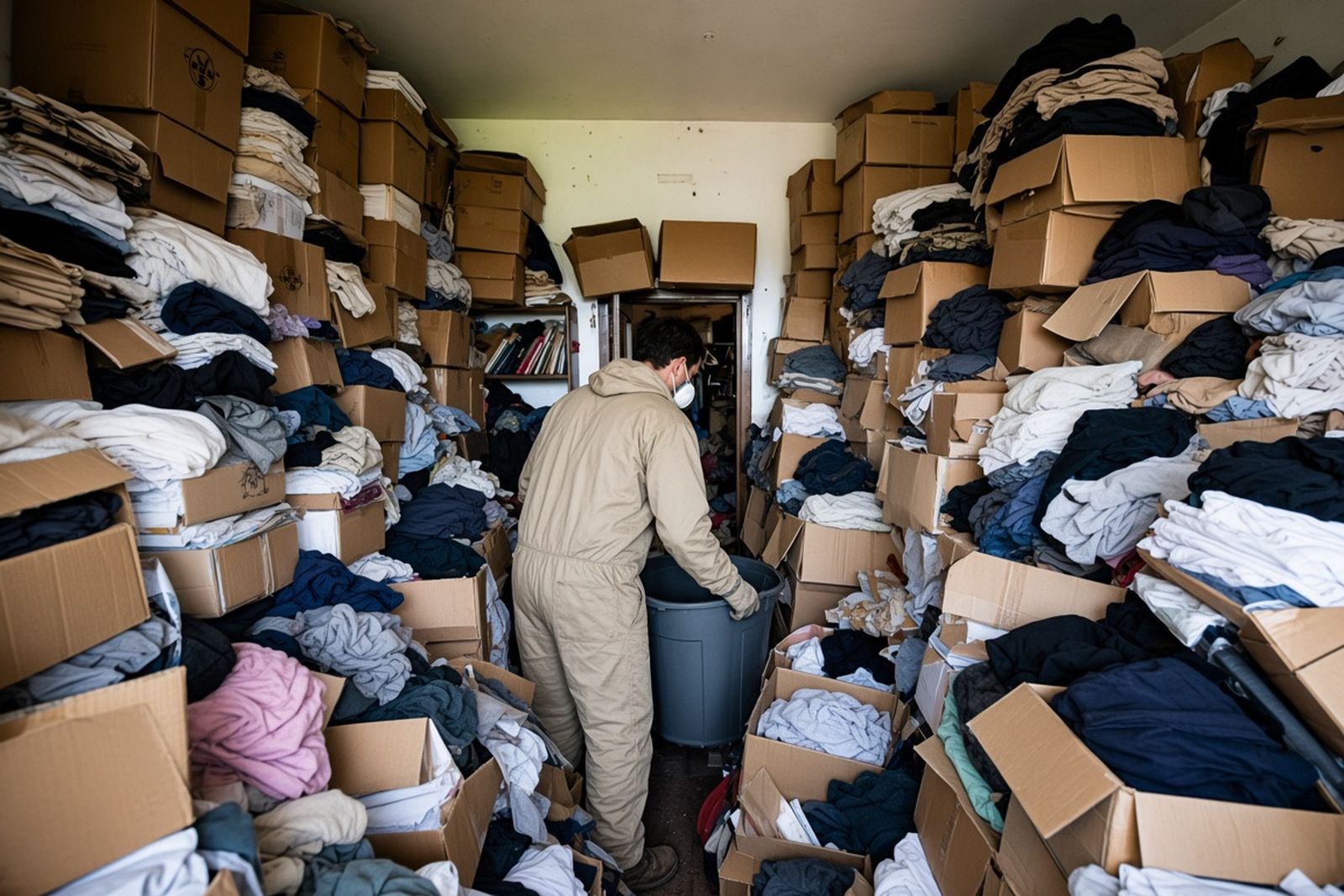
Training, Documentation, and Credentials for Hoarding Scene Cleanup
Hoarding cleanup mixes mental health, biohazards and code orders. What training, records and credentials show a crew can handle all three with care.
Hoarding cleanup has no single national license, so credentials work as a set of clues. Look for bloodborne pathogen and respiratory training when waste, mold or animals are present, familiarity with hoarding disorder and harm-reduction approaches, lawful waste and hauling arrangements, proper insurance, and a habit of documenting sorting decisions, hazards and progress in ways that satisfy families, landlords and code officials.

How to Compare Local and National Hoarding Scene Cleanup Providers
Comparing local hoarding cleanup firms with national brands and franchises: who shows up, crew continuity, local knowledge, subcontracting and insurance claims.
Neither local nor national hoarding cleanup providers are automatically better. Compare them on who will actually do the work, whether the same crew will return across a multi-week job, knowledge of local agencies and disposal options, how they involve the resident, written scope and pricing, insurance and complaint history. Ask every provider the same questions and judge the answers, not the logo.
Sourced figures on choosing a company
- $0 to employees
Since February 13, 2008, OSHA has required employers to provide required personal protective equipment at no cost to employees.
Read with care: Exceptions exist for non-specialty footwear, prescription eyewear and lost or deliberately damaged PPE.
Source: OSHA (2008)US general industry employers
- 40 hours + 8 hours/year
OSHA's HAZWOPER rule requires general site workers to complete 40 hours of off-site instruction plus three days of supervised field experience, with 8 hours of annual refresher training.
Read with care: Not every biohazard cleanup legally falls under HAZWOPER; meth lab chemical work often does.
Source: OSHA (1990)US hazardous waste site workers
- 2.43 million
Janitors and building cleaners held about 2,432,600 jobs in the United States in 2025, with a median pay of $36,840 per year.
Read with care: Occupation-level count covers general cleaning, not specialized biohazard or remediation technicians.
Source: BLS (2025)United States, all employment settings, 2025 estimate
These figures are public research and agency data, not this network's own job records. Keep each number with its population, year and limits; none of them predicts cost, timing or outcome at a specific property.
What research has found
Findings from published studies of people and properties in situations like this one. They describe what researchers observed in a specific group; they are not predictions for your case.
Family conflict sometimes led relatives to move out.
Greater perceived hoarding severity was associated with greater subjective family burden.
Choosing a Company: common questions
What should I listen for during the first phone call?
Notice whether the provider asks about the person's role, animals, known hazards, and any notices before giving a price. Respectful language, questions about consent, and an explanation of how regulated waste is handled are good signs. A company that jumps straight to dumpster size and a one-day timeline without asking about the person may not be the right fit.
Should the provider meet the occupant before the job starts?
When possible, yes. A short introduction lets the occupant see who will be in the home, ask questions, and set boundaries about particular rooms or items. Many experienced providers request this meeting because it reduces anxiety and makes sorting smoother. If the occupant declines, the provider should still explain how they will communicate decisions.
Is it a problem if the company subcontracts part of the work?
Not necessarily, as long as you know who will be in the home and who is responsible for each task. Pest control, mold assessment, and repairs are often handled by partners. Ask for the names of any subcontractors, confirm they carry their own insurance, and make sure the main provider remains accountable for the overall scope.
Should I choose a company that offers both cleanup and repairs?
It can be convenient to have one company handle both, since it simplifies scheduling and communication. But make sure the company is qualified for each type of work and that repairs are clearly scoped and priced separately. Some families prefer specialists for each stage. Ask whether repairs are done by the same crew or subcontractors, and who is responsible for each.
How important is it that the company has worked in homes like ours?
Quite important. Experience with similar conditions means the crew is more likely to expect hazards and plan well. Examples include many animals, a building with several units, or a home with water damage. Ask for examples of similar jobs, with no names or details that identify anyone. Their answers can show whether they understand both the physical work and the human side.
Can I switch companies partway through a cleanup?
Usually yes, though it depends on your contract terms. Before switching, review the contract for termination and payment provisions, collect all documentation of work done, and make sure disposal records and keep lists are transferred. Tell the new company what has been completed and what was found, so they can pick up where the first company left off.
What role should the occupant play in choosing the company?
As much as they are able and willing to take on. Meeting candidates, asking questions, and having a say in the final choice can give the occupant a sense of control and increase their cooperation. If they cannot be involved in selection, share information about the chosen company and introduce the crew lead before work begins.
Related community polls
Every count is a real visitor vote; nothing is seeded or padded. One vote per poll per device, and you can change your answer.
If a relative's home had become unsafe, what would be your first step?
How much control should the occupant keep over what leaves the home?
More on hoarding scene cleanup
Hoarding Scene Cleanup services
Learn how a first look at the home, sorting with consent, biohazard handling, and deep cleaning fit together in a step-by-step plan.
Costs explained
What drives the price, published cost ranges, and how to read a written quote line by line.
Insurance and payment
Which policies may respond, how to document a claim, and what to do if coverage is denied.
Planning tools
Use planners made for families and caseworkers. Sort out costs, questions for providers, insurance steps, first-day actions, waste types, and DIY risk.
Community polls
See how relatives, landlords, people who hoard, and professionals think about consent, pace, and agency help. Compare your own gut feelings with theirs.
Knowledge quiz
Check what you know about hidden hazards, who can decide, dust control, cleaning and killing germs, waste, and records before you start to help.
City guides
Find providers near you who know hoarding cases. Before you hire anyone, check their training, insurance, and way of working yourself.