Hoarding Scene Cleanup: Regulations
How to identify the worker-safety, waste, transport, environmental, and local rules that may apply to hoarding scene cleanup. Confirm jurisdiction-specific requirements with the issuing authority.
Rules posts explain the rules that can surround a hoarding cleanup. They do not pretend those rules are the same everywhere. You will find articles on how property upkeep codes are enforced and what leads to a health department inspection. Others cover how landlord and tenant duties fit together when a rental is affected. Some explain where adult protective services has authority and where it does not. Other pieces cover how needles and some animal waste are classified for disposal. They explain why that changes who may haul them away.
Get an email reply about hoarding scene cleanup
Send a short message to the follow-up inbox. A coordinator can reply by email. This form does not send emergency help; call 911 first if anyone is in danger.
Knowing the rules helps you respond to a notice calmly. It helps you avoid steps that create new problems. Examples are putting regulated waste in household trash or clearing a home without the legal right to consent. Details differ by state and county. So each post points you to the office or official who can confirm the rule for your address. The goal is to help you ask the right agency the right question instead of relying on general guesses.

OSHA Regulations and Hoarding Scene Cleanup
How OSHA worker-safety standards apply when crews clear a hoarded home, from ammonia and mold to sharps, heavy lifting and blocked exits, and what to ask.
OSHA standards protect the employees who clear and clean a hoarded home. Depending on what is inside, that can mean respirator rules for ammonia, mold or dust, the Bloodborne Pathogens Standard for sharps and bodily fluids, PPE hazard assessments, and the General Duty Clause for collapse, fire and lifting risks. Ask any contractor how its written safety program fits the conditions in your home.
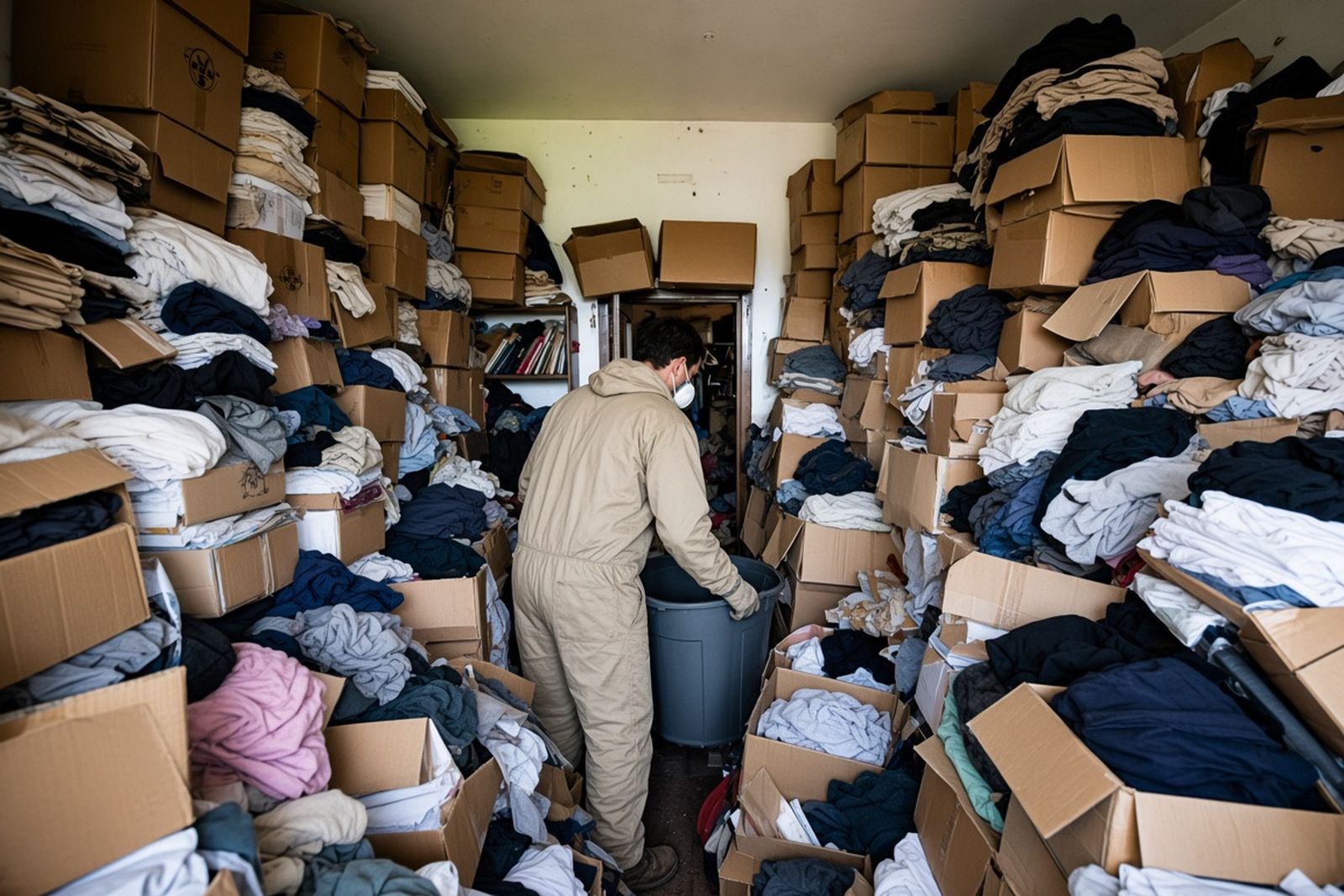
Which Federal, State, and Local Rules Apply to Hoarding Scene Cleanup?
How federal housing and safety law, state protective services and local code, fire and health enforcement shape a hoarding cleanup, and whom to call first.
Hoarding cleanup is shaped mostly by state and local rules. Federal law contributes worker safety through OSHA and fair housing protections that can require reasonable accommodation for tenants with disabilities. States run adult protective services and landlord-tenant law. Local code enforcement, fire marshals, health departments and animal control usually drive deadlines and inspections. Knowing which office is involved tells you what the cleanup must achieve.

How to Research Waste Rules for Hoarding Scene Cleanup
How to look up the disposal rules for what a hoarding cleanup removes: trash, chemicals, electronics, appliances, medicines, needles and animal waste.
Start by sorting hoarding cleanup waste into groups. Most of what comes out is regular household trash. But paint, solvents, bug and weed killers, batteries, electronics, fridges and air conditioners, tires, medicines, needles and animal waste often have their own rules. Check with your state environmental agency and local trash office for each group. Ask your hauler where loads go. Keep receipts that show how special items were handled.
Sourced figures on regulations
- 34,696
Federal OSHA conducted 34,696 inspections in fiscal year 2024 and has roughly one compliance officer for every 70,000 workers.
Read with care: Excludes inspections by state-plan agencies.
Source: OSHA (2024)United States, federal OSHA, FY2024
- 10 square feet
EPA says moldy areas smaller than about 10 square feet can usually be handled by the homeowner, while larger areas warrant professional guidance.
Read with care: Applies to mold; contaminated sewage or biohazard materials are treated differently.
Source: US EPA (2026)Residential guidance, United States
- $357.5 million
IBISWorld counted nearly 600 U.S. crime-scene cleanup firms with revenues of $357.5 million and profits over $99 million in 2015.
Read with care: Decade-old figure reported secondhand; IBISWorld no longer publishes this niche report publicly.
Source: IBISWorld (reported by The Philadelphia Inquirer) (2015)United States, crime scene cleanup industry, 2015
These figures are public research and agency data, not this network's own job records. Keep each number with its population, year and limits; none of them predicts cost, timing or outcome at a specific property.
What research has found
Findings from published studies of people and properties in situations like this one. They describe what researchers observed in a specific group; they are not predictions for your case.
Insensitive organisational interactions worsened adjustment.
Housing staff described barriers to obtaining specialist mental-health involvement.
Regulations: common questions
Can a landlord enter a tenant's unit because of hoarding concerns?
State law and the lease set when a landlord may enter. They usually require notice ahead of time except in emergencies. Hoarding conditions that threaten health or safety can lead to inspections and notices to fix the problem. Rules posts explain the usual steps. They urge both tenants and landlords to talk with a local housing agency or a lawyer before acting on guesses.
Is it legal to throw away someone else's belongings during a cleanup?
Usually, only the owner or someone with legal authority can approve throwing things away. That might be a guardian, someone acting under a power of attorney, or the person handling an estate. Relatives acting without that authority risk disputes and possible legal blame. Articles in this category describe how consent is usually written down. They explain why providers often ask to see proof of authority before throwing anything away.
Do fire codes apply to hoarded homes?
Fire and life safety codes can apply to exits, escape windows, storage near heat sources, and access for emergency crews. This is especially true in buildings with several units. Enforcement differs between communities. Some fire departments run outreach programs instead of issuing fines. Rules posts explain what inspectors often look at and how to contact your local fire marshal for advice.
Can a neighbor's complaint lead to an inspection of a hoarded home?
In many communities, yes. Complaints about odor, pests, or visible hazards can prompt code enforcement, health, or fire officials to investigate. The process and what follows vary by locality. If an inspection happens, focus on understanding which conditions were cited and what must be addressed. A clear, respectful response often helps more than disputing the complaint.
Do rules differ for homeowners and renters?
Yes. Homeowners mainly deal with local codes on safety, sanitation, and property maintenance. Renters also face lease terms and landlord-tenant rules, which may set out inspection rights, notice periods, and procedures for addressing conditions. Both may have access to supportive services. Knowing which set of rules applies helps you respond to the right people with the right information.
What rights does an occupant have during an agency visit?
Rights depend on the agency, the reason for the visit, and local rules. In many cases, occupants can ask for identification, ask why the visit is happening, request that a support person be present, and ask for requirements in writing. Some visits require consent or a warrant, while emergencies may not. A legal aid office can explain the specifics.
How can we keep a record that shows compliance with a notice?
Keep a file with the notice, all correspondence, the provider's scope and invoices, dated photos of cited conditions before and after work, disposal receipts, and notes from calls with the issuing office. Organize them by date. Share copies with the office when requested, and bring the file to any reinspection so questions can be answered quickly.
Related community polls
Every count is a real visitor vote; nothing is seeded or padded. One vote per poll per device, and you can change your answer.
If a relative's home had become unsafe, what would be your first step?
How much control should the occupant keep over what leaves the home?
More on hoarding scene cleanup
Hoarding Scene Cleanup services
Learn how a first look at the home, sorting with consent, biohazard handling, and deep cleaning fit together in a step-by-step plan.
Costs explained
What drives the price, published cost ranges, and how to read a written quote line by line.
Insurance and payment
Which policies may respond, how to document a claim, and what to do if coverage is denied.
Planning tools
Use planners made for families and caseworkers. Sort out costs, questions for providers, insurance steps, first-day actions, waste types, and DIY risk.
Community polls
See how relatives, landlords, people who hoard, and professionals think about consent, pace, and agency help. Compare your own gut feelings with theirs.
Knowledge quiz
Check what you know about hidden hazards, who can decide, dust control, cleaning and killing germs, waste, and records before you start to help.
City guides
Find providers near you who know hoarding cases. Before you hire anyone, check their training, insurance, and way of working yourself.