Short answer
As a property manager, your job in a hoarded unit is to protect the building, other residents and the tenant's rights at the same time. Document conditions with care, follow your lease and local notice rules, involve social services when the tenant is vulnerable, hire a provider who works in phases with the tenant, and keep a clear record of every step.
How do I know whether a unit has crossed from messy into a hoarding problem?
Plenty of tenants keep untidy apartments, and a lease rarely gives you authority over housekeeping style. The line you care about is safety and habitability. A unit becomes a management issue when belongings block exits, cover heating appliances, overload floors, attract pests, create odors that reach neighbors or prevent maintenance staff from reaching smoke alarms, plumbing and electrical panels.
Warning signs often reach you secondhand. A neighbor mentions cockroaches that keep coming back. A maintenance technician could not open the bedroom door to reach a leaking radiator. A window stays covered with stacked boxes for months. Delivery drivers leave packages that pile up in the hallway.
Try to describe what you observe in functional terms rather than moral ones. Writing "kitchen range surrounded by paper within inches of burners" is far more useful, and far fairer to the tenant, than writing "filthy apartment." Functional notes also hold up better if the matter ever reaches a housing hearing.
What are my obligations to the tenant who is hoarding?
Hoarding disorder is a recognized mental health condition, and in many places a tenant with a disability may ask for a reasonable accommodation, such as extra time to bring a unit into compliance or permission for a support worker to help. Treating the situation purely as a lease violation can expose you to fair housing complaints and usually produces worse outcomes for everyone.
Why eviction is rarely the answer
Eviction is a real risk for these tenants, and it is often not a solution. In a 2008 study in Psychiatry Research, Tolin and colleagues reported that 8 to 12 percent of surveyed hoarders had been evicted or threatened with eviction because of hoarding. A tenant who is evicted may simply carry the behavior to another address, while you absorb a vacant, damaged unit.
Rules vary by state and county; verify with the local authority, and ideally with a housing attorney, how notice periods, entry rights, accommodation requests and abandoned property rules apply before you act.
Treat it as a building safety issue, not just one unit
Hoarded units affect shared systems. Fire can spread through walls and ceilings into neighboring homes. Pest populations migrate along pipe chases. Water leaks go unnoticed under piles and rot subfloors that support the unit below. Odor and mold can travel through shared ventilation.
Fire is the concern firefighters raise most often. A 2009 analysis of fire incidents in Melbourne, Australia, prepared for the Metropolitan Fire Brigade by Worcester Polytechnic Institute researchers found that 48 hoarding fires over ten years were only 0.25 percent of residential fires, yet 10 were fatal, accounting for 24 percent of all preventable residential fire deaths. Clear paths, working smoke alarms and space around heat sources are the first things to restore.
When you frame the conversation around shared safety, tenants and families often find it easier to accept help. It is not about how someone lives. It is about everyone in the building getting out safely if something goes wrong.
Inspection and notice, done well
Give proper written notice before entering, following your lease and local law. Bring a second staff member so that no one is alone in a cramped or unstable space, and so that there is a witness to what was said. Wear gloves and sturdy shoes, and do not move or open the tenant's belongings.
Photograph conditions that relate to safety and building systems, such as blocked egress, covered heaters, water staining, droppings or damaged fixtures. Avoid photographing personal papers, medications or anything that identifies the tenant beyond what you need.
What the written follow-up should list
Follow up with a written summary that lists specific, achievable items and realistic dates. Many managers find that a short list, such as clearing a path from the bed to the front door and exposing the stove and heater, gets further than a demand that the entire unit be emptied at once.
- Egress: doors, hallways and at least one bedroom window usable.
- Heat sources: range, space heaters, furnace closet and water heater clear.
- Life safety devices: smoke and carbon monoxide alarms reachable and working.
- Water and structure: no active leaks, sagging floors or damaged ceilings.
- Sanitation: working toilet and sink, no rotting food, no animal waste buildup.
- Pests: signs of rodents or insects noted so treatment can be coordinated.
When should I bring in social services or adult protective services?
If the tenant is elderly, has a disability, appears unable to care for themselves or is living without working utilities, a referral to adult protective services or a local aging agency may be appropriate. Some cities and counties have hoarding task forces that bring together code enforcement, fire, health and mental health staff.
Vulnerability is common in these cases, so expect to coordinate with caseworkers, not just contractors.
Involving social services is not the same as reporting a tenant to get them removed. A caseworker can connect the tenant with therapy, in-home support or funding programs that make a lasting cleanup more likely, which serves your interests too.
Hiring a provider and writing the scope
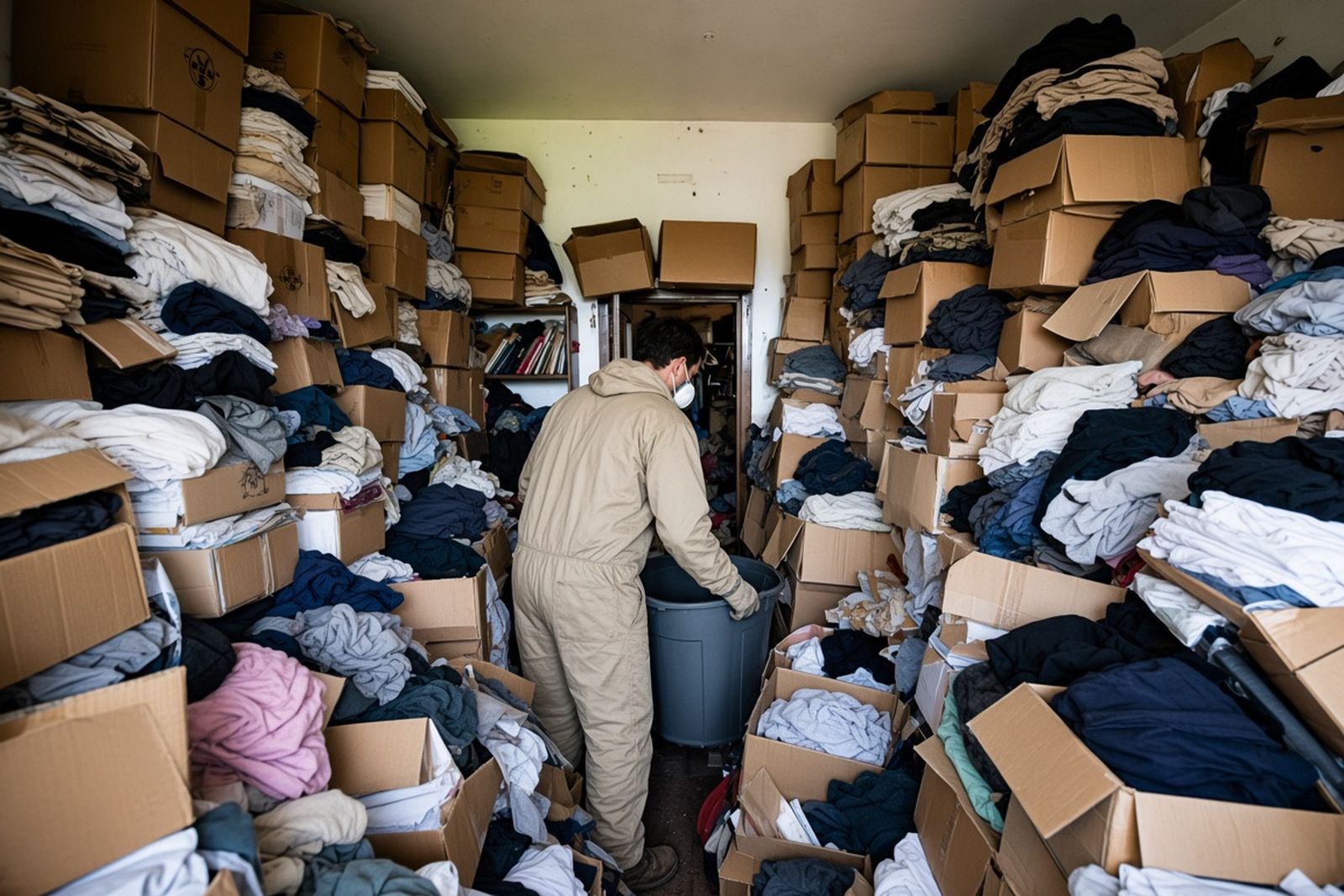
Look for a provider that handles both the sorting side of hoarding work and the sanitation side. The job may involve removing large volumes of belongings, cleaning up after pests or animals, discarding spoiled food, addressing soiled bedding and disinfecting bathrooms and kitchens. A general junk hauler may not be equipped for the biohazard portion.
Ask how the provider involves the tenant in decisions, how they handle items the tenant wants to keep, how they separate recyclables and donations from waste and how they document conditions before and after. A good provider will ask who has authority to approve disposal and will want that answer in writing.
The written scope should name the rooms involved, the phases planned, the items that must not be discarded without the tenant's approval, the cleaning and disinfection steps, any pest treatment coordination and the condition you expect at handoff. Avoid open-ended phrases like "clean out unit" that leave room for disputes about what was thrown away.
Illustrative case: a second-floor leak
Consider a made-up situation. A manager of a small apartment building gets a call from the first-floor tenant about a brown stain spreading across the bathroom ceiling. The second-floor tenant, a retired man who has lived there for years, rarely allows anyone inside.
The manager gives written notice for a repair entry and arrives with a maintenance technician. They find the bathroom partly blocked by stacked newspapers and bags, and a slow leak at the toilet supply line that has soaked the floor beneath the piles. They photograph the leak, the blocked path and a space heater surrounded by clothing, and they leave the tenant's papers untouched.
Instead of issuing a cure-or-quit notice, the manager sets up a meeting with the tenant and his daughter. They agree on a first phase: clearing the bathroom and a path from the bedroom to the front door so the plumber can repair the leak and replace damaged flooring. A hoarding cleanup provider sorts with the tenant present, and the daughter holds a list of items that must be kept. A county aging services worker joins the second meeting to discuss ongoing support.
Three weeks later the leak is fixed, the path is clear, the heater has space around it and a follow-up visit is on the calendar. The rest of the unit is still crowded, but the building is safer and the tenancy is intact.
How do I prevent the unit from filling up again?
Hoarding tends to return without ongoing support. Build follow-up into the plan with scheduled, noticed inspections at a pace the tenant can handle, such as monthly at first. Keep the checklist focused on the same safety items each time so expectations are predictable.
Encourage connections that last beyond the cleanup, such as a therapist familiar with hoarding, a peer support group or a professional organizer who visits regularly. Where a caseworker is involved, ask whether you can share updates with the tenant's permission.
Treat backsliding as information rather than betrayal. A small setback caught early costs far less than a full second cleanout, and a tenant who trusts you is more likely to let you in when it matters.
Records to keep once the work is done
Keep the inspection notes and photos, every notice you sent, the tenant's responses, any accommodation requests and your replies, the provider's scope and invoices, waste and donation receipts, pest treatment reports and repair records. Store them securely, since they contain sensitive health-related information.
These records protect you if there is a dispute over lost belongings, a fair housing complaint or an insurance claim for water or fire damage. They also help your team respond faster and more consistently the next time a similar situation comes up in your portfolio.