Hoarding Scene Cleanup: Safety
Hazard-assessment articles for hoarding scene cleanup, including when bloodborne, chemical, respiratory, sharps, structural, or waste controls may apply. PPE and containment must follow the actual exposure—not a universal checklist.
Safety posts focus on hazards that tend to hide in hoarded homes and the steps that reduce them. Topics include unsteady piles that can shift when one box is removed and floors weakened by long-term weight or leaks. They also include blocked exits during a fire, needles tucked into bags or furniture, and animal waste that has dried into dust. You will also find advice on protective gear for different tasks. That runs from simple gloves for sorting clean paper to respirators when dust and droppings are present.
Get an email reply about hoarding scene cleanup
Send a short message to the follow-up inbox. A coordinator can reply by email. This form does not send emergency help; call 911 first if anyone is in danger.
This category matters because helpers are often family members who want to pitch in before a professional arrives. The articles explain which tasks are usually fine for relatives and which should wait for trained workers. They also show how to spot a sign that you need to stop and step outside. They also cover protecting the person who lives there. Someone who has lived with piled-up items may have health problems that make dust and odor harder to bear.
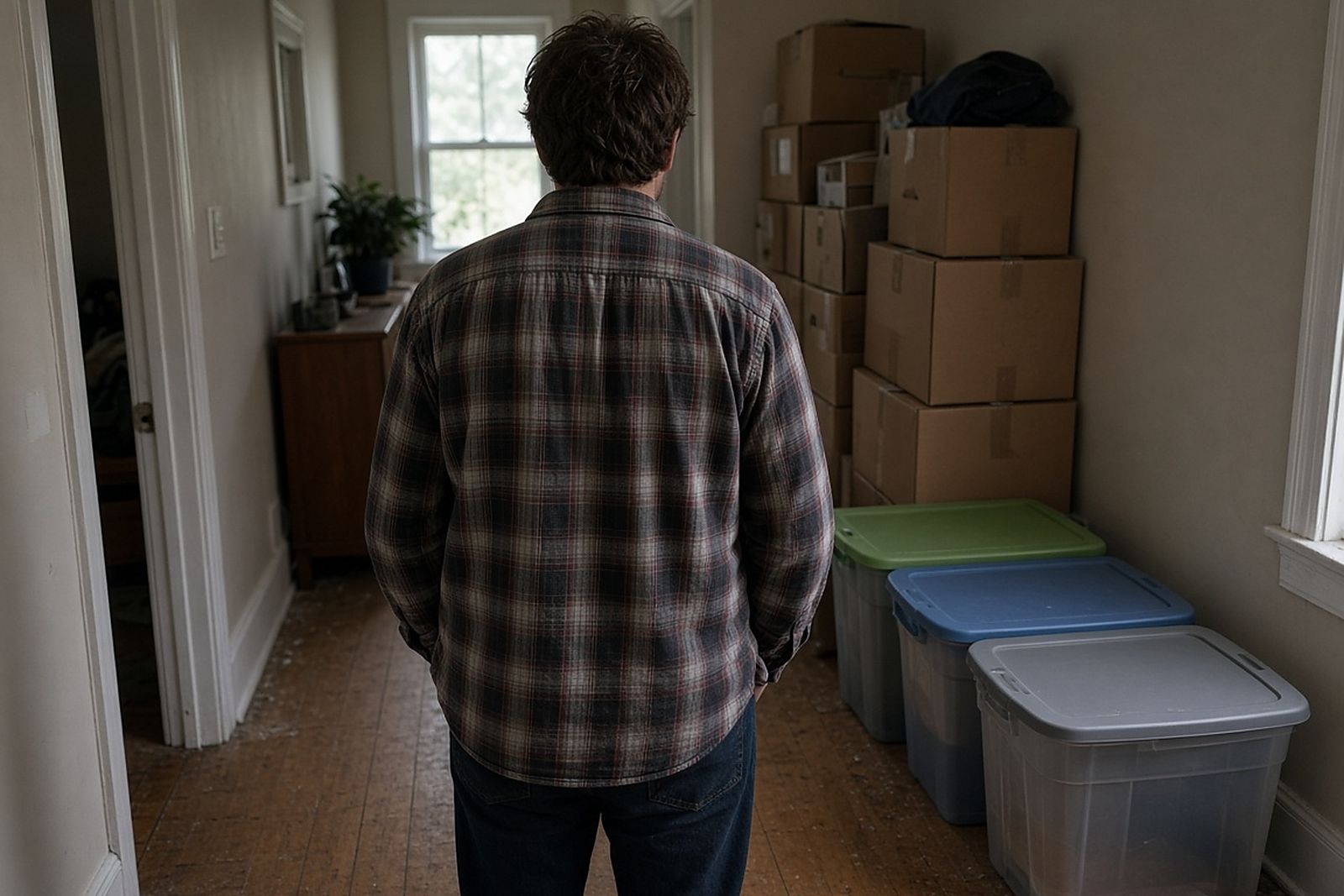
DIY vs Professional Hoarding Scene Cleanup: The Critical Differences
When families can clear a cluttered home themselves, when hidden hazards call for a trained crew, and how to protect a loved one's dignity on either path.
Families can often handle light clutter themselves, especially when the resident is willing and there are no biohazards, pests or structural problems. Professional hoarding cleanup becomes the safer choice when there is animal or human waste, mold, sharps, pest infestations, blocked exits, damaged floors or an urgent legal deadline. Professionals also bring neutral distance that can protect family relationships during a difficult process.
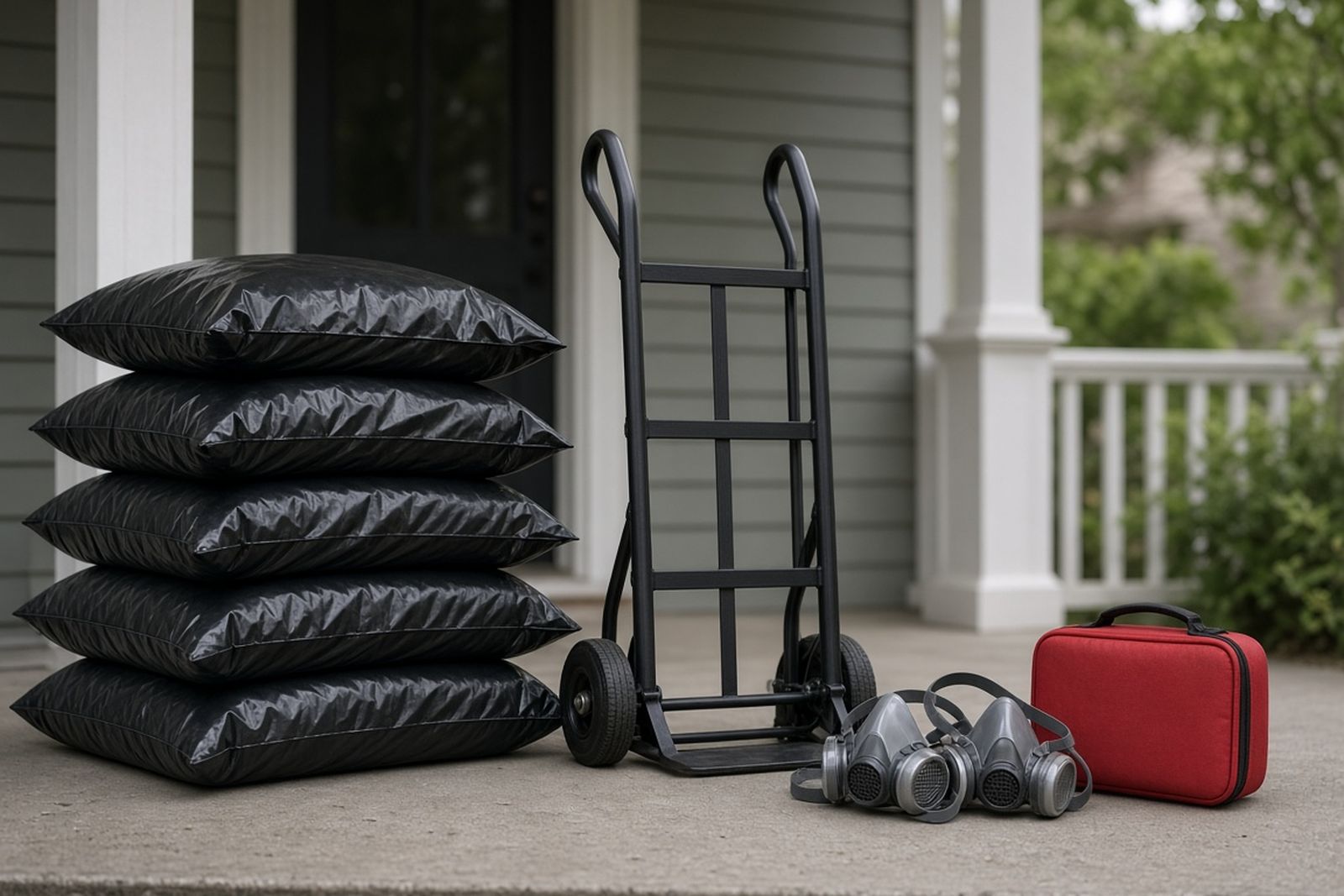
10 Hoarding Scene Cleanup Safety Risks to Assess Before Work Begins
Collapsing stacks, blocked exits, mold, rodent waste, hidden needles, weak floors and fire load: ten hoarding cleanup risks to check before the first bag fills.
Before a hoarding scene cleanup begins, assess ten risks: unstable stacks and falls, blocked exits and fire load, overloaded or rotted floors, mold, animal and rodent waste, human waste and spoiled food, hidden sharps, dangerous household items such as chemicals and firearms, electrical and utility hazards, and the emotional and legal risks of moving too fast. Each one changes how and in what order the work should happen.
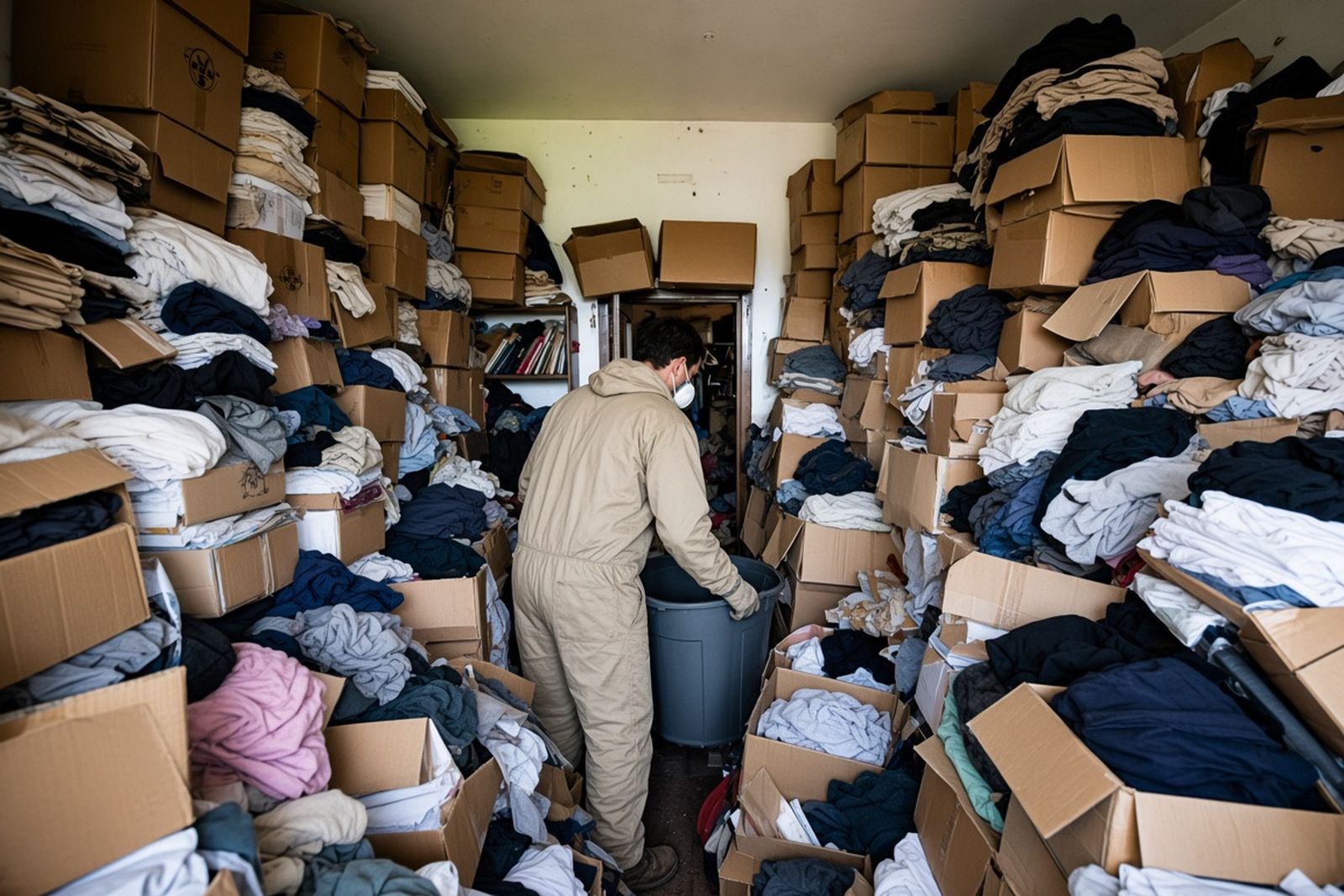
PPE Planning for Hoarding Scene Cleanup: Start With the Hazard Assessment
How a hoarding cleanup crew picks respirators, gloves, suits and boots after assessing dust, ammonia, mold, pests, sharps and unstable piles room by room.
PPE for hoarding scene cleanup should follow a written, room-by-room hazard assessment. Crews look for animal waste and ammonia, mold, rodent droppings, spoiled food, sharps, dust, unstable piles and structural damage, then choose respirators, gloves, suits, eye protection and footwear to match. Because conditions change as layers come out, the assessment and the gear are revisited throughout the job.
Sourced figures on safety
- 0.85%
A meta-analysis of 85,681 English households over 13 years estimated the point prevalence of domestic squalor at 0.85%, with rentals and lower-income homes at higher risk.
Read with care: Squalor overlaps with but is not identical to hoarding disorder; UK data.
Source: BMC Public Health (2024)English Housing Survey data
- 700–2,000 cases/year
Animals were found dead or in poor condition in 80% of animal-hoarding cases, and Patronek estimated 700 to 2,000 such cases occur in the US each year.
Read with care: Rough extrapolation from a small 1990s sample.
Source: Public Health Reports (Patronek) (1999)Extrapolated US estimate from 54 cases
- 250,000 animals/year
The Animal Legal Defense Fund estimates up to 250,000 animals per year are victims of hoarding and that 72% of animal hoarders are women.
Read with care: Advocacy-organization estimate without a published methodology.
Source: Animal Legal Defense Fund (2018)United States estimate
These figures are public research and agency data, not this network's own job records. Keep each number with its population, year and limits; none of them predicts cost, timing or outcome at a specific property.
What research has found
Findings from published studies of people and properties in situations like this one. They describe what researchers observed in a specific group; they are not predictions for your case.
Administrative work compounded vulnerability during early bereavement.
Greater perceived severity was associated with fewer positive experiences.
Safety: common questions
What is the most common injury risk during a hoarding cleanup?
Falls and strains from shifting piles, uneven footing, and lifting awkward loads are common concerns. So are cuts from hidden sharp objects. Safety posts suggest clearing a steady path first and working from the top of a stack down. Wear sturdy shoes and cut-resistant gloves. Never reach blindly into bags or drawers where needles or broken glass could be hidden.
Should family members wear masks while sorting?
Basic dust masks help with light dust. But they give little protection against fine bits from droppings or mold. When those are present, a respirator that fits properly is a better choice. Many families choose to leave those rooms to trained crews. Safety articles describe how to spot the conditions that call for more protection.
When should we stop working and leave the home?
Stop if you smell gas or notice a floor that bends or sags. Stop if you hear sparking or buzzing from wiring. Stop if you find a large amount of animal waste or a biohazard you did not expect. Stop if you start to feel dizzy or short of breath. Leave the home and call the right utility or professional. Go back only once the problem has been checked.
Is it safe to visit a hoarded home with young children?
It is best to avoid bringing young children into a hoarded home, particularly into rooms with dust, animal waste, mold, or unstable piles. Children are more likely to touch or climb on things and may be more sensitive to air quality. If a visit is important, meet in a cleared area or outside, and keep the visit short and supervised.
How should we store items between sorting sessions to keep paths safe?
Keep boxes and bags out of hallways, stairs, and doorways, and stack them only as high as is stable. Use a designated staging area away from heat sources. Label boxes clearly so no one needs to dig through them. At the end of each session, walk the path to every exit to confirm it is still clear before leaving.
What should we do if we find signs of fire damage under the clutter?
Stop working in that area and look for any remaining risk, such as damaged wiring, a charred outlet, or a heater near combustible items. Do not use the affected outlet or appliance. Contact an electrician or the fire department for guidance if the cause is unclear. Let the provider know, since smoke and soot residue may change cleaning plans.
Are smoke alarms and carbon monoxide alarms part of the cleanup?
They should be. Check that alarms are present, working, and not covered or blocked by items, and replace batteries or units as needed. Some fire departments offer free alarm installation programs. A working alarm is one of the simplest ways to reduce fire risk while a longer cleanup is underway, especially in homes with fuel-heavy clutter.
Related community polls
Every count is a real visitor vote; nothing is seeded or padded. One vote per poll per device, and you can change your answer.
If a relative's home had become unsafe, what would be your first step?
How much control should the occupant keep over what leaves the home?
More on hoarding scene cleanup
Hoarding Scene Cleanup services
Learn how a first look at the home, sorting with consent, biohazard handling, and deep cleaning fit together in a step-by-step plan.
Costs explained
What drives the price, published cost ranges, and how to read a written quote line by line.
Insurance and payment
Which policies may respond, how to document a claim, and what to do if coverage is denied.
Planning tools
Use planners made for families and caseworkers. Sort out costs, questions for providers, insurance steps, first-day actions, waste types, and DIY risk.
Community polls
See how relatives, landlords, people who hoard, and professionals think about consent, pace, and agency help. Compare your own gut feelings with theirs.
Knowledge quiz
Check what you know about hidden hazards, who can decide, dust control, cleaning and killing germs, waste, and records before you start to help.
City guides
Find providers near you who know hoarding cases. Before you hire anyone, check their training, insurance, and way of working yourself.