Short answer
PPE for hoarding scene cleanup should follow a written, room-by-room hazard assessment. Crews look for animal waste and ammonia, mold, rodent droppings, spoiled food, sharps, dust, unstable piles and structural damage, then choose respirators, gloves, suits, eye protection and footwear to match. Because conditions change as layers come out, the assessment and the gear are revisited throughout the job.
Why can't a hoarding crew just wear the same gear in every house?
Hoarded homes vary enormously. One house may hold decades of newspapers, clothing and unopened purchases in dry, stable rooms. Another may include rotting food, dozens of animals, broken plumbing and hidden medical waste. Even within a single home, the kitchen, a pet room and a spare bedroom can present completely different hazards.
Because of that variety, protective equipment should be chosen after a hazard assessment rather than from a fixed kit. OSHA's personal protective equipment standard, 29 CFR 1910.132, expects employers to assess hazards and certify that assessment in writing before selecting gear. On a hoarding job, the smart approach is to repeat that assessment room by room.
The goal is protection that fits the task. Overdressing a crew in heavy suits for a dry paper room invites heat exhaustion and slows the work. Underdressing them in a room full of animal waste invites respiratory illness and skin infections.
Hazards a room-by-room assessment looks for
A supervisor typically walks the home in baseline protection before crews begin, noting conditions and asking the family what they know. The list below covers the hazards that most often shape PPE choices.
- Air quality: dust from disturbed piles, ammonia from urine, odors from spoiled food and possible mold spores.
- Animal and pest activity: pet waste, rodent droppings and nesting material, insect infestations and carcasses.
- Biological materials: human waste, bodily fluids, used bandages or incontinence products.
- Sharps: syringes, lancets, broken glass, rusted metal and tools buried in piles.
- Chemicals: old cleaners, pesticides, paint, fuel or pool chemicals, sometimes leaking.
- Physical hazards: unstable stacks, blocked exits, weak floors, exposed wiring and poor lighting.
- Heat and fatigue: rooms without working air conditioning and days of repetitive lifting.
How do crews decide on respiratory protection?
Respiratory protection is often the most important choice in a hoarded home. Disturbing layers of material releases dust that can contain mold, insect fragments and dried animal waste. In rooms where pets were confined, ammonia can be strong enough to irritate eyes and lungs immediately.
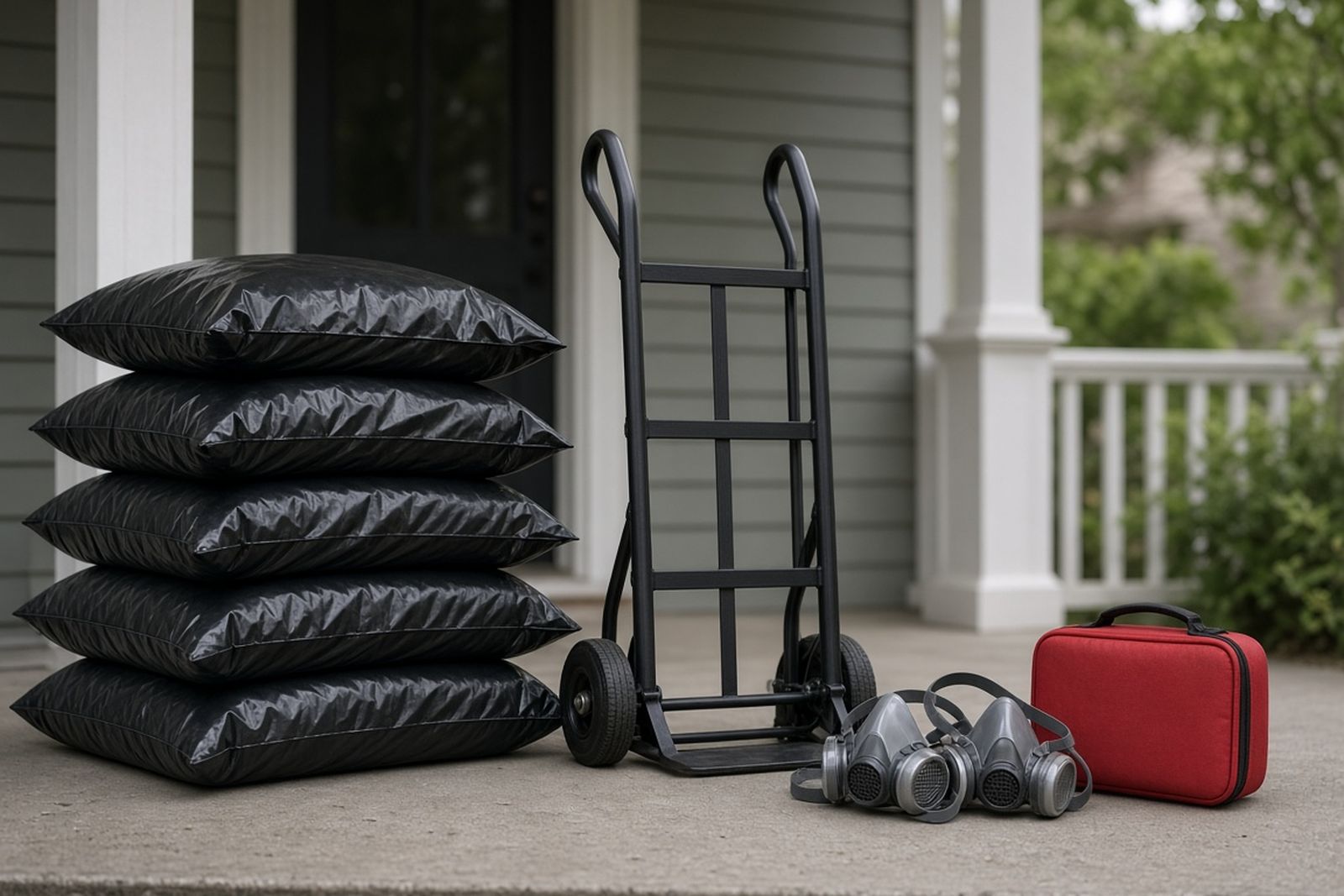
The type of respirator depends on what the assessment finds. Particulate filters address dust and spores, while cartridges designed for ammonia or other vapors are needed where odors and gases are the concern. Many crews choose full-face respirators in the worst rooms because they also protect the eyes. Under OSHA's respiratory protection standard, any technician wearing a required respirator must be medically cleared, fit tested and trained.
Where wild rodent droppings are present, public health guidance advises against sweeping or vacuuming dry material because it can put particles in the air. Crews wet the droppings with disinfectant, wait for the contact time and then pick them up, all while wearing appropriate respiratory protection.
Fit matters as much as filter choice. A respirator that leaks around the edges protects very little, which is why technicians are fit tested on the exact make and size they use and perform a seal check every time they put it on.
Gloves, suits, footwear and eye protection
Gloves need to handle both biological material and physical hazards. Nitrile gloves protect against fluids and waste, but they tear easily on sharp debris. Many crews wear puncture- or cut-resistant work gloves over nitrile when moving piles, then switch to nitrile alone for detailed cleaning.
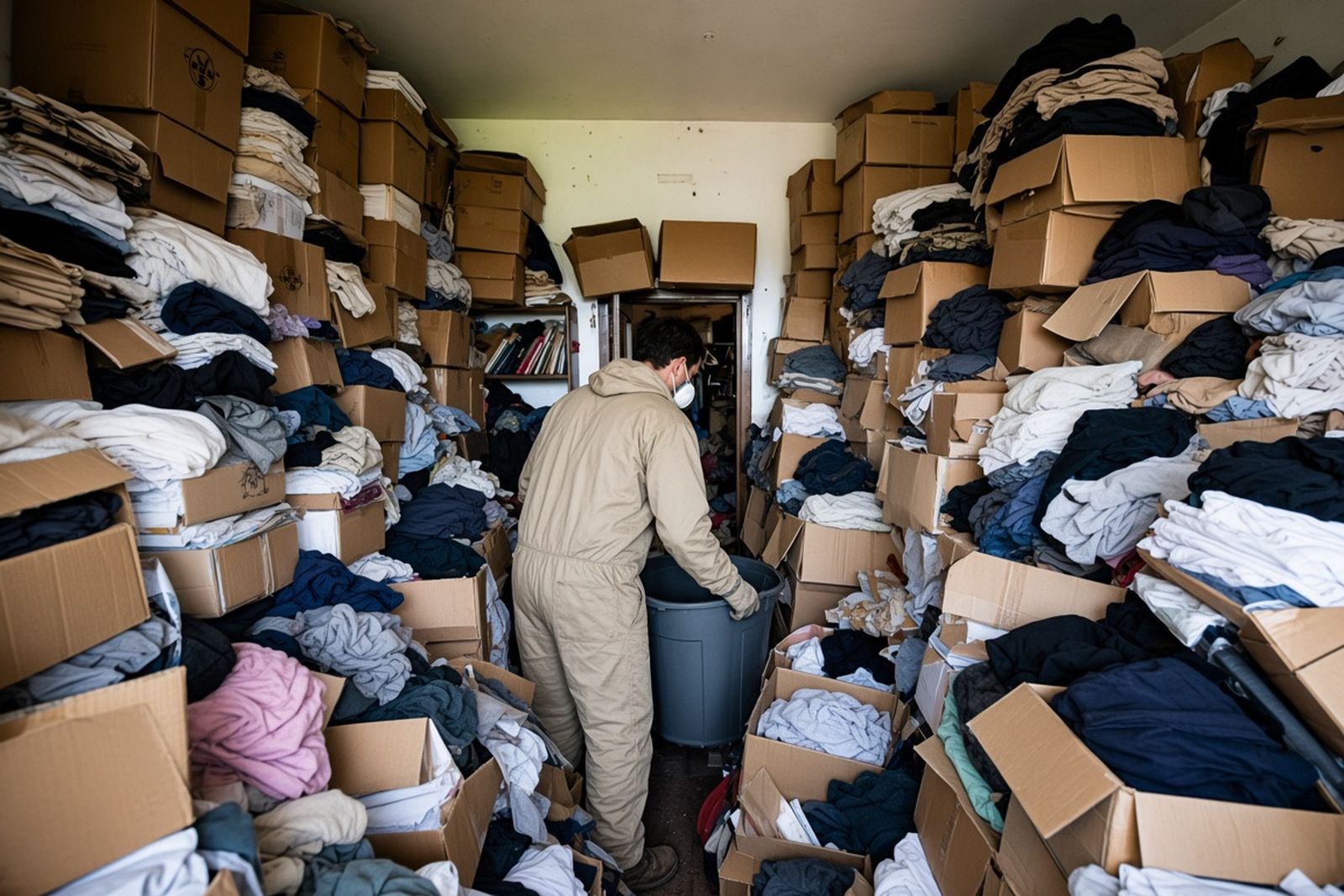
Disposable coveralls keep dust, waste and pests off clothing and skin. In rooms with heavy animal waste or liquids, fluid-resistant suits with hoods and boot covers are more appropriate. Sturdy, puncture-resistant boots are important in almost every hoarded home, because the floor is often invisible and may hide nails, glass or needles.
Eye protection matters even in rooms that seem dry. Dust, falling items from high stacks and splashes from cleaning products can all reach the eyes. Hard hats may be appropriate when crews are working beneath tall, unstable piles or in areas where ceilings have been damaged by leaks.
Heat, fatigue and rest breaks
Protective clothing has a cost in comfort. Hoarding jobs often run for days in homes where the power, air conditioning or water has been shut off, and technicians in coveralls and respirators lose heat slowly while lifting bags and boxes. Supervisors plan shaded or cooled rest areas, water breaks and job rotation so that nobody is lifting in a heavy suit for hours without relief. Fatigue leads to careless handling, and careless handling is when sharps injuries and falls happen.
How animal hoarding changes the plan
Homes where many animals lived present some of the most demanding conditions in this field. Urine saturates flooring and subflooring, feces accumulate in layers, and ammonia can build up to levels that make rooms difficult to enter. Parasites and fleas may be present, and some animals may have died inside the home.
The scale can be large. In a 1999 review of 54 animal-hoarding case reports published in Public Health Reports, Patronek found that the median number of animals per case was 39. Crews entering homes like these usually plan for fluid-resistant suits, full-face respirators with cartridges suited to ammonia, and frequent breaks outside.
Animal welfare or control officers are often involved before a cleanup crew arrives, and surviving animals should be removed before remediation begins. Crews should not be asked to handle live animals as part of cleanup unless they are trained and equipped to do so.
Reassessing as the layers come out
A hoarded room reveals itself gradually. The top layer may be paper and clothing, while the bottom foot contains spoiled food, pet waste or water damage. A room that was assessed as dry and low-risk on day one can look very different by day three.
Good supervisors treat the PPE assessment as a living document. When technicians uncover something new, such as sharps, mold growth, a dead animal or leaking chemicals, work pauses and the plan is updated. Technicians are encouraged to stop and ask rather than push through with inadequate gear.
This reassessment also affects waste. Items once destined for ordinary disposal may need to be separated if they are contaminated with sharps or bodily fluids. Your contractor should know how such items must be packaged and where they can go.
One house, three PPE levels
Here is a made-up job to show the idea. A daughter hires a crew to clear her late father's ranch house. The living room and hallway are filled with stacked magazines, boxes and clothing. The kitchen contains years of spoiled food and heavy insect activity. A back bedroom held several cats, and the floor beneath the clutter is soaked.
The supervisor's assessment sets three levels. In the living room, technicians wear disposable coveralls, cut-resistant gloves over nitrile, safety glasses, sturdy boots and half-face respirators with particulate filters. In the kitchen, they add boot covers and switch to fluid-resistant suits because of spoiled liquids and pests. In the cat room, they wear full-face respirators with cartridges suited to ammonia, fluid-resistant suits with hoods and take breaks more often.
Midway through the living room, a technician finds a shoebox of used insulin syringes. Work pauses, a sharps container is brought in and the crew adopts tongs for the rest of that area. That is how PPE can shift within a single home.
Donning and doffing: keeping contamination contained
Contamination spreads easily in a hoarded home because crews carry material through narrow paths to reach the exit. A clear route, a dedicated doffing area near the door and a routine for removing gear in the right order keep dust, waste and pests from traveling into cleaned rooms, vehicles and technicians' homes.
Family members who want to help sort belongings should be offered protection too. A company can set up a staging area outside or in a cleaned room where relatives can review items in gloves and masks, away from the worst conditions. Relatives should not enter active work areas in street clothes, even for a quick look.
If anyone who lived in the home or visited often has breathing problems, rashes or other symptoms, encourage them to see a doctor. Those conditions are not something a cleanup crew can diagnose or treat.
Questions to ask a company about PPE
You can gauge a company's approach with a handful of plain questions. Solid answers show that protective equipment follows the hazards in your home rather than a one-size-fits-all routine.
- Will you do a written hazard assessment for each room, and update it as you go?
- How will you handle ammonia, mold and rodent droppings if you find them?
- Are your technicians fit tested and medically cleared for respirators?
- What gloves and boots do you use to protect against hidden sharps?
- Where will crews change gear, and how will you keep contamination out of cleaned areas?
- Can family members safely help sort belongings, and what protection will you provide them?