Short answer
Hoarding cleanup has shifted from one-time forced clean-outs, often ordered by a city or landlord, toward approaches that treat hoarding as a mental health condition. Modern practice pairs hazard control and sanitation with resident involvement, harm reduction, careful sorting, documentation for agencies and coordination with clinicians and community task forces, because research showed that clearing a home without support rarely lasts.
How were hoarded homes handled in the past?
For many years, a severely cluttered home was usually treated as a sanitation or code problem and nothing more. A neighbor complained, an inspector visited, and the resident was ordered to clean up. If that did not happen, the city, a landlord or relatives might hire laborers to empty the house.
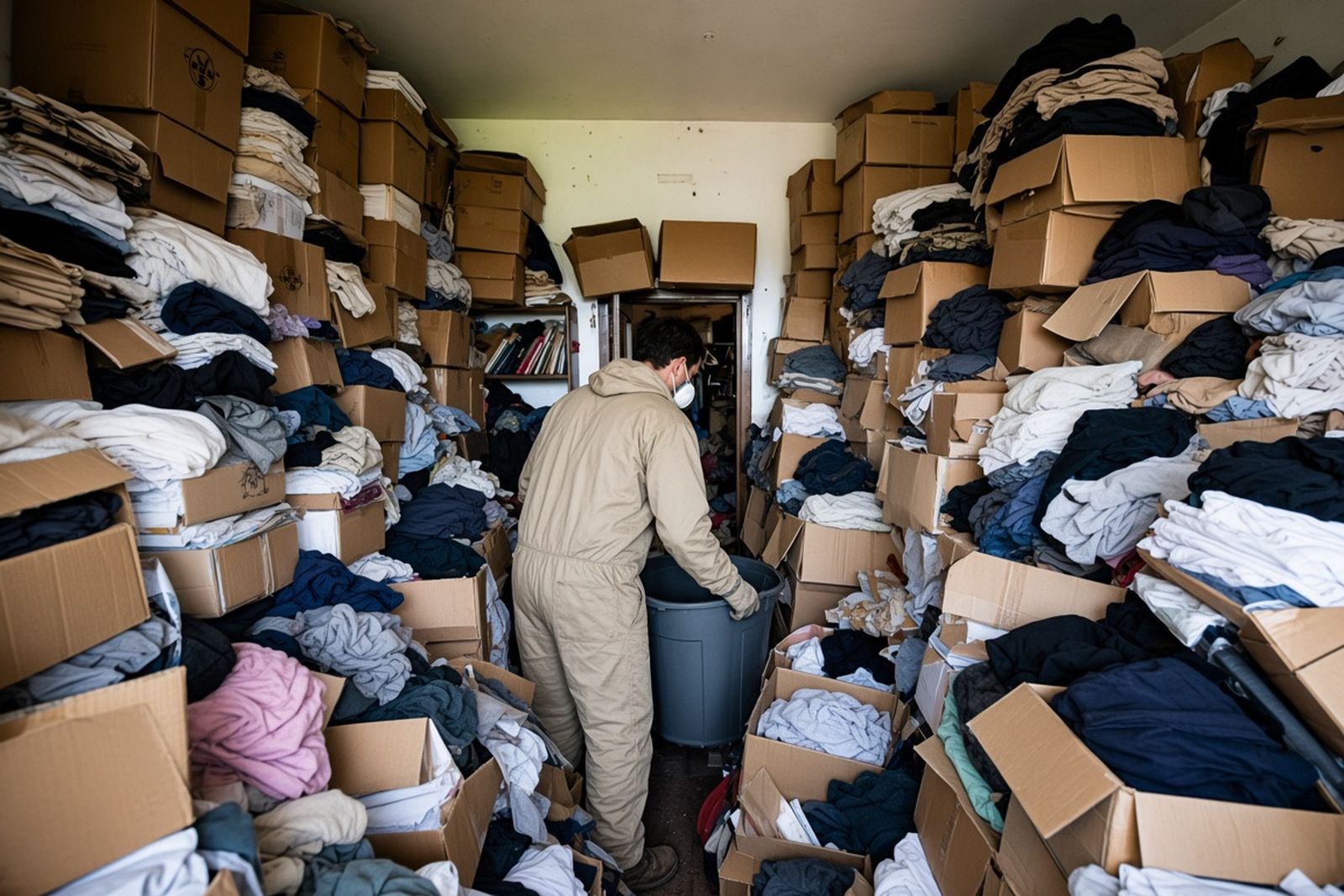
Those clean-outs were often fast and forceful. Crews filled dumpsters with little or no sorting. Residents were sometimes excluded from the process or learned about it after the fact. Important papers, keepsakes and valuables were frequently lost alongside trash.
The approach could satisfy an immediate order, but it tended to leave the resident traumatized and distrustful. In many cases the home filled up again, and the cycle of complaints and clean-outs repeated.
Language reflected the attitude of the time. Residents were often described in terms that suggested laziness or moral failure, and the home was framed as a nuisance to be removed rather than a symptom of something the person was struggling with. That framing made it easy to justify excluding the resident from decisions.
When did researchers start treating hoarding as a community health issue?
A turning point came when researchers began documenting how often hoarding showed up in the work of local agencies. A widely cited study by Frost, Steketee and Williams, published in Health and Social Care in the Community in 2000, surveyed Massachusetts health officers. It found that only half of hoarders recognized the lack of sanitation in their home and fewer than one-third cooperated willingly to resolve the complaint.
That finding helped explain why forced clean-outs so often failed. If a resident does not see the problem the way officials do, and does not agree to the solution, clearing the home once does little to change what happens next.
Research over the following years looked at the broader burden. In a 2008 study in Psychiatry Research, Tolin and colleagues found that among 864 self-identified hoarders, hoarding was associated with an average of 7.0 work-impairment days in the past month, comparable to psychotic disorders. Findings like these framed hoarding as a serious condition affecting health, work and housing, not a matter of tidiness.
Recognizing hoarding as a disorder changed cleanup
As clinicians came to recognize hoarding disorder as a distinct mental health condition, rather than only a feature of other disorders, the expectations placed on cleanup began to change. If hoarding is a condition, then removing belongings without treatment is like treating a symptom while ignoring its cause.
Cleanup companies that wanted to do the work well started to adopt ideas from mental health practice. They began involving residents in decisions, working in shorter sessions, respecting attachment to certain items and coordinating with therapists, social workers and professional organizers.
That shift did not replace the need for hazard control. Mold, animal waste, pests and fire risk are still real. What changed was the recognition that safety work and the resident's wellbeing are linked, and that ignoring either one tends to produce poor outcomes.
Training followed. Some cleanup firms began sending supervisors to courses on hoarding disorder and motivational interviewing, and some started hiring staff with social work or counseling backgrounds. Crews learned to ask permission before touching items, to explain what they were doing and to recognize when a resident needed a break.
What is harm reduction, and why did it spread?
Harm reduction is an approach that focuses first on the most serious risks, rather than on making the home perfectly tidy. In a hoarding context, that often means clearing exits and walkways, removing rotting food and waste, making sure smoke alarms work, and fixing urgent structural or utility problems.
Fire risk is a big reason this approach gained ground. Fire services and housing providers noticed that hoarded homes posed outsized dangers. In a 2022 study of council tenancies with a large social landlord in England by Porter and colleagues, 34 percent of recorded hoarding cases were flagged as presenting fire and environmental risk. Addressing those risks quickly, even when a full cleanup is not yet possible, protects residents, neighbors and first responders.
Harm reduction also recognizes that progress may be gradual. A resident who accepts a safer home with some remaining clutter may be better off, and more stable, than one who is forced through a total clean-out and then refuses further help.
Task forces and partnerships
Because hoarding touches so many systems, many communities formed hoarding task forces or coordinated response teams. These groups can bring together representatives from different services so that residents are not passed from one agency to another.
Typical participants in these partnerships include:
Task forces also changed how cleanup companies get involved. Rather than arriving alone with a crew and a truck, a company may now be one part of a plan that already includes a caseworker, a timeline agreed with code officials and a clinician who will continue working with the resident afterward. That context tends to make the cleanup itself calmer and more productive.
- Local health and code enforcement departments.
- Fire departments and fire prevention officers.
- Adult and child protective services.
- Mental health clinicians and case managers.
- Housing authorities, landlords and tenant advocates.
- Animal control and humane organizations, in animal hoarding cases.
- Cleanup companies and professional organizers.
Changes in the cleanup work itself
The physical work evolved alongside the social approach. Crews increasingly assess hazards before starting, use protective equipment suited to mold, ammonia and biological waste, and follow bloodborne pathogen practices when human waste or sharps are present.
Sorting became more structured, with clear categories for items to keep, donate, recycle, discard and dispose of as hazardous waste. Many companies now keep inventories of documents, cash, medications and valuables found during the work, and photograph progress in each room.
Cleaning and disinfection after removal also became standard for better companies. Taking items out is only part of the job. Floors, walls, kitchens and bathrooms often need thorough cleaning, and odor sources such as animal urine may require targeted treatment before a home is truly livable.
Animal hoarding brought its own changes. Crews working in homes with many animals, or with signs of animal waste built up over time, learned to coordinate with animal welfare organizations and to plan for heavy ammonia levels, damaged subfloors and the need for extensive odor treatment. Those jobs pushed the field to take respiratory protection and structural assessment more seriously.
Challenges that remain
Progress is uneven. Many areas still lack coordinated services, and families may find that the only option offered is a fast clean-out. Access to clinicians trained in hoarding treatment varies widely, and waiting lists can be long.
Legal pressure can also push toward speed. Eviction deadlines, code orders and safety concerns sometimes leave little room for gradual work. Balancing urgency and respect remains one of the hardest parts of the field.
The office that issued an order can explain exactly what it requires and by when, and a local health department or area agency on aging may know whether a hoarding task force serves the area.
Stigma is another persistent problem. Residents may still hide their situation for years out of shame, which allows hazards to grow. Families may hesitate to ask for help for the same reason. Public education, and a calmer and more respectful tone from the companies that do this work, are part of changing that pattern.
What does this history mean for you when you hire help?
Knowing how the field has changed helps you ask better questions. A modern hoarding cleanup company should be able to explain how it handles hazards, how it involves the resident, how it sorts and documents items, and how it coordinates with other services.
Be cautious of a company whose only plan is a dumpster and a deadline. That approach belongs to an earlier era, and research has shown why it so often fails.
The best outcomes usually come from combining solid technical work with patience and ongoing support. The cleanup is an important step, but it works best as part of a longer plan that keeps the resident safe and involved.
Sources
- Health & Social Care in the Community (Frost, Steketee & Williams) — Hoarding: a community health problem
- Psychiatry Research (Tolin et al.) — The economic and social burden of compulsive hoarding
- Porter et al. — Council tenancies and hoarding behaviours: A study with a large social landlord in England