Short answer
A hoarded home becomes hazardous through predictable processes: trapped moisture feeds mold, food and waste decompose, animal urine releases ammonia, pests breed in undisturbed layers, and dense paper and fabric raise fire risk while blocking exits. Professional cleanup addresses each process in order, while respecting that hoarding disorder is a mental health condition, not a housekeeping failure.
Why does clutter turn into a health hazard over time?
Clutter on its own is mostly a matter of space. It becomes a health hazard when it starts to change the environment inside the home. Layers of belongings block airflow, hold moisture against floors and walls, hide spills and leaks, and give insects and rodents a protected place to live.
Those changes happen slowly, which is part of why they go unnoticed. A single bag of recycling in a corner is harmless. Years of bags stacked against an exterior wall, with no air moving behind them, can create a damp, dark pocket where mold grows and wood begins to rot.
Understanding the science does not mean judging the person who lives there. It means knowing where the real risks are so the cleanup can target them safely and in the right order.
Moisture: the engine behind most problems
Moisture drives most of the biological problems in a cluttered space. Everyday activities such as cooking, bathing and breathing release water vapor. In an open room, that vapor disperses. In a room packed with paper, cardboard and textiles, those porous materials absorb it and release it slowly, keeping the local humidity high.
Leaks make it much worse. A dripping pipe under a sink or a failing roof may go unrepaired for years if nobody can reach it. The water soaks into stacked materials, which act like a sponge pressed against drywall and subflooring.
Where moisture persists, mold follows. Mold spores are present in nearly every indoor environment, but they need damp organic material to grow. Paper and cardboard are ideal food. Once colonies establish, disturbing them during cleanup can release spores into the air, which is why crews control dust and wear respiratory protection when they move saturated items.
Decay, animals and pests
Food packaging, spoiled groceries and household waste decompose through the action of bacteria and fungi. Decomposition produces gases and liquids, and in an enclosed space those byproducts concentrate. The strong odors many families notice are signs of that ongoing breakdown.
Animal waste adds another layer. Urine contains urea, which bacteria convert into ammonia. In a home with many animals and little ventilation, ammonia can build to levels that irritate the eyes and lungs. Urine also soaks deep into carpet, pad, subfloor and even drywall, so the odor source is often far below the visible surface.
Animal hoarding is its own public health issue. A 1999 review in Public Health Reports by Patronek found animals dead or in poor condition in 80% of animal-hoarding cases. When animals are present, animal control or a humane agency usually needs to be involved before or alongside the cleanup crew.
Human waste is sometimes present when plumbing has failed or bathrooms have become inaccessible. Any bodily fluid is handled as a potential biohazard, with the same precautions a crew would use at any other biohazard scene.
Rodents and insects follow food, water and shelter, and a hoarded home can offer all three. Undisturbed piles give mice and rats places to nest, and droppings, urine and nesting material accumulate over time.
Rodent droppings are a concern because of the diseases some rodents carry. Dried droppings can be broken into particles and inhaled if they are swept or vacuumed with ordinary equipment. Professional crews wet the material with a disinfectant first and remove it carefully instead of sweeping.
Cockroaches, bed bugs, fleas and flies may also be present. Pest control is often scheduled before the main cleanout and again afterward, because moving belongings can scatter insects into other rooms or neighboring units.
Insects also leave residue of their own. Cockroach droppings and shed skins are known allergens, and they collect in the same layers that hold dust and food debris. That is one reason people with asthma sometimes notice their breathing improves after a thorough cleanout, even before any odor work is finished.
Why is fire such a serious concern in these homes?
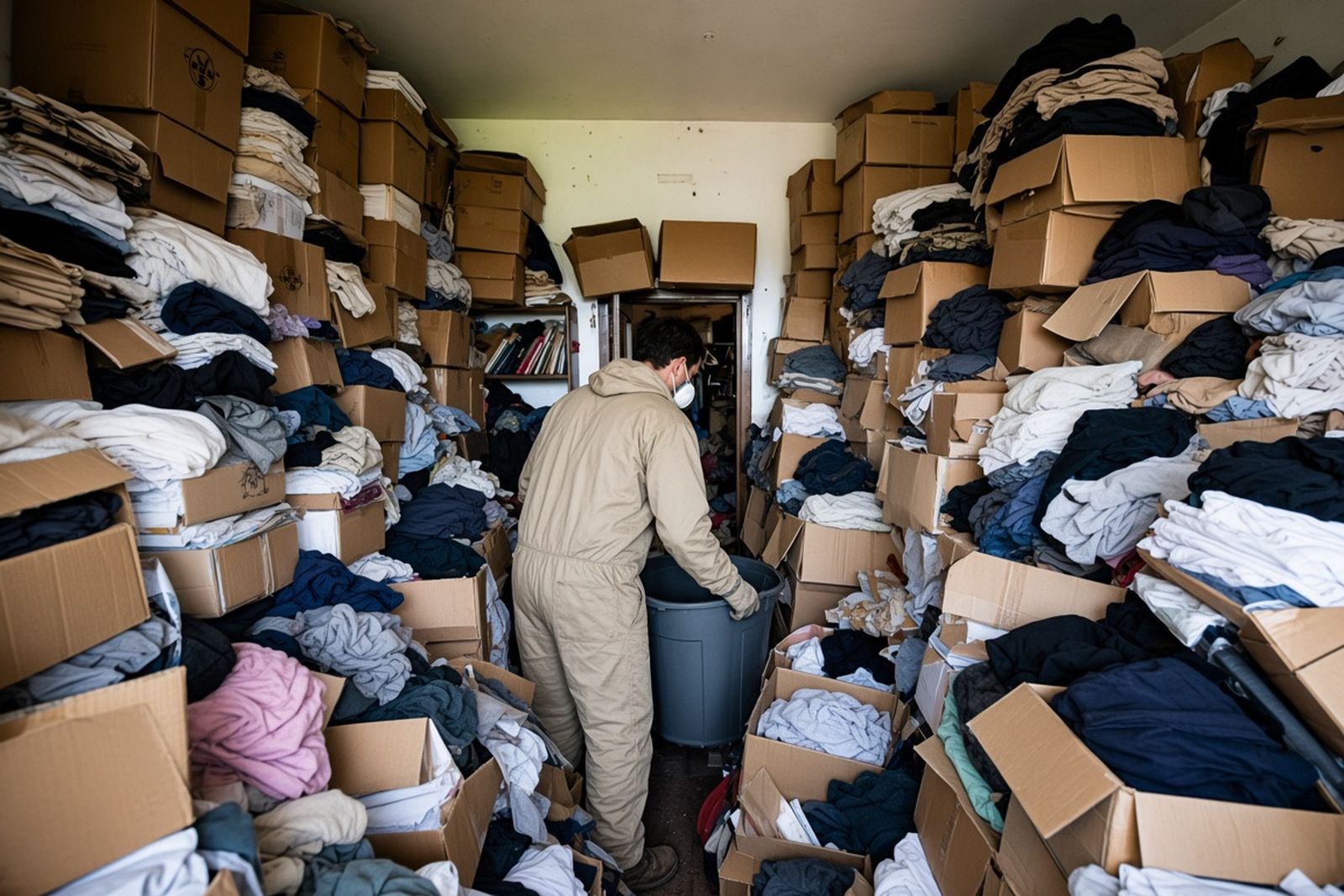
Fire science explains why firefighters take hoarded homes so seriously. Paper, cardboard, clothing and plastic are all fuel. When they fill a room from floor to ceiling, a small ignition source such as a space heater or overloaded extension cord has a great deal to burn, and blocked pathways make escape and rescue difficult.
Research reflects that danger. An analysis by Worcester Polytechnic Institute and the Metropolitan Fire Brigade in Melbourne, Australia, published in 2009, found that only 40% of hoarding fires were contained to the room of origin versus about 90% of average residential fires, with damages 8 times and response costs 16 times higher.
Stacked weight is a related issue. Heavy piles of paper, books or water-damaged goods can overload floors, especially in older homes or upper stories. Crews look for sagging floors, cracked ceilings below and doors that no longer close, and they may bring in a structural professional before removing weight from a compromised area.
Electrical systems deserve a close look too. Outlets buried behind piles, cords run under rugs and appliances that no longer vent properly all add ignition risk. Many crews ask an electrician to inspect the home once the walls and outlets are visible again.
How the psychology of hoarding shapes the physical work
Hoarding disorder is a recognized mental health condition. People who live with it often feel intense distress at the idea of discarding items, and they may attach meaning or safety to belongings that others see as worthless. A meta-analysis by Postlethwaite, Kellett and Mataix-Cols in the Journal of Affective Disorders in 2019 estimated the prevalence of hoarding disorder at 2.5%, with similar rates in men and women.
That reality matters for the science of cleanup. A rapid, forced clearance may remove the physical hazards, but it can be deeply traumatic, damage trust and lead to the home refilling. When time allows, many professionals work alongside a therapist, case manager or family member, sorting in stages and letting the resident make decisions about keepsakes.
When a health or safety deadline forces a faster pace, respectful communication still counts. Explaining what will happen, setting aside items the person identifies as important and avoiding comments about the condition of the home all help protect the person's dignity.
Putting the science into practice
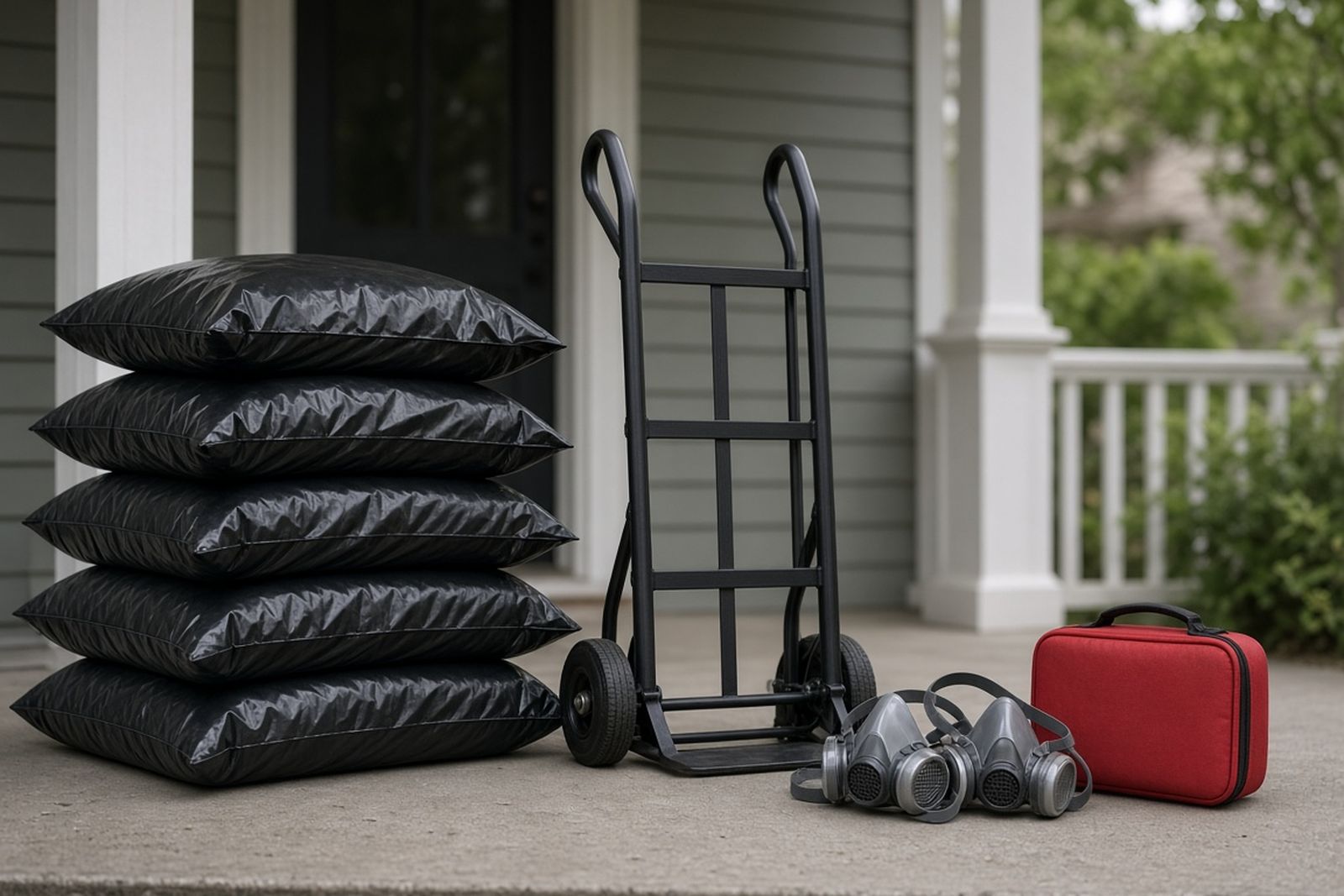
A room that has been closed for years deserves extra caution. A musty odor at the door or a soft spot in the hallway floor nearby suggests a long-running leak, so crews set up air filtration, put on respirators and protective suits, and plan a removal path to the exterior before opening the room fully. That way wet, moldy material is not carried through rooms that are already clean.
A sound hoarding cleanup follows the hazards rather than the clutter. The general order looks like this, adjusted to each home.
- Assess structural safety, utilities, animals, sharps and signs of biohazards before moving anything.
- Establish a clear exit path and a staging area outside the home.
- Control dust and spores with air filtration and by misting materials before disturbing them.
- Sort with the resident or family where possible, separating keep, donate, recycle and discard.
- Remove saturated and contaminated porous materials rather than trying to save them.
- Clean hard surfaces with detergent, then disinfect with a registered product for the labeled contact time.
- Address odor at its source, which may mean removing flooring or sealing subfloors.
- Coordinate repairs for leaks, electrical hazards and damaged structure before the home is reoccupied.
What should you do if you are worried about someone's home?
Start with safety and compassion together. If there is an immediate danger, such as a gas smell, a fire hazard or a person who cannot get out, call emergency services. Otherwise, try to talk with the person privately and without criticism about what feels hardest for them.
A mental health professional who understands hoarding disorder can be a valuable partner, and many communities have hoarding task forces that bring together health, housing and social service agencies. Your local health department can often tell you whether code enforcement, adult protective services or a housing agency has a role in the home you are concerned about.
When cleanup does move forward, choose a team that explains the hazards plainly, protects the resident's privacy and treats the person as a partner in the process.
Sources
- Journal of Affective Disorders (Postlethwaite, Kellett & Mataix-Cols) — Prevalence of Hoarding Disorder: A systematic review and meta-analysis
- Worcester Polytechnic Institute / Metropolitan Fire Brigade — An Analysis of Fire Incidents Involving Hoarding Households
- Public Health Reports (Patronek) — Hoarding of Animals: An Under-Recognized Public Health Problem in a Difficult-to-Study Population