Short answer
Before a hoarding scene cleanup begins, assess ten risks: unstable stacks and falls, blocked exits and fire load, overloaded or rotted floors, mold, animal and rodent waste, human waste and spoiled food, hidden sharps, dangerous household items such as chemicals and firearms, electrical and utility hazards, and the emotional and legal risks of moving too fast. Each one changes how and in what order the work should happen.
Why does a hoarding cleanup need a safety assessment first?
A hoarded home can hide hazards that are invisible from the doorway. Stacks may be unstable, floors may be weakened, and waste, mold or sharps may be buried under layers of belongings. Starting to haul things out without a plan can lead to injuries, exposures and damage to the home.
An assessment also protects the resident. It helps the crew identify items the person values, understand any deadlines from a landlord or code enforcement office and plan a pace that respects the person's well-being.
The ten risks below are the ones experienced crews check before the first bag is filled. Knowing them can help you evaluate a cleanup company's plan or decide whether a family-led effort is safe.
It is worth doing the assessment even when time is short. Twenty careful minutes at the start can prevent a crew member from falling through a weakened floor, a family member from being stuck by a needle or a box of irreplaceable photographs from ending up in a dumpster. Speed that skips this step usually costs more time later.
Risks 1 and 2: unstable stacks and blocked exits
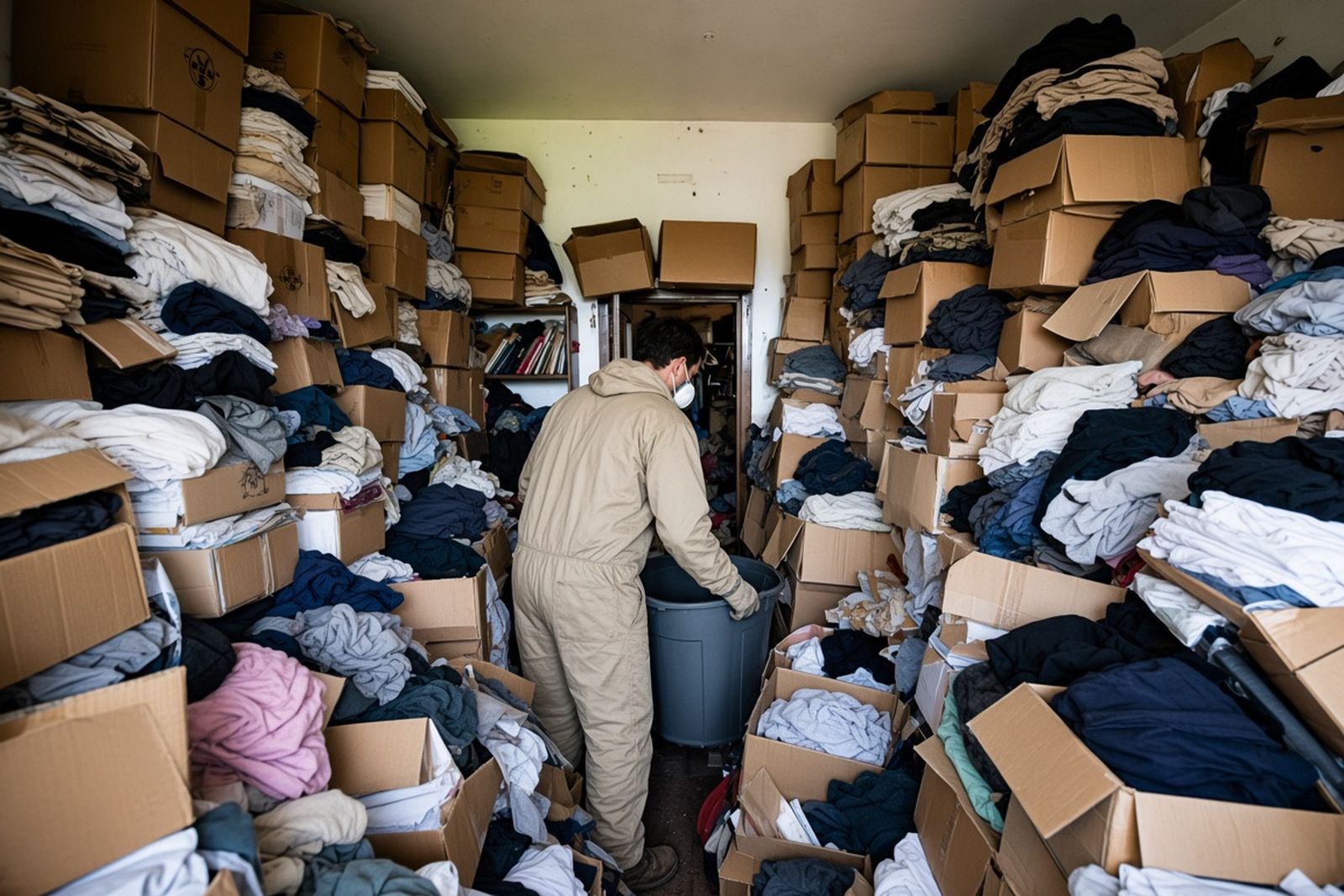
The first risk is collapse and falls. Tall stacks of boxes, papers or furniture can topple when disturbed. Narrow pathways, loose items underfoot and poor lighting make trips and falls likely. Crews look for leaning piles, overloaded shelves and items stored above head height, and they plan to work from the top down and from the entrance inward.
The second risk is blocked exits and fire load. Paper, cardboard and textiles are fuel, and blocked doors and windows make escape difficult. Research from Melbourne, Australia, shows how serious this can be. A 2009 analysis by Worcester Polytechnic Institute and the Metropolitan Fire Brigade found that over ten years, 48 hoarding fires were only 0.25% of residential fires but 10 were fatal, accounting for 24% of all preventable residential fire deaths.
Assessment means identifying every exit, clearing at least one safe path early in the work and removing ignition sources such as space heaters or overloaded extension cords near combustible piles.
Risk 3: floors and structure
Years of accumulated weight, combined with hidden leaks, can weaken floors and ceilings. Stacks of books, magazines, water-damaged goods and appliances are heavy. Where a pipe or roof has leaked unnoticed, subfloor and joists may be rotted.
Warning signs include floors that feel soft or bouncy, visible sagging, cracks or stains on ceilings below, and doors that no longer close properly. In multi-story homes or apartments, removal of heavy items from an upper floor may need to be planned carefully.
When there is any doubt, a structural professional should look at the area before heavy work begins. A crew that stops to call in an expert is protecting everyone, including neighbors below.
Stairs deserve their own look. Items stored on steps, loose treads and missing handrails are common in cluttered homes, and stairs are where heavy loads are carried. Clearing and checking the stairway early makes every later trip safer.
Risks 4, 5 and 6: mold, animal waste and human waste
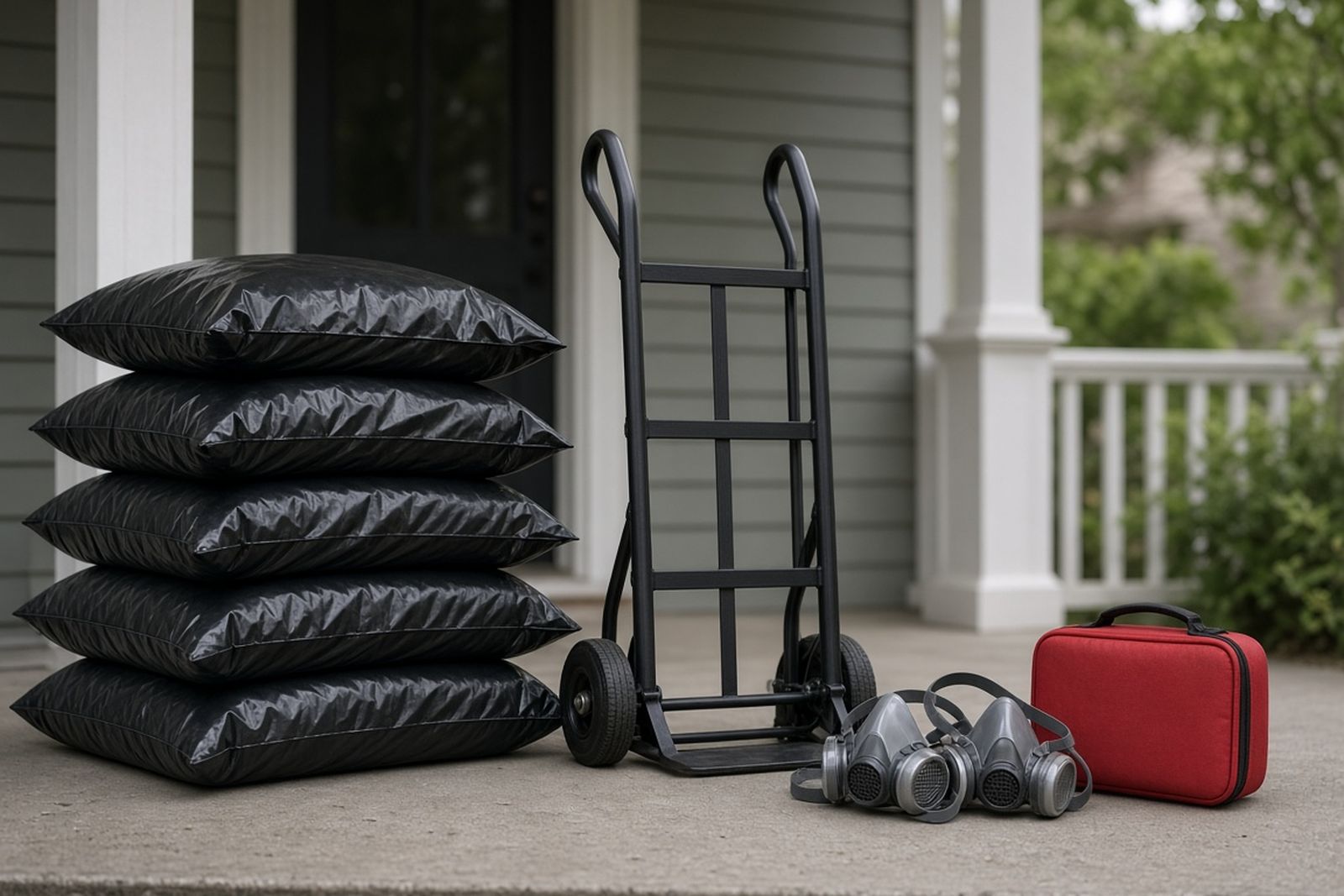
The fourth risk is mold. Trapped moisture in piles of paper and fabric feeds mold growth, especially against exterior walls and in bathrooms, kitchens and basements. Disturbing moldy materials can release spores. Crews wear respirators, mist materials before moving them and use HEPA air filtration in affected rooms.
The fifth risk is animal and rodent waste. Droppings, urine and nesting material accumulate in undisturbed areas. Urine produces ammonia, which can build up in closed rooms. Rodent droppings should be wetted with disinfectant and removed carefully rather than swept. If live animals are present, animal welfare agencies may need to be involved first.
The sixth risk is human waste and spoiled food. When plumbing fails or bathrooms become inaccessible, human waste may be present. Spoiled food attracts insects and produces odors and liquids. Both require biohazard precautions, including fluid-resistant suits, gloves and eye protection.
Risks 7 and 8: sharps and dangerous household items
The seventh risk is hidden sharps. Needles from diabetes care, other medical needs or past drug use, along with broken glass and rusted metal, can be buried anywhere. Crews use puncture-resistant gloves, avoid reaching into piles blindly and carry sharps containers.
The eighth risk is dangerous household items. Propane cylinders, gasoline, pool chemicals, pesticides, paint, old medications, ammunition and firearms can all turn up in a cleanout. Some are flammable, some are toxic and some are legally sensitive.
Assessment includes asking the resident or family about any such items before work begins and agreeing on a protocol if something is found. Agree too on who will call the county household hazardous waste program, a pharmacy take-back site or the police non-emergency line if something turns up.
Risk 9: utilities and electrical systems
Electrical hazards are common in homes where outlets and panels have been blocked for years. Extension cords may run under piles, outlets may be overloaded and some wiring may have been damaged by pests or moisture. Gas appliances may not have been serviced, and water heaters or furnaces may be surrounded by combustible material.
Some homes have had utilities shut off, which creates other problems: no lighting, no running water for cleaning and no heat or cooling for the crew. Others have plumbing that leaks or backs up when used.
Before work begins, crews check whether utilities are on, locate the electrical panel and water shutoff if possible and avoid plugging equipment into questionable circuits. An electrician or plumber may be needed early in the process.
Carbon monoxide is a quiet risk in this category. Fuel-burning appliances with blocked vents or poor maintenance can leak it without any smell. Placing a working carbon monoxide alarm in the home during the cleanup, and leaving one behind afterward, is an inexpensive precaution.
Risk 10: Why are emotional and legal risks part of safety?
Hoarding disorder is a mental health condition, and a cleanup can be deeply distressing for the person living in the home. Moving too fast, discarding items without consent or making dismissive comments can cause lasting harm and often leads to the home filling again.
There can also be legal considerations. Landlords, code enforcement, adult protective services or courts may be involved, with deadlines and requirements.
Assessment means clarifying who has authority to make decisions, what deadlines exist and how the resident wants to be involved. Pairing the cleanup with support from a mental health professional or case manager can reduce harm. If the resident expresses thoughts of suicide, the 988 Suicide and Crisis Lifeline is available by call or text.
From findings to a plan
A walkthrough produces a list of findings, and each one should lead to a specific step. A space heater next to a pile of newspapers is unplugged and removed first. A leaning hallway stack comes down from the top. A back door blocked by furniture is cleared to create a second exit.
Cockroaches in the kitchen mean pest control goes on the schedule. A soft bathroom floor near the toilet is flagged for a contractor. A spare room with mouse droppings and a strong ammonia odor is misted with disinfectant before the droppings are removed. A firearm the family mentions is located and secured before sorting begins.
None of this has to happen without the resident. Items can still be reviewed with the crew in short sessions while the hazards are handled in order.
A ten-point checklist before work begins
Walk through these ten points before any cleanup starts, whether you are hiring a crew or organizing a family effort.
- Identify unstable stacks and plan to work from the top down.
- Locate all exits and clear at least one early; remove ignition sources near piles.
- Check floors and ceilings for sagging, softness or water damage.
- Look and smell for mold, and plan respiratory protection and air filtration.
- Check for animal or rodent waste and whether live animals need care.
- Identify human waste or spoiled food and plan biohazard precautions.
- Assume sharps may be hidden and use puncture-resistant gloves.
- Ask about chemicals, fuels, medications, ammunition and firearms.
- Confirm utilities, locate shutoffs and avoid questionable circuits.
- Clarify decision-making authority, deadlines and the resident's wishes.