Northeast · US

Hoarding Scene Cleanup Planning in Manhattan, NY

Planning hoarding scene cleanup in Manhattan, NY

Manhattan high-rise cleanup plans cover freight elevators, wall units and shafts, bedroom exits first, and consent files that a co-op board can accept. This is planning guidance, not a claim of a local office or crew in Manhattan.

Get an email reply about hoarding scene cleanup

Send a short message to the follow-up inbox. A coordinator can reply by email. This form does not send emergency help; call 911 first if anyone is in danger.

Tell us what you need help with. Share a short description; please leave out medical details, access codes, and other sensitive information.

A request does not confirm a booking. For immediate danger, contact local emergency services.

Or email info@hoardingcleanup.online

Direct answer

The short answer for Manhattan, NY

Island high-rises and prewar elevator co-ops turn a Manhattan cleanout into a problem of freight elevators and shafts. Bedroom exits come first. Bags ride sealed in the elevator. Mind the PTAC units (heating and cooling units set in the wall). Keep files ready for the board. Use FDNY and NYC Health guidance, and don't make up borough clearance numbers.

Editorial guide · Biohazard Remediation NetworkUpdated 2026-07-22Location focus: Manhattan, NY

Local planning context

Midtown service elevators, prewar buildings on the Upper West Side, and downtown loft conversions share one limit. Everything leaves through shafts that doormen and neighbors across the courtyard can watch. PTAC units in the wall and bathroom fans can spread dust if air moves carelessly while piles come down. Tourist crowds on the sidewalk cut the minutes you can use the curb. Planning starts with the managing agent's work orders and the unit's exits, not with perfume machines that hide dirt that's still there.

FDNY and NYC Department of Health and Mental Hygiene websites help owners with safety and environmental health questions. HPD pages add context on housing conditions. This guide doesn't make up a borough rule with a lab number for everyday clutter. Boards still expect photos at each step, waste notes, and permission letters, even when no number-based clearance stamp exists. The risk of spreading dirt goes up when soft goods ride uncovered in passenger elevators.

Estate sales and co-op interviews call for lots of paperwork. Build stations inside labeled Keep, Donate, Release, and Regulated (special disposal). Move medicine into a sealed tote early. Use dated hold boxes when heirs disagree. Keep soft goods sealed in the elevator. Medical diagnosis is not part of cleanup. Once the unit is emptied, write up pest sealing, floors, and new filters each as its own job. That way nobody mistakes cleaning for a remodel.
Property considerations

Book the freight elevator, or write a plan for a padded passenger elevator, before hauling.

Open lanes from the bedrooms to the apartment door before deep sorting.

Turn off or seal the wall units and fans during dusty pulls, when it's safe and building staff agree.

Route bags through the service entrance so they never pass the package room or lobby seating.

Get the managing agent's approval for elevator pads, hours, and hallway runners.

Pause in rooms where floors bounce or doors stick under stacked paper.

Response-planning framework

Agent paperwork and the unit's exits

Get written approval for elevator use and hours. Separately, name who may approve throwing out what's in the unit. Walk from the bedrooms to the apartment door and bathroom. Photograph blocked spots. Uncover smoke detectors. Write down who holds the keys before bulky removal starts, so a lockout halfway through the day doesn't leave sealed carts stuck in the hall.

Moving sealed loads in the elevator

Use sealed containers every time anything goes up or down. Use the freight elevator if you can. Otherwise, hang pads in a passenger car and run it off-peak. Stay aware of trash chutes and utility shafts during dusty work. Clean the carts before they leave the floor. Photograph the hallway runners for the board file, so reviewers later see that protection went in before the first bag moved.

Sorting at a pace that minds the wall units

Keep the air units off while dusty piles come down. Build consent stations inside. Prescriptions, IDs, and co-op or lease papers go into a sealed tote before the first freight elevator run. Disputed items go into dated hold boxes, with photos for heirs who live far away. Family who arrive without masks or gloves keep their hands out of nests. Take keepsakes one room at a time so nobody faces a flood of snap judgments.

A board archive with no fake stamps

Gather exit photos, elevator protection pictures, waste notes, notes on the air filters, and a move-out statement listing unfinished remodel work. Keep cleaning steps apart from remodeling the board has approved. Don't claim odor machines equal clearance. Give the packet in a form the board can file next to its alteration agreements.

Documentation checklist

  1. 1Managing agent's approval for logistics, plus a letter from the person who can approve discards
  2. 2Photos of bedroom exits before and after lanes open
  3. 3Photos of freight or passenger elevator protection
  4. 4Notes on wall units or filters when air systems were involved
  5. 5Inventory of the sealed tote holding medicine, IDs, and phones or laptops, signed by the managing agent's contact or family
  6. 6Record of which bags went down the freight elevator as trash, recycling, needles, or regulated waste
  7. 7List of hold boxes, with dates and photos
  8. 8Board packet that separates cleaning from unfinished remodel work

Official resources

Questions for this location

Why do wall heating and cooling units matter during a Manhattan cleanout?

PTAC units are heating and cooling units set through the wall. They and bathroom fans can push dust into the halls, or blow it around inside a sealed apartment, if they run while piles come down. Keep them off during dusty pulls when it's safe. Note the filter condition for the board file. Odor fights between floors often start with air moving where it shouldn't. Soft goods still need sealed elevator rides no matter what the air system is doing. Dirty containers stay out of package rooms.

How should co-op boards read a cleanup file?

Look for permission letters, exit photos at each step, elevator protection pictures, and waste notes. Look for a move-out statement that lists unfinished remodel work. Turn down bills that only charge for fragrance. Ask for dated hold box logs if disputed belongings remain. File the packet with the alteration records. These record standards protect shareholders without diagnosing residents or making up a borough clearance number.

Is there a borough test number that clears a home after a cleanup?

This page doesn't point to any borough-only lab-number rule for everyday clutter. Rely on written consent, exit steps, waste checks, and records of hard-surface cleaning. If an agency sends a directive for this specific site, follow it in writing and file it. Reopening a unit because it looks fine isn't enough for a high-rise sale. Medical and mental health care are outside the crew's work. Honest files beat spoken promises in a co-op interview.

How should remote heirs approve discards?

Send heirs photos a few rooms at a time. Ask for replies by a set date, and keep anything they don't answer about. Put medicine and ID cards first, the same day. If a neighbor or distant cousin tells the crew to toss everything, the crew should wait for the person with legal authority. Keep a decision log. On-site checks for needles and nests still go on at their own pace, even when keepsake choices wait on overnight replies.

What should buyers be told in a co-op sale after a cleanout?

Buyers and boards often ask for the cleanup file. Give them photos, waste notes, and clear statements about unfinished remodel work. Don't advertise the unit as "fully remediated" when rebuilding is still open. Keep permission letters with the packet. Honest files cut down interview questions without dramatic stories. They also show that shared building paths were protected during hauling.

How should Manhattan residents handle building staff during a cleanout?

Doormen, porters, and supers see who comes and goes, and they often care about residents. Tell them only what they need: which days, which elevator, and where bags will be loaded. Ask them not to discuss the work with other residents. If staff are asked to help carry things, make sure they have gloves and aren't handling hazardous waste. A thank-you to the staff after the job helps keep good relations.

What should Manhattan families do with books, records, and archives found in an apartment?

Manhattan apartments often hold big collections of books, papers, records, and work files. Before throwing anything out, look for items with personal, money, or historical value, such as letters, manuscripts, or signed editions. Libraries, archives, and used booksellers may want some collections. Don't donate damp or moldy books. Shred files with personal information instead of putting them out with regular recycling.

Contact

Get help by email

Send a short message for an email reply about hoarding scene cleanup planning questions for the New York City area.

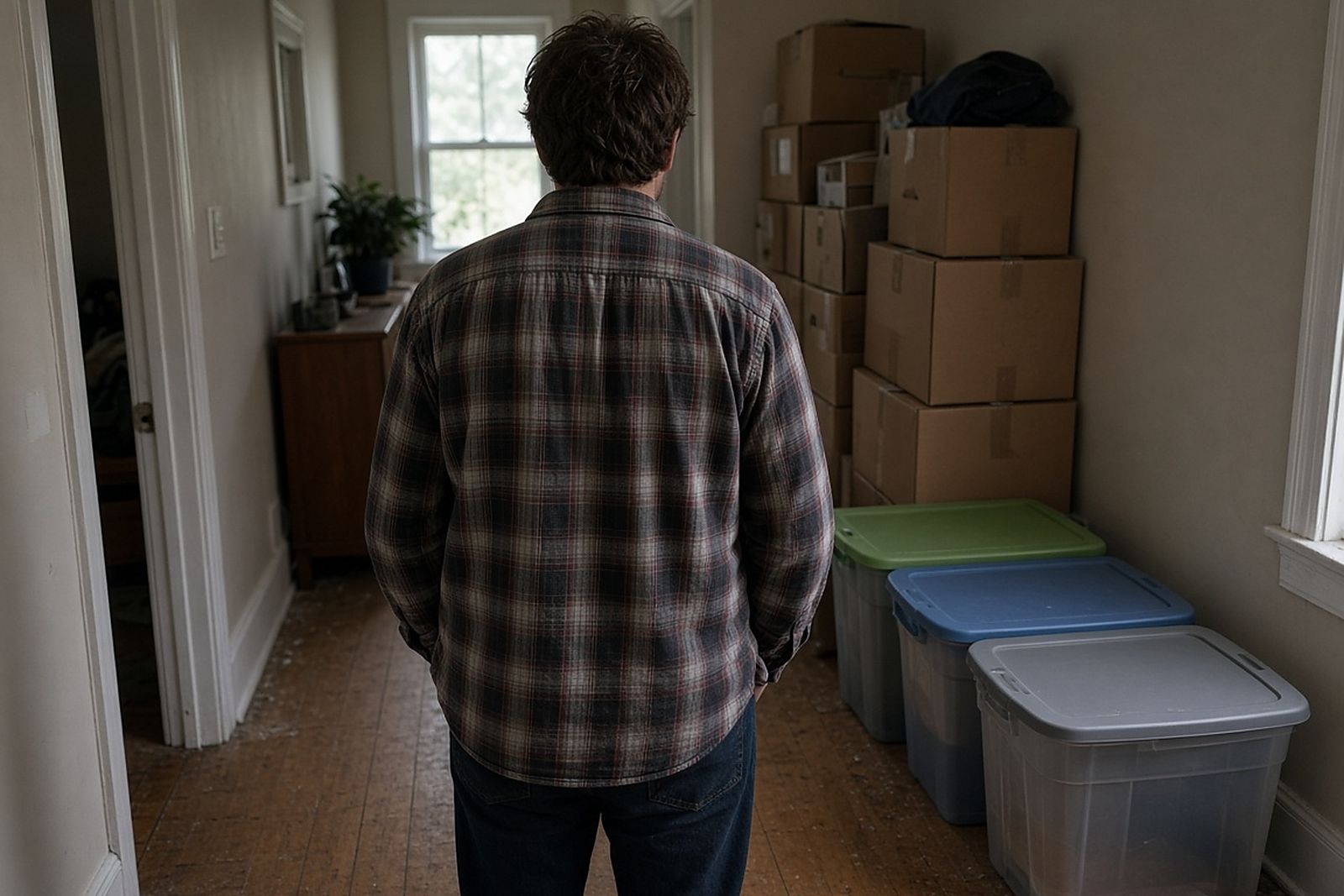
Person seen from behind in a hallway beside stacked boxes and three colored sorting bins
Illustrative photo, not a job record. Person seen from behind in a hallway beside stacked boxes and three colored sorting bins.
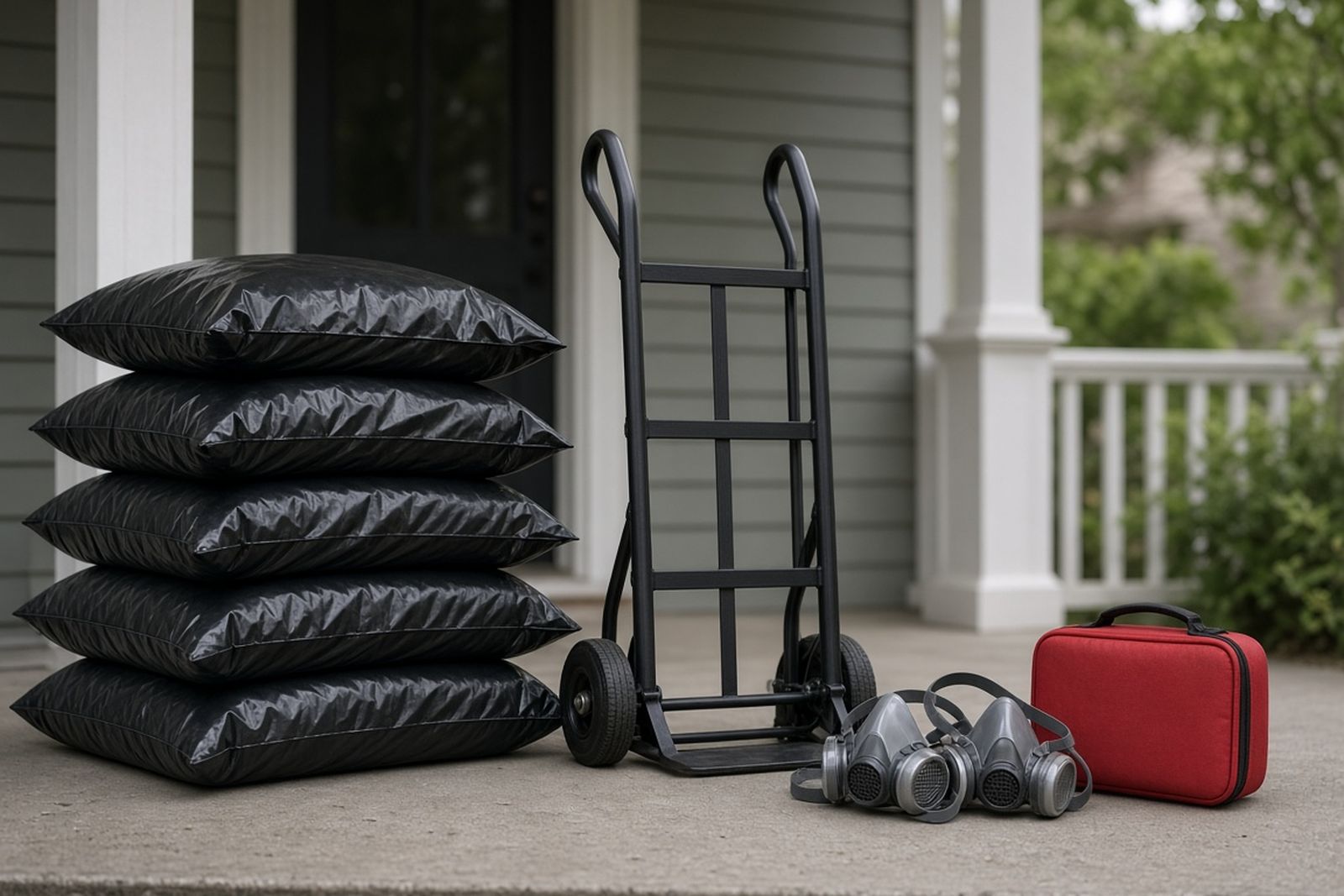
Contractor bags, a hand truck, respirators and a first-aid kit staged on a porch
Illustrative photo, not a job record. Contractor bags, a hand truck, respirators and a first-aid kit staged on a porch.

Hoarding Scene Cleanup figures to keep in mind

National and research figures, not Manhattan data. Local conditions, rules and providers vary; use these for scale and context only.

22%

22% of screened clients met clinician-rated hoarding-disorder criteria.

Read with care: Housing-help sample; cannot estimate hoarding prevalence among all tenants.

Source: Rodriguez et al. (2012)115 clients seeking help from one NYC eviction-prevention organisation; 25 met hoarding criteria.

34%

34% were recorded as presenting fire and environmental risk.

Read with care: Identified council cases; not all tenants; officer-reported characteristics.

Source: Porter et al. (2022)38 reported hoarding cases and 11 housing-officer interviews; English council, summer 2021.

2.5%

A meta-analysis of 11 studies covering 53,378 adults estimated the prevalence of hoarding disorder at 2.5%, with similar rates in men and women.

Read with care: Studies used different definitions, so estimates ranged from 0.8% to 3.5%.

Source: Journal of Affective Disorders (Postlethwaite, Kellett & Mataix-Cols) (2019)Working-age adults in developed countries; 95% CI 1.7–3.6%

These figures are public research and agency data, not this network's own job records. Keep each number with its population, year and limits; none of them predicts cost, timing or outcome at a specific property.

Plan before you reach out

Use the first 24 hours planner for immediate steps and the provider vetting checklist to confirm any Manhattan provider's training, insurance and waste path in writing.

What research has found

Findings from published studies of people and properties in situations like this one. They describe what researchers observed in a specific group; they are not predictions for your case.

Hoarding severity predicted work impairment after adjustment for age, sex and physical conditions.
Who was studied: 864 self-identified hoarding participants and 655 family informants online; research-criteria subsets analysed.Limits: Self-selected and mostly female; related research programme to S002; not representative prevalence.The economic and social burden of compulsive hoarding (2008)
Both symptom groups had greater adjusted odds of impairment across all assessed functioning domains.
Who was studied: 16,312 adults in the internet-based Brain Health Registry.Limits: Volunteer registry; symptom screens rather than universal clinical diagnoses; no causality.Hoarding symptoms are associated with higher rates of disability across multiple domains… (2022)

Hoarding Scene Cleanup community polls

Poll results

Every count is a real visitor vote; nothing is seeded or padded. One vote per poll per device, and you can change your answer.

Your experience

If a relative's home had become unsafe, what would be your first step?

No visitor votes yet
Process

How much control should the occupant keep over what leaves the home?

No visitor votes yet

Planning cleanup in Manhattan?

Send a short message about the property to the follow-up inbox. A coordinator can reply by email with next steps.

Your request is sent to the follow-up inbox. A coordinator can reply by email.

If anyone is hurt or in danger, call 911 first.