San Diego, CA

Hoarding Scene Cleanup Planning in San Diego, CA

What to do, who to contact, and what to ask in San Diego.

Hoarding cleanup help in San Diego, CA. First steps for canyon homes, apartments and bungalow courts, who may approve discards, and local weather risks.

Get an email reply about hoarding scene cleanup

Send a short message to the follow-up inbox. A coordinator can reply by email. This form does not send emergency help; call 911 first if anyone is in danger.

Tell us what you need help with. Share a short description; please leave out medical details, access codes, and other sensitive information.

A request does not confirm a booking. For immediate danger, contact local emergency services.

Or email info@hoardingcleanup.online

The short answer for San Diego, CA

A San Diego home can be a Mission Valley apartment, a canyon-rim house or a unit in a bungalow court, and each one empties out differently. Your first step does not change. Open a way from every bedroom to the outside door. After that, the person with legal say over the belongings sets the pace for sorting.

What to do, step by step

  1. 1

    Walk from the bedroom to the street

    Walk with the company from each bedroom in use to your main outside door. Then walk from that door to the street or the alley entrance. Take photos of spots you cannot get through. Smoke detectors and the electric panel should be dug out, and any stack leaning in the hall taken down gently. If a floor bends, pulling stops in that area. On a canyon lot, you still need one unbroken walking path, even when landscaping hides your house from the street.

  2. 2

    Match the loading plan to your building

    If you live over a podium garage, ask for the halls to be protected and the elevators booked. In a bungalow court, the alley entrance is measured, and sidewalks and hydrants stay clear. Either way, your items are bagged before they move to the curb, so odor and drips stay sealed in. Your neighbors in the court need only the dates and which parking spaces to leave open. Because of marine-layer damp, ask the crew to note nests and mold as soon as your walls are uncovered.

  3. 3

    Put legal authority and holds in writing

    Name the person with legal authority in writing. A manager or relative who holds your keys has access, and that is all. Pills and ID cards go straight into the tote with no debate. Albums, uniforms and research binders you disagree about go into dated hold boxes. On canyon lots where wood rats nest, relatives without an N95 mask or better should stick to boxing papers. Ask the crew to log each disputed item that is let go, with a date. Family far away can follow along by photo.

  4. 4

    Ask for honest words at the finish

    Each kind of waste gets its own container: everyday trash, recycling, charity goods, needles, and chemicals from your garage. Exposed tile and counters are cleaned. Pet-stained subfloor or damp mold on walls is listed as a separate repair. If your home sits at a canyon edge, plan the pest-sealing visit now. Ask the company to describe the result plainly. Your rooms are passable and the hazards are out, but walls and floors may still need work. That honesty helps you price the next step.

What cleanup is like in San Diego

Your home may sit on a canyon rim above a dry creek bed, in a Mission Valley apartment built over a parking garage, or in an inland bungalow court. In all three, piles often stay hidden until a caregiver, a manager or a medical call brings someone inside. Cool marine-layer mornings keep closed rooms clammy, and cardboard pressed to your outside walls can hide insects you see only once paths open. A steep switchback drive with one way in leaves little room for a bin. Ask the company to plan your driveway and your bedroom path as one loop.

San Diego Fire-Rescue and the Development Services code enforcement pages can answer your questions about blocked exits and property conditions. The county's health agency posts general cleanliness information for residents. Those websites do not send anyone to sort your home. If you receive a notice, check its dates on the official site. Beyond the fire safety advice, you will need one more thing before work starts. That is a signed letter from whoever legally controls the belongings, whether that is you, a relative or a trustee.

This is a city of research and military families, and your siblings, landlord or heirs out of town may not agree about service keepsakes, research binders or ID papers. Ask the crew to label four stations indoors: keep, donate, release, and items needing special disposal. Before anything else, your pills, glasses, ID cards and any cane or walker go into a locked tote. Anything your family disputes is boxed, dated and photographed. Nests are wetted down, never swept. At the end, open paths are one thing and later flooring or pest-proofing work is another.
What to expect for your type of home

  • Canyon-rim homes: Ask the hauler to measure the bin against your switchback before delivery. Rodents come in from the brush, so plan a pest-sealing visit once the clearing is done.
  • Mission Valley apartments over garages: The elevator, garage and trash room are shared. Book the elevator or service hall with your manager, and make sure bags never wait in exit stairs.
  • Bungalow courts: Neighbors see everything and the alley entrance is narrow. Tell them only the dates and which parking spaces to leave open. Keep sidewalks and hydrants clear.
  • Homes with garages: Fuel, solvents and needles in a garage are checked apart from living-room paper. Tell the crew what you know is stored there before they begin.
  • Homes with heavy stacks: Where floors bounce, walls crack, or doors stick under the weight, heavy pulling stops. Expect the crew to wait for a qualified expert.
  • Homes near visitor parking or wildlife: Items stay bagged indoors until a short move to the curb. Open piles outside draw animals and attention you do not need.

Papers and records to keep

  • The letter, signed by whoever legally controls the belongings, allowing the work
  • Paired photos of bedroom paths and of the switchback or alley entrance, blocked then clear
  • For apartments, a note on how the elevator and halls were padded
  • A list of the locked tote: pills, ID cards, phones and important papers
  • A running count of loads by type, with each dump or drop-off site
  • Notes on rodent nests and damp drywall along canyon-facing walls
  • Each hold box listed by date, next to its photo
  • A list for other contractors: flooring, wall repair, rodent-proofing and air filters

Local offices and official help

Common questions in San Diego

Why open the bedroom routes before going through memorabilia?

Paramedics carrying a stretcher down a switchback drive need a clear hallway to the bedroom. That matters far more than sorting photos. A tidy front hall does not help someone stuck behind hallway stacks. Ask for a photo of each blocked hall, and another from the same spot once it is clear. Leaning piles are steadied so early work does not bring them down. On a San Diego canyon lot, the outside path for fire trucks counts too.

How is an apartment over a garage handled differently from a bungalow court?

The bedroom path comes first in both. Only the loading plan changes. In a Mission Valley complex, the trouble spots are the shared elevator, garage and trash room. The crew reserves the elevator and pads the landings. In a bungalow court, the limits are a narrow driveway and neighbors who can see everything, so the bin is measured against the alley. A shared exit stair is never a place for unsorted things.

The property manager has keys. Can they approve what is thrown out?

No. Keys mean access. Before anything is loaded at a canyon-rim or Mission Valley property, there should be written permission from the person with legal authority over the belongings. Contested heirlooms are held in a box marked with the date. Prescriptions and IDs are secured first and never wait on a family talk. If a lease or trust leaves authority unclear, set those items aside and let a lawyer sort it out. A manager can still help plan logistics.

How does marine-layer damp affect the cleanup?

Months with the doors closed leave paper damp and stuck to the plaster. Nests are soaked with water before anyone touches them, and public health guides explain why. Ask the crew to note damp stains and insects as soon as paths open, so the follow-up trades are described honestly. Air fresheners will not beat marine-layer mustiness while damp cardboard and soiled carpet stay in the house. Pest-proofing is its own job, apart from hauling.

How will we know when the cleanup is done?

At the least, every bedroom has a clear way out, the bathroom works, hazardous items are gone, and the cleared rooms are wiped down. Feeling at home again may still take new flooring, patched walls, rodent-proofing or new filters from other trades. Dated photos at each step give your San Diego family and the landlord a shared record of progress. Mental health care is a separate matter from clearing the home.

We are a military family facing a move or deployment. How do we plan?

Start with what must move. San Diego has many military households, and a change of station or deployment can put a tight timeline on clearing a home. Secure IDs, military records, medicine, and what your family will need at the next duty station. Keep a clear list of anything shipped or stored. If the service member cannot be there, get written permission that names who may make the choices in their place.

Do Santa Ana winds change the work on a canyon lot?

Yes. In the fall, Santa Ana winds bring hot, dry air and a higher fire risk to canyon-edge homes. On those days the crew should avoid outdoor work that makes sparks or heat. Bags and cardboard stay away from the brush, and bins are closed so nothing blows off. Clearing things that burn from around the house and fence can be an early goal before fire season. Heed red flag alerts from local fire officials.

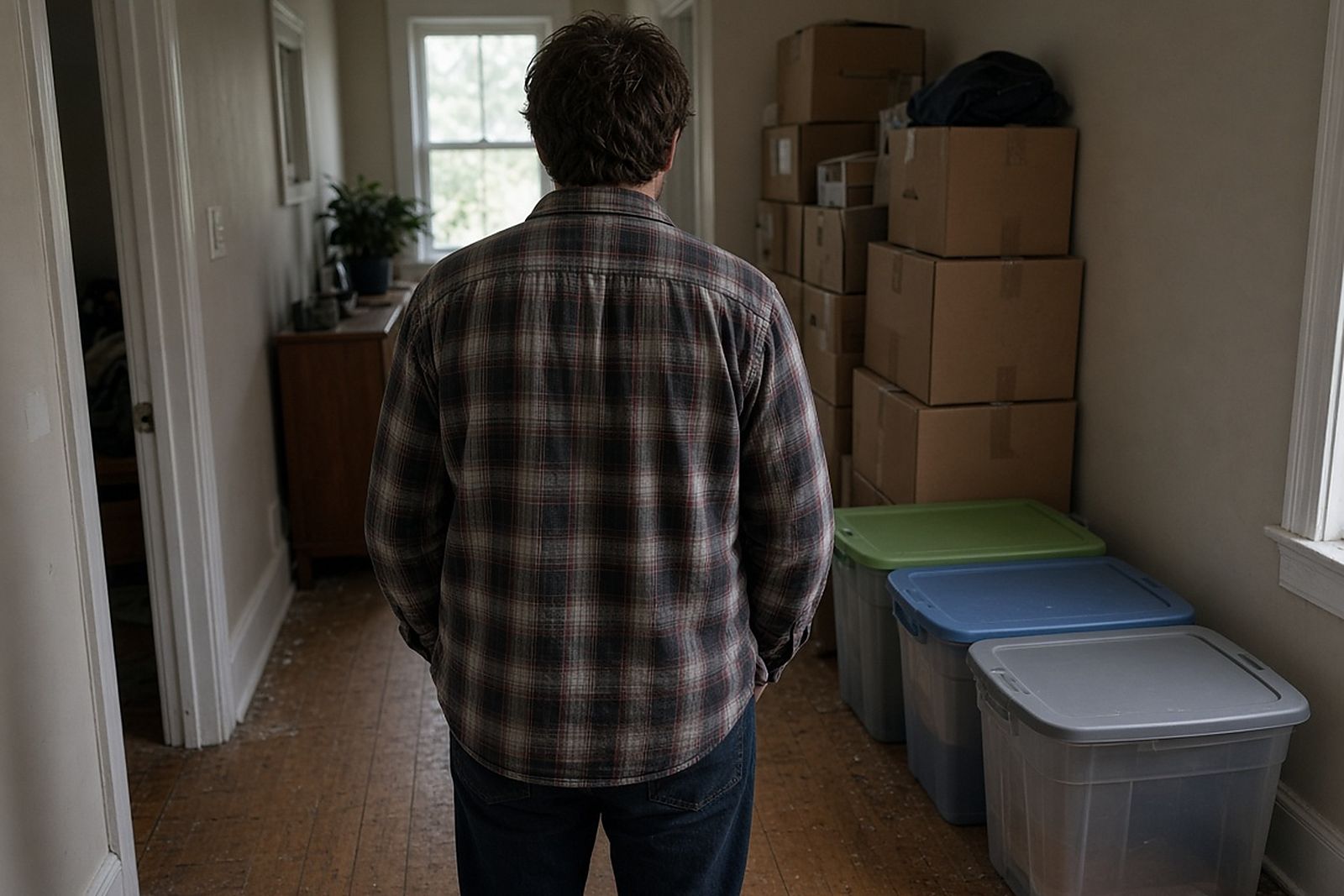
Person seen from behind in a hallway beside stacked boxes and three colored sorting bins
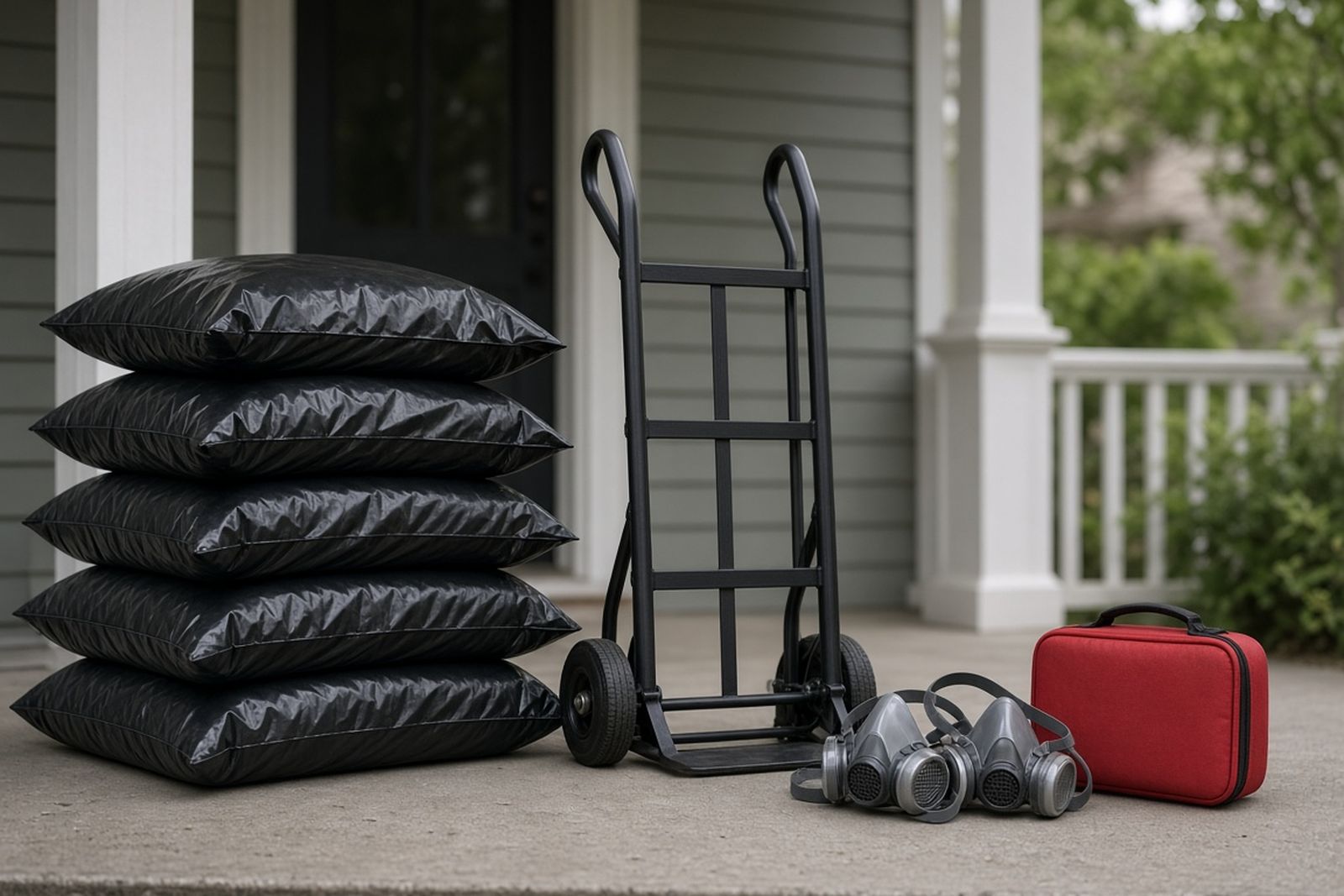
Contractor bags, a hand truck, respirators and a first-aid kit staged on a porch

Facts worth knowing

  • In focus groups with 17 English housing, health and care professionals, participants said forced clear-outs were traumatic for some residents.

    Why it matters: A forced clear-out can do harm, so you may want a company that works at the person's pace where safety allows.

    Source: Haighton et al., 2023

  • In a small study of 14 adults, the authors judged that case management alone was unlikely to remove eviction risk in severe hoarding cases.

    Why it matters: If eviction is possible, do not rely on a caseworker alone; ask early about legal help and what your landlord requires.

    Source: Millen et al., 2020

  • In one English council's 38 recorded hoarding cases in 2021, 34% were noted as a fire and environmental risk.

    Why it matters: Ask that your cleanup starts with exits, walkways and areas near heat sources, where fire risk may be highest.

    Source: Porter et al., 2022

Tools that help right now

What would you do?

Poll results

Vote to see how other people answered. You can change your answer at any time.

Your experience

If a relative's home had become unsafe, what would be your first step?

Be the first to vote
Process

How much control should the occupant keep over what leaves the home?

Be the first to vote

Need help in San Diego?

Send a short message about the property to the follow-up inbox. A coordinator can reply by email with next steps.

Your request is sent to the follow-up inbox. A coordinator can reply by email.

If anyone is hurt or in danger, call 911 first.