South · US

Hoarding Scene Cleanup Planning in Washington, DC

Planning hoarding scene cleanup in Washington, DC

Washington DC row-house cleanup plans cover homes on alleys, co-op freight elevators, clear exits from bedrooms first, and notes on checking for nests. This is planning guidance, not a claim of a local office or crew in Washington.

Get an email reply about hoarding scene cleanup

Send a short message to the follow-up inbox. A coordinator can reply by email. This form does not send emergency help; call 911 first if anyone is in danger.

Tell us what you need help with. Share a short description; please leave out medical details, access codes, and other sensitive information.

A request does not confirm a booking. For immediate danger, contact local emergency services.

Or email info@hoardingcleanup.online

Direct answer

The short answer for Washington, DC

Co-op shares on Capitol Hill, stacked parlors in Northwest, and small homes on alleys turn a District cleanout into a problem of shared walls and trash chutes. Step one is a clear exit from every bedroom that's slept in. Seal bags before the alley handoff. Pace the paperwork for the board. DC Health and FEMS offer guidance; this page invents no rules and promises no crews.

Editorial guide · Biohazard Remediation NetworkUpdated 2026-07-22Location focus: Washington, DC

Local planning context

Railroad flats on the parlor floor near Eastern Market, co-op shares in Dupont, and small homes on alleys can hide blocked back bedrooms behind fronts that still look fine for a listing. Shared walls let odor and pests pass between homes. Vaults under the stairs and trash room chutes create a dirty route that never touches the formal front hall. Red Line boarding, school dismissals, and alley trash times cut down the time you have to move things. Mid-Atlantic dampness swells boxes against plaster, and storm windows trap stale air in closed dens. Plan the route from each bed to the back door and out to the alley as one path. Clear it before opening any keepsake closet.

DC Health and FEMS websites help owners and agents with questions about blocked exits, things that could burn, and environmental health. DOEE materials cover waste topics that many boards already expect. None of those offices diagnoses people or sorts their things. A super's key ring doesn't give anyone the power to throw things out. Only the person with legal authority over the home can approve discards in writing.

When a District home is being sold, relatives in other states, an estate lawyer, and a co-op board may all be waiting on the same updates. Go slowly. Sort at tables inside, and crate disputed service medals, immigration records, or photo albums with dates. On the first visit, gather the resident's medicine, glasses, ID, and cane into one sealed box. Rats are common in District alleys. Soak droppings with disinfectant before cleaning up, instead of sweeping. Once the home is cleared, list plaster work, floors, and rat-proofing as separate jobs. Curb rush near Eastern Market, damp found behind shared walls, doorways of alley homes, and trash chutes that bring pests back are District problems. A plan for a Gulf Coast lanai with empty midweek days won't cover them.

District clear-outs reach well beyond Capitol Hill and Dupont. Think of alley mews in Navy Yard, walk-ups along the H Street corridor, basements near the canal in Georgetown, stacked porches in Petworth, and freight docks on the Southwest waterfront. Each changes how the work goes.

District row houses bring their own limits. Many have no driveway, so loading happens from the street or a back alley. Alleys in Capitol Hill, Shaw, and Petworth can be too narrow for a large truck. Parking a dumpster on public space may need a permit from the city's transportation agency, so check with the District before booking one. Co-op and condo buildings add board rules about elevator time and weekday hours. Record these limits in the property file. Confirm any permit or fine question with the District government directly.
Property considerations

Chart a wide enough path from parlor and garden apartment bedrooms to the unit door before pulling keepsakes.

Choose the alley gate, trash chute, a booked freight elevator, or the stoop based on the real building, not a suburban driveway plan.

Protect shared stairs that neighbors use all day. Never leave unsorted debris on exit stairs.

Co-op and condo buildings in Dupont and Columbia Heights often have strict move hours. Get them from management first.

Check vaults under the stairs and homes on alleys for fuel, solvents, and needles, apart from the parlor paper.

Century-old row-house floor beams can sag. Stop in any room where floors dip or plaster starts to crack.

Response-planning framework

Bedroom lanes before the alley home or trash chute

From each place someone sleeps, including homes on alleys, walk to the unit door. Then walk to the alley entrance, the trash chute, or the booked freight elevator. Take pictures of spots you can't get through. Uncover smoke alarms buried under paper. In narrow row-house halls, lower leaning stacks a few boxes at a time so they don't topple onto the stairs. A clear front room doesn't help if the path to the back bedroom is still blocked. Name the dirty route before the fullest rooms are opened.

Red Line rush and Eastern Market trash days

Fill bags inside and carry them to the alley only on collection day. Boarding rushes and trash set-out times can take away the stoop or gate you planned to use. Settle on a fallback gate or curb spot before any tote bag leaves the flat. Keep package rooms off the dirty path. Row-house neighbors only need the work days and alley times. Measure the alley before ordering a dumpster, since many are too narrow for a standard one.

Co-op board packets and sealed totes

Keys held by a super open doors; they don't decide what goes. Pills and ID are packed away first. Family members lacking gloves and masks keep clear of rat and mouse nests. Keep a dated record of disputed items for probate or the co-op board.

Uncovering shared walls and sorting special waste

District trash and recycling go out on set days. Sort bags by type inside, and keep needles and chemicals in their own containers. Where a shared wall is damp, check for nests and wet them down before removal. Rats move along District alleys and shared walls. If rats are still active once the house is clear, call a licensed pest company. Clean the old heart-pine floors and counters. List stained subfloor or damp plaster for a separate contractor. Describe the row house as passable and free of hazards, not as renovated.

Documentation checklist

  1. 1Signed permission from the owner, co-op, or estate representative
  2. 2Way-out photos of bedroom paths and the alley or freight elevator route
  3. 3Managing agent notes on hours, runners, dumpsters, and trash chute rules
  4. 4What the day-one box holds, including any federal ID badge
  5. 5Alley pickup log by type and date
  6. 6Party-wall damp and nest findings, recorded as walls are exposed
  7. 7Dated list of crated items the family hasn't decided on
  8. 8Alley, street parking, and co-op board limits for this address, plus repairs still owed

Official resources

Questions for this location

Why reopen bedroom routes before sorting medals in a Capitol Hill railroad flat?

In a narrow row house with one staircase, a blocked upstairs hall can keep paramedics from reaching the bedroom at all. Photograph the stairs and halls both blocked and opened. Uncover smoke alarms early. Steady any leaning piles. Back gates and alley paths must stay open. Closed curtains don't make a blocked house safe.

How do Red Line rush hours and alley trash times change loading?

Metro rush hours and the District's trash and recycling days both affect when an alley or curb is free. Pick loading times outside rush hour and away from collection mornings. Plan a second loading time in case a delivery or parked car blocks the first. Keep loads brief and bags covered. Never leave them in the travel lane or the shared front hall.

Who may approve letting things go when a Dupont super holds the keys?

Not the super. A building super or manager can open the door but can't decide what's thrown away. Get written permission from the owner, the estate's executor, or another person with legal authority before anything goes to the alley. Items heirs disagree on should be photographed and set aside in dated crates. If the lease or ownership papers are unclear, wait for a lawyer before throwing out disputed things.

How is taking bags out of a small alley home different from a parlor stoop?

In small homes on alleys, sealed bags often have to go through narrow gates and shared trash chutes. Parlor floors may use a stoop with railings neighbors climb all day. A stoop plan used in an alley, or the reverse, stops the job cold. Check the width of the stairs and back gate. Pad shared railings, and bag everything inside. Never leave unsorted debris on an exit stair.

When is a District row house or co-op really done?

In a District row house or co-op, finished for safety means every bed connects to the stairs and the door, the bathroom can be used, and hazardous items are gone. Finished for comfort may still need plaster repairs, floor work, and rat-proofing along the alley side. Dated photos help the family and any co-op board see what was done. The resident's own clinicians handle any mental health needs.

How do rats in District alleys affect a row-house cleanout?

Many DC neighborhoods have active rats in alleys and yards. A cluttered row house can give them food and shelter. Before clearing, look for burrows near the back of the house and droppings in the basement or kitchen. Keep bags sealed and inside until pickup, since open bags in the alley draw rats. After clearing, ask a pest control company about sealing entry points. Contact the District's rodent control office if the problem reaches the alley.

What should DC families do with government, military, or work papers found in a home?

Many District residents have worked for federal agencies, the military, or embassies. Homes may hold old work files, ID badges, or documents. Don't throw these in the trash. Set them aside in a sealed box and ask the person who decides to review them. Keep personal records like pension or benefits papers. Anything that looks official or sensitive may need to go back to the agency or be shredded securely.

Contact

Get help by email

Send a short message for an email reply about hoarding scene cleanup planning questions for the Washington DC area.

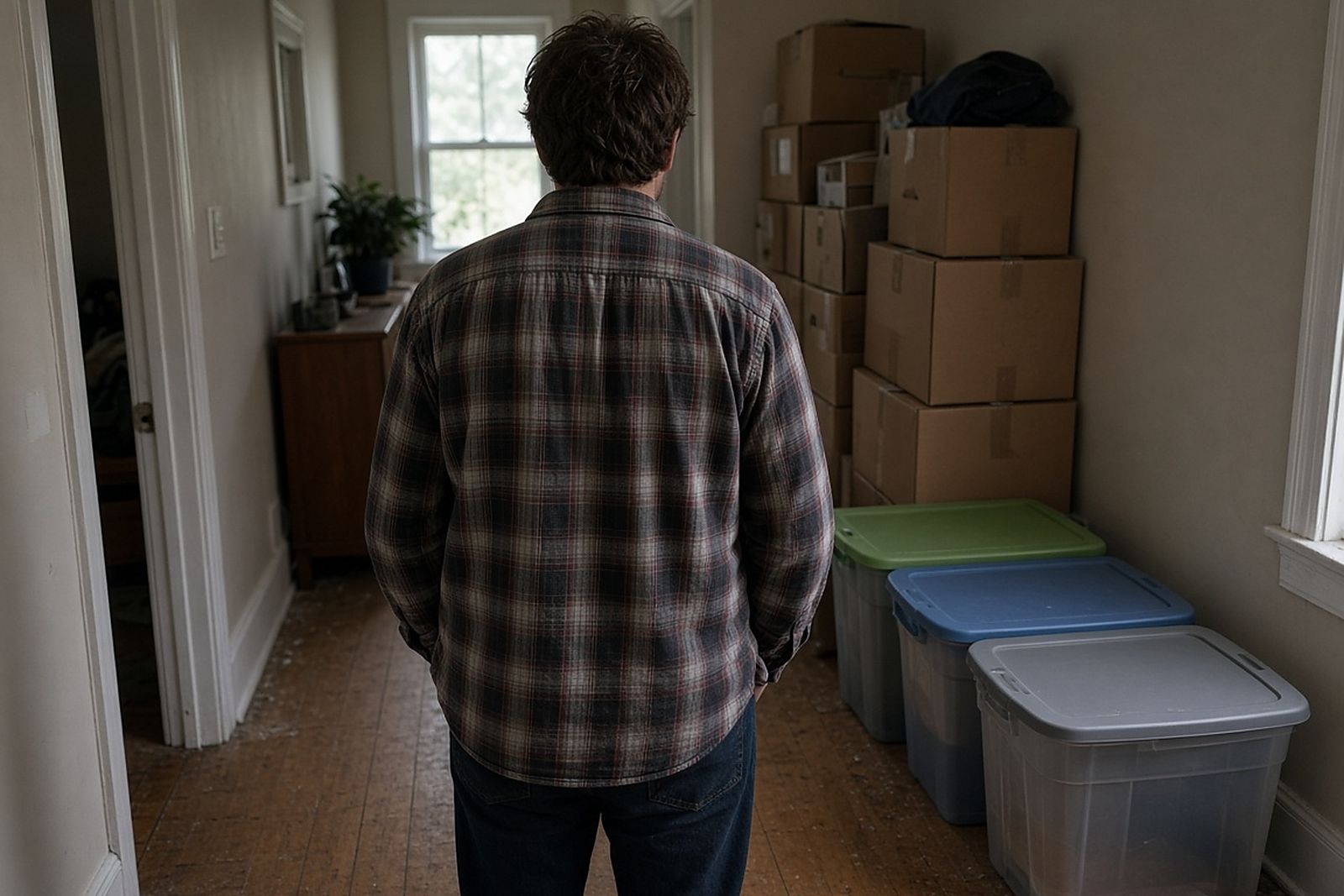
Person seen from behind in a hallway beside stacked boxes and three colored sorting bins
Illustrative photo, not a job record. Person seen from behind in a hallway beside stacked boxes and three colored sorting bins.
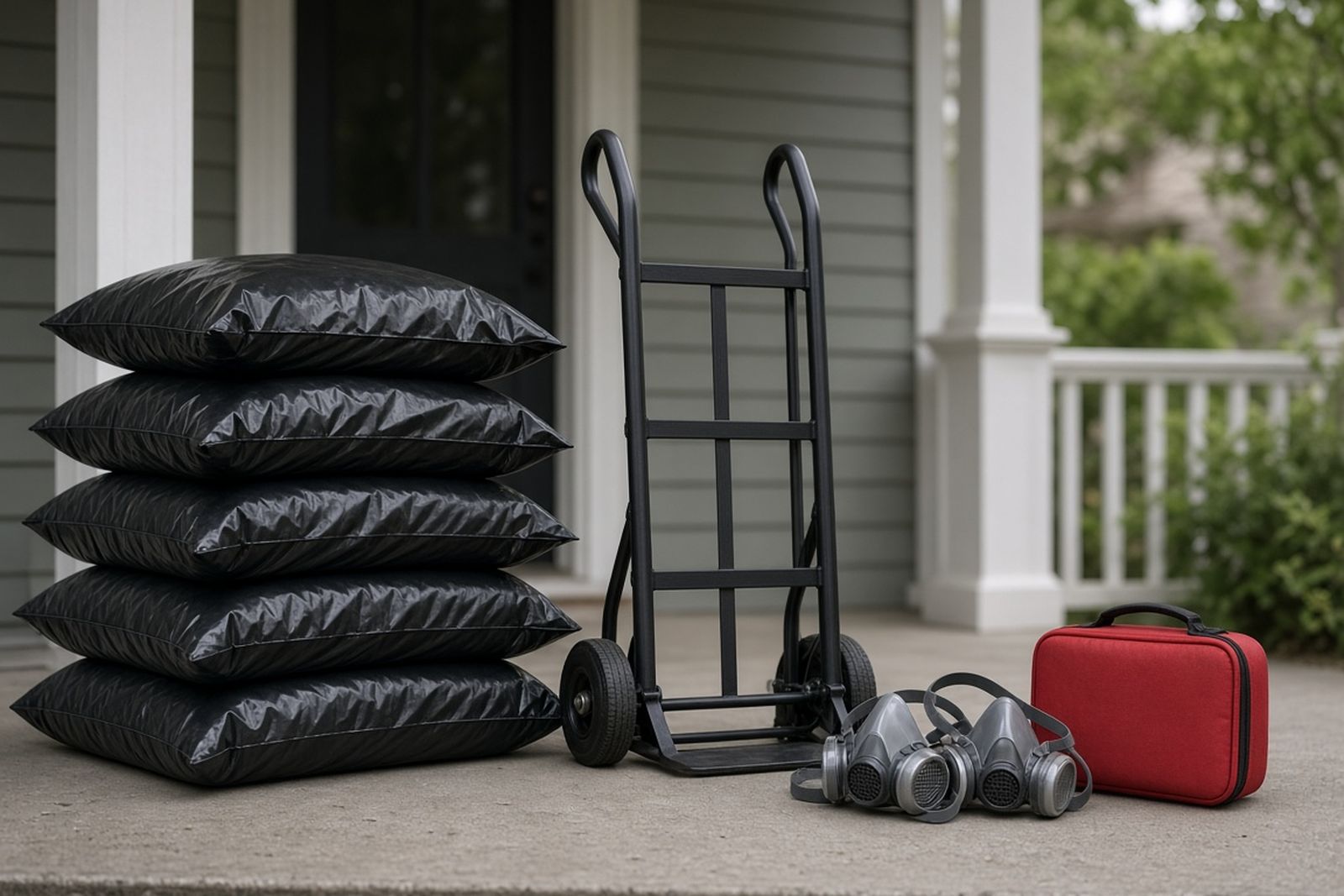
Contractor bags, a hand truck, respirators and a first-aid kit staged on a porch
Illustrative photo, not a job record. Contractor bags, a hand truck, respirators and a first-aid kit staged on a porch.

Hoarding Scene Cleanup figures to keep in mind

National and research figures, not Washington data. Local conditions, rules and providers vary; use these for scale and context only.

18.7%

18.7% with clinical hoarding symptoms reported moderate-to-extreme work/school difficulty versus 11.8% with reported depression history.

Read with care: Volunteer registry; symptom screens rather than universal clinical diagnoses; no causality.

Source: Nutley et al. (2022)16,312 adults in the internet-based Brain Health Registry.

0.85%

A meta-analysis of 85,681 English households over 13 years estimated the point prevalence of domestic squalor at 0.85%, with rentals and lower-income homes at higher risk.

Read with care: Squalor overlaps with but is not identical to hoarding disorder; UK data.

Source: BMC Public Health (2024)English Housing Survey data

700–2,000 cases/year

Animals were found dead or in poor condition in 80% of animal-hoarding cases, and Patronek estimated 700 to 2,000 such cases occur in the US each year.

Read with care: Rough extrapolation from a small 1990s sample.

Source: Public Health Reports (Patronek) (1999)Extrapolated US estimate from 54 cases

These figures are public research and agency data, not this network's own job records. Keep each number with its population, year and limits; none of them predicts cost, timing or outcome at a specific property.

Plan before you reach out

Use the first 24 hours planner for immediate steps and the provider vetting checklist to confirm any Washington provider's training, insurance and waste path in writing.

What research has found

Findings from published studies of people and properties in situations like this one. They describe what researchers observed in a specific group; they are not predictions for your case.

Repeated administrative reminders of the death could be demoralising.
Who was studied: 21 community-dwelling Australian widows aged over 65; serial interviews.Limits: Small selected sample; themes do not quantify all widows.The business of death: a qualitative study of financial concerns of widowed older women (2015)
Stakeholders supported coordinated multi-agency responses.
Who was studied: 17 English housing, health, emergency-service and social-care stakeholders in two focus groups.Limits: Professional perceptions; not measured intervention effectiveness or prevalence.Managing hoarding disorder: A qualitative investigation of existing procedures and pract… (2023)

Hoarding Scene Cleanup community polls

Poll results

Every count is a real visitor vote; nothing is seeded or padded. One vote per poll per device, and you can change your answer.

Your experience

If a relative's home had become unsafe, what would be your first step?

No visitor votes yet
Process

How much control should the occupant keep over what leaves the home?

No visitor votes yet

Planning cleanup in Washington?

Send a short message about the property to the follow-up inbox. A coordinator can reply by email with next steps.

Your request is sent to the follow-up inbox. A coordinator can reply by email.

If anyone is hurt or in danger, call 911 first.