Alexandria, VA

Hoarding Scene Cleanup Planning in Alexandria, VA

What to do, who to contact, and what to ask in Alexandria.

Alexandria, VA hoarding cleanup help: reopen bedroom routes, plan loading for Old Town cobbles or a mid-rise dock, and put the owner's choices in writing.

Get an email reply about hoarding scene cleanup

Send a short message to the follow-up inbox. A coordinator can reply by email. This form does not send emergency help; call 911 first if anyone is in danger.

Tell us what you need help with. Share a short description; please leave out medical details, access codes, and other sensitive information.

A request does not confirm a booking. For immediate danger, contact local emergency services.

Or email info@hoardingcleanup.online

The short answer for Alexandria, VA

In Old Town Alexandria, bags leave by steep stairs, sloped cobblestones, and a curb crowded with visitors. On Eisenhower Avenue, they leave by a booked loading dock. Either way, reopen the way out of each bedroom first. Have bags sealed before they reach the street, and put the owner's choices in writing. The city's health department can answer questions.

What to do, step by step

  1. 1

    Walk from every bedroom to the street door

    Walk the route from every bedroom to your street door and on to the alley or curb. Write down each spot you can't get through. Smoke alarms buried under paper get uncovered. Hallway stacks that lean are eased back. Before the fullest rooms are opened, settle how your bags will leave. In Old Town that means the front steps or the garden gate. In a mid-rise, it means the building elevator.

  2. 2

    Load early, before King Street fills

    Everything is bagged inside your home. Your loads then move out early on weekdays, when King Street is quieter. Cruise-day crowds at the waterfront and bursts of trolley tourists can take away the stoop edge you wanted. Choose a second handoff spot before any tote leaves your townhouse. Neighbors who share a wall only need to know the work hours and where bags will be loaded. Have the dumpster's footprint measured against the narrow, sloped cobbles.

  3. 3

    Write down who has legal say

    Write down who has legal authority before any bag goes to the curb. Whoever holds a spare key, whether a super or a house-sitter, still can't approve discards. Your relative's prescriptions and IDs are secured first, before any other choice comes up. Family members without gloves and masks can help at the review table and stay out of the piles. Keep dated notes on each disputed item that's let go, in case the estate is questioned later.

  4. 4

    Have the old plaster checked and ask for a modest report

    Your trash, recycling, donations, needles, and household chemicals go in separate, labeled containers. Damp plaster near the river can draw mice, so nests are wet down before removal. If mice keep coming in through your old brick foundation, bring in a pest company to seal it. Mildewed plaster should go to a plasterer who works on historic homes. The report should state that each bedroom has a way out and that special waste is handled. Don't accept a made-up historic district badge.

What cleanup is like in Alexandria

Think of townhomes on Union Street and Prince Street, walk-ups on cobblestone alleys, and mid-rises on Eisenhower Avenue. In Old Town, your loads pass painted railings and tilted cobbles well before any truck. Many townhouses also have a back garden gate, which can be a quieter way to move bags out. A freshly painted front door on Prince Street can hide a back bedroom no one can walk into. Cruise days at the waterfront eat up curb space. So do tourists at the King Street trolley and the school backpack rush. River humidity in summer keeps stored paper damp.

Alexandria has its own health department, and the state health department adds broader sanitation information. City pages add context on property conditions that many boards expect you to know. City offices give advice. They don't sort your belongings or give staff the right to discard them. For logistics, go to the official city sites. Only the person with legal authority, named in writing, can approve what leaves an Old Town house or a West End apartment.

When a townhouse is headed to market, relatives in DC or Maryland and the listing agent may all want updates from you at once. Work one floor at a time. Sort at tables inside your house, and set aside albums or service keepsakes in dated boxes when you disagree. On the first day, find prescriptions, glasses, IDs, and canes or walkers, and keep them together in a sealed tote. In cellars and closets under the stairs, droppings are dampened with disinfectant before wiping. When your house is empty, list the repairs that need experts who know older homes.

Old Town's historic blocks set the real limits. Many row houses sit right on the sidewalk with no driveway, and the back alleys are narrow. Weekend visitors crowd King Street and the waterfront, so weekday mornings are usually your easiest time to load. Work on the outside of homes in the historic districts can involve city review. Keep the cleanup to what's inside, and ask the city before touching fronts, windows, or fences. Mid-rises along Eisenhower Avenue run on management's dock schedule. Ask City Hall about any permit before you book a dumpster.
What to expect for your type of home

  • Old Town townhomes on Union and Prince Streets: Stairs are steep and narrow. Ask that the bedroom and bathroom connect to your front door before anything sentimental is sorted.
  • Walk-ups on cobblestone alleys: The railings and landings are shared. Ask the crew to pad them. Bags should never rest on the stairs your neighbors use to get out.
  • Eisenhower Avenue mid-rises: Management books the dock and service elevator by the hour. Get the building's word on bins, work hours, and hallway floor covers ahead of hauling day.
  • Townhouses with a back garden gate: The gate may be your quietest way out. Ask the company whether bags should leave by the gate, the alley, or the edge of the stoop.
  • Row houses with a closet under the stairs: Paint and cleaners tend to end up in there. Ask for that closet to be gone through on its own.
  • Older row houses with original floor beams: Heavy stacks strain old wood. If a floor sags, plaster cracks, or a door begins to stick, that room should wait.

Papers and records to keep

  • The sorting rules for the Old Town house or West End apartment, signed by the owner or executor
  • Records of each bedroom path and of the stoop or cobblestone alley, made on the first and last day
  • Notes on your building's rules for hours, floor protection, and where bins may sit
  • A list of what's in your relative's essentials box
  • A log showing where trash, recycling, donations, needles, and chemicals from the house each went
  • Notes on nests and damp plaster found in the spaces under the stairs
  • A register of hold boxes, each with its date and photo number
  • Loading notes for your row-house block or mid-rise dock, and the repairs still to do

Local offices and official help

Common questions in Alexandria

Why clear the bedrooms before we sort keepsakes in our Old Town townhome?

Because the stairs are steep and narrow. In many Old Town townhouses, a cluttered upper hall can leave medics unable to carry someone down. A tidy front room doesn't help a person whose bedroom hallway is blocked. Ask for a dated record of each landing and hall. Your front steps and the brick alley have to stay passable as well.

How do the cobbles and the trolley crowds change loading at our front steps?

They shrink your curb time. Narrow, sloped cobbles and bursts of trolley tourists take away the stoop edge you'd like to use. Agree on a second loading spot in case visitor traffic or a delivery blocks the first. Trips should be brief and covered. Rough brick sidewalks slow the carts, but that's no reason to leave bags sitting inside your front door.

Can a building manager or a house-sitter approve what's thrown out?

No. Holding keys means access and nothing more. Get a signed letter from the owner or another legally authorized person before anything is removed from the townhouse. Antiques your family disagrees about are logged and boxed with a date. Medicine and IDs go into the sealed tote, whatever else is still being talked over. If the lease leaves authority unclear, a lawyer should weigh in first.

How is an Eisenhower Avenue mid-rise different from a Prince Street row house?

A mid-rise along Eisenhower Avenue usually has a loading dock and service elevator that management books by the hour. An Old Town row house has neither. Bags go down narrow stairs, out the front steps or a back gate, and onto the sidewalk or alley. So each needs its own plan. Book the dock for a mid-rise. For a row house, have the steps and gates measured.

Should we plan around King Street crowds or around dock schedules?

That depends on where you live. King Street and the waterfront fill with visitors on weekends and during events, which crowds sidewalks and parking near Old Town homes. A mid-rise on Eisenhower Avenue faces dock time set by management. For a townhouse, load early on weekday mornings. For a mid-rise, book the dock ahead. Check with the city about any permit to use the street.

Our house is near the waterfront. Should we worry about past flooding?

It's worth checking. Parts of Old Town near the Potomac can flood during heavy rain or high tides, and a basement there may have taken on water before. Boxes stored on low floors may hide mold or water damage. Wear a mask when handling damp items, and bag them quickly. Once the space is clear, ask a moisture expert to check the walls and floors. Keep important papers upstairs.

We keep finding antiques and old letters. How should they be handled?

Set aside anything that looks old, and photograph it before any choice is made. Old Town homes can hold antique furniture, letters, maps, and family records going back generations. A local historical society, museum, or appraiser can advise you on value. Fragile paper should be kept flat and dry. The person with authority over the home should approve in writing before a historic item is sold, donated, or thrown out.

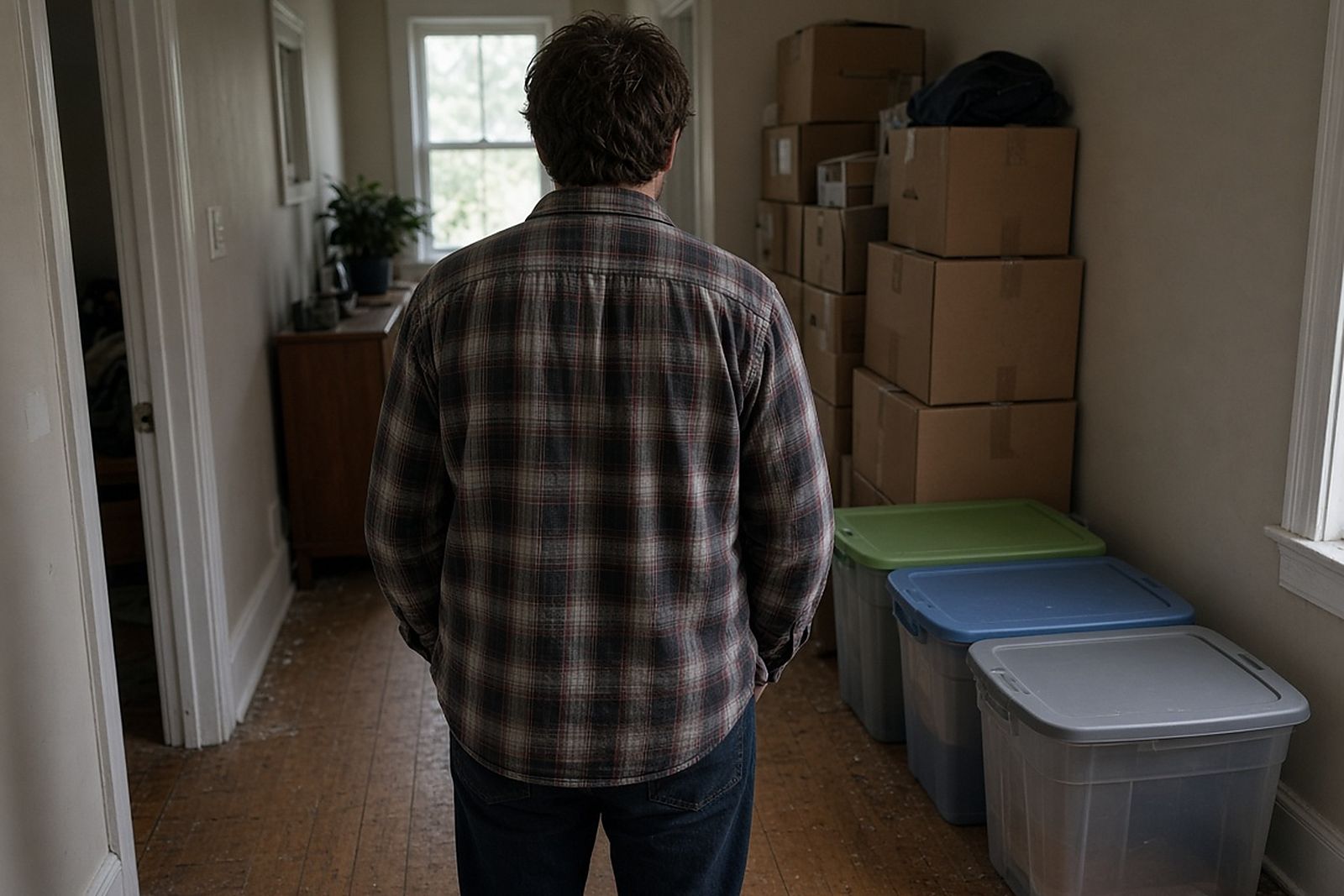
Person seen from behind in a hallway beside stacked boxes and three colored sorting bins
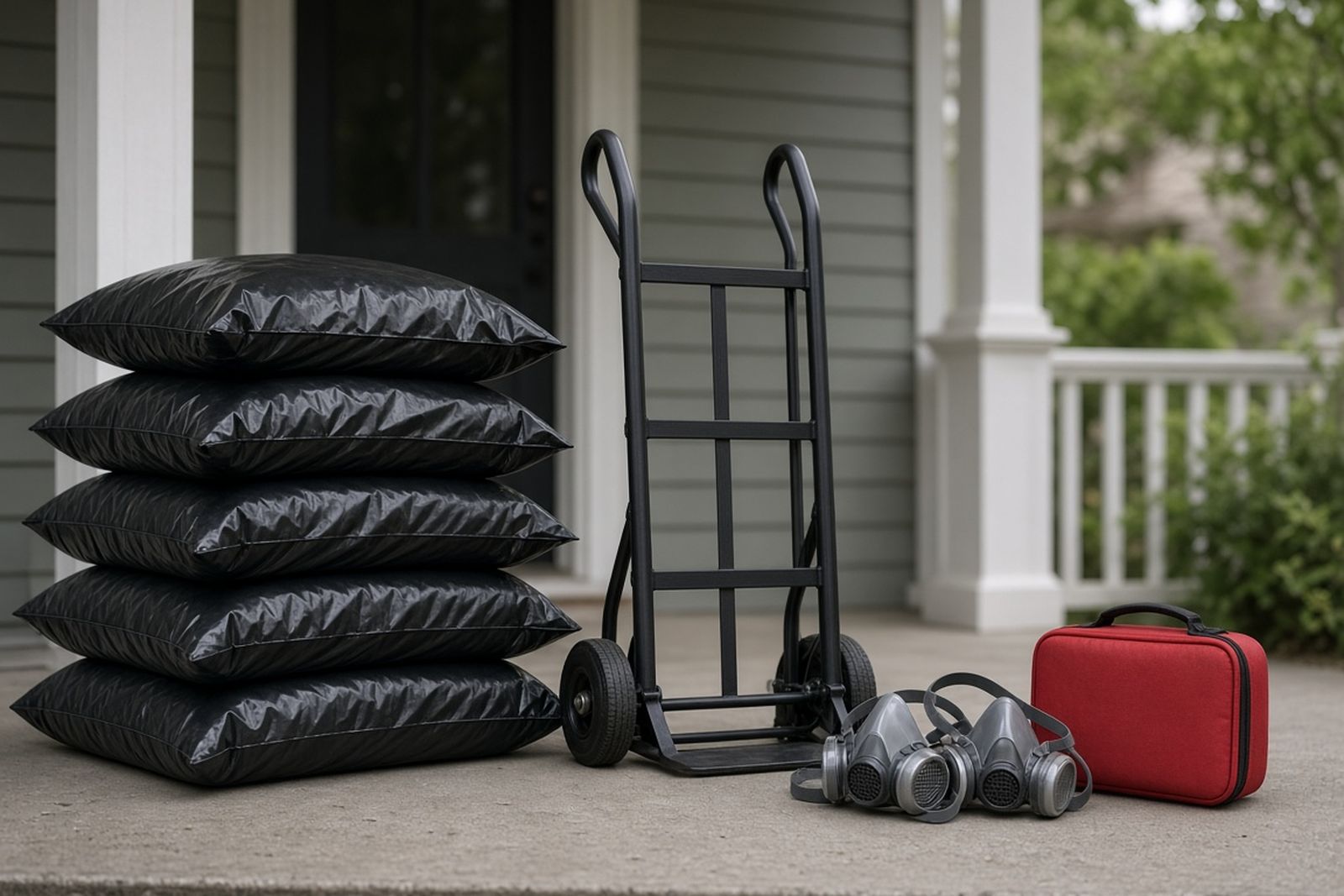
Contractor bags, a hand truck, respirators and a first-aid kit staged on a porch

Facts worth knowing

  • In focus groups with 17 English housing, health and care professionals, participants said forced clear-outs were traumatic for some residents.

    Why it matters: A forced clear-out can do harm, so you may want a company that works at the person's pace where safety allows.

    Source: Haighton et al., 2023

  • In a large online survey, 8–12% of people who hoard and their family members reported an eviction or eviction threat due to hoarding.

    Why it matters: If you rent, hoarding may lead to an eviction notice, so ask your landlord exactly what must be fixed and by when.

    Source: Tolin et al., 2008

  • In interviews with 21 Australian widows over 65, paperwork and official tasks made the early period after a death harder.

    Why it matters: You may want to ask a relative or friend to help with forms, calls and claims in the first weeks.

    Source: DiGiacomo et al., 2015

Tools that help right now

What would you do?

Poll results

Vote to see how other people answered. You can change your answer at any time.

Your experience

If a relative's home had become unsafe, what would be your first step?

Be the first to vote
Process

How much control should the occupant keep over what leaves the home?

Be the first to vote

Need help in Alexandria?

Send a short message about the property to the follow-up inbox. A coordinator can reply by email with next steps.

Your request is sent to the follow-up inbox. A coordinator can reply by email.

If anyone is hurt or in danger, call 911 first.