Darien, CT

Hoarding Scene Cleanup Planning in Darien, CT

What to do, who to contact, and what to ask in Darien.

Hoarding cleanup help in Darien, CT. Check basement and bedroom exits first, know what a caretaker cannot approve, and plan around commuter schedules.

Get an email reply about hoarding scene cleanup

Send a short message to the follow-up inbox. A coordinator can reply by email. This form does not send emergency help; call 911 first if anyone is in danger.

Tell us what you need help with. Share a short description; please leave out medical details, access codes, and other sensitive information.

A request does not confirm a booking. For immediate danger, contact local emergency services.

Or email info@hoardingcleanup.online

The short answer for Darien, CT

In Darien, the upstairs of a home can look fine from the front step while the finished basement is packed wall to wall. If that sounds like your house, or a parent's, check the basement doors and the bedroom exits on the same morning. Then sort in the evenings and weekends your family can manage.

What to do, step by step

  1. 1

    Spend the first morning on exits, both levels

    Ask the crew to photograph basement doors you cannot get through and blocked paths from the upstairs bedrooms. Smoke detectors on both floors get uncovered. Stacks on your stairs come down with care, so no helper is stuck halfway. If someone sleeps in a lower guest room, it goes on the safety list too. Keep both levels in one household record. It will show a landlord, insurer or relative why work began on the stairs and not in the fullest corner.

  2. 2

    Protect the driveway and the storm drains

    Have everything bagged inside before it spends any time at your curb. Nothing should ever be rinsed toward the storm drains. When you can, loads move at hours when train commuters are not rushing past. Neighbors get the hours and parking limits. Ask for sealed bags that cannot be seen through. On tight lots where porch talk travels fast, short curb times save you a good deal of conflict.

  3. 3

    Set the rules for caretakers and heirs

    Name the person with legal authority before any discard cart moves. Belongings in dispute go into dated hold boxes with photos, so your family can look after the evening train home. On the first morning, ask the caretaker to help find prescriptions and IDs, and have them all placed in one sealed box. Anyone without a mask and gloves keeps out of the nests. Ask for a dated log of each disputed item that is let go. Later arguments can then rest on paper instead of memory.

  4. 4

    Wrap up with the basement moisture noted

    What leaves your home should go in separate streams: debris, donations, needles, fuel and special packages. Foundation damp and nests are written down as later jobs. Hard surfaces are wiped in the rooms that were worked on. The closing note should say your exits are open and special items are under control. It should not say finishes are restored. No cleanup firm can hand you a town clearance paper, so question any that offers one.

What cleanup is like in Darien

On the streets around Noroton and Tokeneke, your home probably sits close to the curb drains and to your neighbors' windows. A finished basement often holds a guest bed, the furnace room and decades of overflow, while the halls upstairs still look walkable. Short driveways carry rain into the storm drains within minutes, so bagging outdoors in wet weather is a mistake. If a caretaker runs the house, that adds a layer. Staff unlock doors on schedule but rarely have the right to approve what goes. Ask for both levels to be walked before any keepsakes are touched.

Darien has its own health department, and the town website lists who handles other property questions. Connecticut Department of Public Health materials give statewide background. These official pages do not choose who gets to throw things out. If a notice arrives, read the current pages for yourself instead of guessing at penalties. Neighbors see a lot on these blocks. So ask the crew to bag everything indoors in sealed bags and to keep curb time short. That protects your dignity as much as it helps with logistics.

If your family rides Metro-North, the people who must approve choices are often free only after work. Ask for photo batches where no answer means hold. That is far better for you than one frantic Saturday without protective gear. Have medicine moved into a sealed tote early. Your furnace and utility rooms need a check for fuel, apart from the piles of school papers upstairs. Nests are wetted before they are moved. Keep graphic stories out of chats with neighbors and out of the caretaker's group texts too.

What to expect for your type of home

  • Homes with finished basements: Ask that the basement's outside door and any escape window be cleared on day one. A lower guest room someone sleeps in counts as a bedroom.
  • Compact shoreline lots: Open piles on a short driveway can clog curb drains or block a fire truck. Insist that bags are filled indoors and moved to the curb only briefly.
  • Caretaker-run houses: Put the caretaker's limits in writing. Holding keys is not the right to throw things out, so name who does decide and how to reach them.
  • Homes on tightly packed blocks: Sealed bags no one can see through keep the sidewalk from becoming a show. Share work hours with neighbors, nothing else.
  • Homes with furnace and utility rooms: Fuel, generator supplies and needles are checked apart from paper. Tell the crew where the oil tank or generator is before they start.
  • Low-lying homes near the shore: Cardboard on a damp foundation may be moldy underneath. Ask for damp walls to be noted as a later moisture job, apart from the cleanup.

Papers and records to keep

  • The owner's or trustee's signed letter, with what a caretaker may and may not approve
  • Photos of the basement and upstairs exits before and after paths opened
  • A short note to the caretaker stating they cannot approve discards
  • Notes on driveway staging that kept curb drains and sidewalks clear
  • A list of the sealed box contents, emailed to the family
  • A record of what left by type, including generator fuel and pool chemicals
  • Notes on foundation damp, wet boxes and nests found downstairs
  • Jobs for later: floors, a dehumidifier, mouse sealing and filter changes

Local offices and official help

Common questions in Darien

Why do the basement and the bedrooms get checked on the same morning?

Because someone in a lower guest room can be trapped while the upstairs front hall looks fine. Ask for photos of both levels. Smoke detectors are uncovered early and stair stacks are brought down with care. Any lower room where a person sleeps belongs in the first hour's work. A cleared garage stair is not a safe basement exit if bins still block the outside door at ground level. Records of both levels show the whole picture.
What should we tell the caretaker before sorting starts?

Tell them, in writing, that keys open doors but do not give the right to trash belongings. A caretaker can set hazards aside, let the legal decision holder know, and stay out of nest layers without protection. Items in dispute go into dated hold boxes. Medicine still goes into a sealed tote. Written limits stop on-the-spot choices made under pressure to get the Darien house ready for guests. Those choices can destroy trust papers.

Why does the crew care about the curb drains?

In rain, a short driveway sends water to the storm drains fast. Open piles and rinse water can carry debris and liquids off your property. So items are bagged inside, moves to the curb are brief, and the driveway entrance stays open. Ask for a photo of the driveway on hauling days. On tightly packed blocks, privacy comes from sealed bags. Things stored at the curb invite trouble with neighbors within minutes.

We commute to the city. How can we approve things from the train?

Use evening photo sets. Many Darien families have a parent in the house and grown children who ride Metro-North to Manhattan. The crew sends photos when you are home. You answer within a few days, and anything unanswered stays in a dated box. Medicine and IDs are found on the first day no matter what. Discards need a yes from whoever holds legal authority. Quick texts from anyone else should be ignored.

What does finished mean for a basement clear-out?

For a Darien basement, done means the stairs and any escape window are clear, the bathroom works, and chemicals from the utility room are gone. Being comfortable again may still take moisture work, flooring or pest-proofing. Dated photos prevent arguments about what happened in what order. Air freshener cannot replace removing the source on a damp foundation wall. Be wary of any paper that claims the town has signed off.

The basement has taken on water. How should we handle it?

Carefully, with masks and gloves. Finished basements near the Darien shoreline, and in low spots inland, can take on water after heavy rain or a storm surge. Boxes on the floor may have soaked through and grown mold, even when the top layer looks dry. Wet items should be bagged quickly. Once the room is clear, ask a water or mold expert to check the walls and carpet. That work is separate from the cleanup.

How do we keep the home from filling up again?

Small, regular habits work better than another big clear-out later. Many families set up a simple routine: a weekly mail sort, a set spot for packages, and a monthly visit from a relative or organizer. Talking with a therapist who understands hoarding can also help the person who lives there. Keep your hopes realistic and kind. The home belongs to them, and lasting change comes from choices they make themselves.

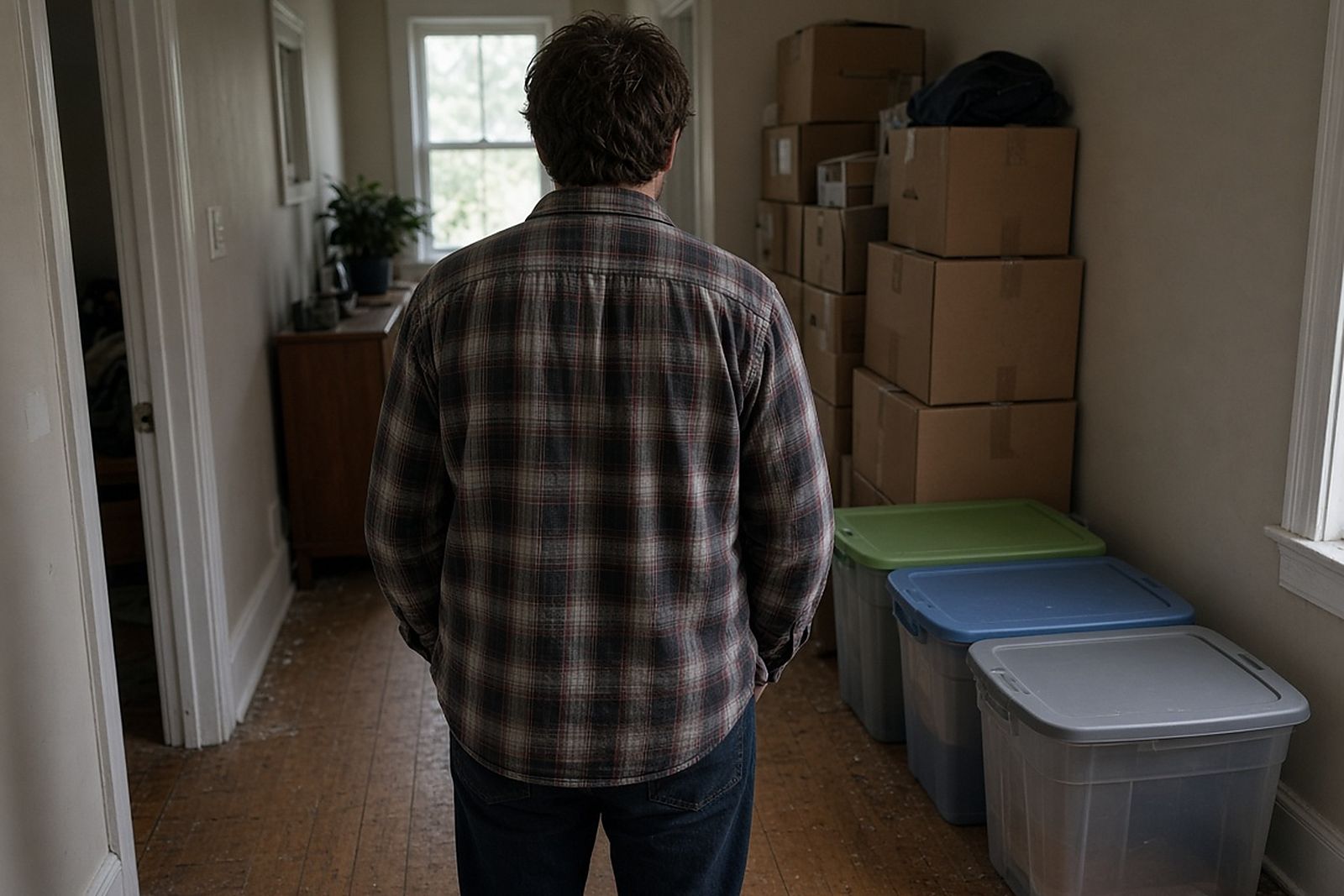
Person seen from behind in a hallway beside stacked boxes and three colored sorting bins
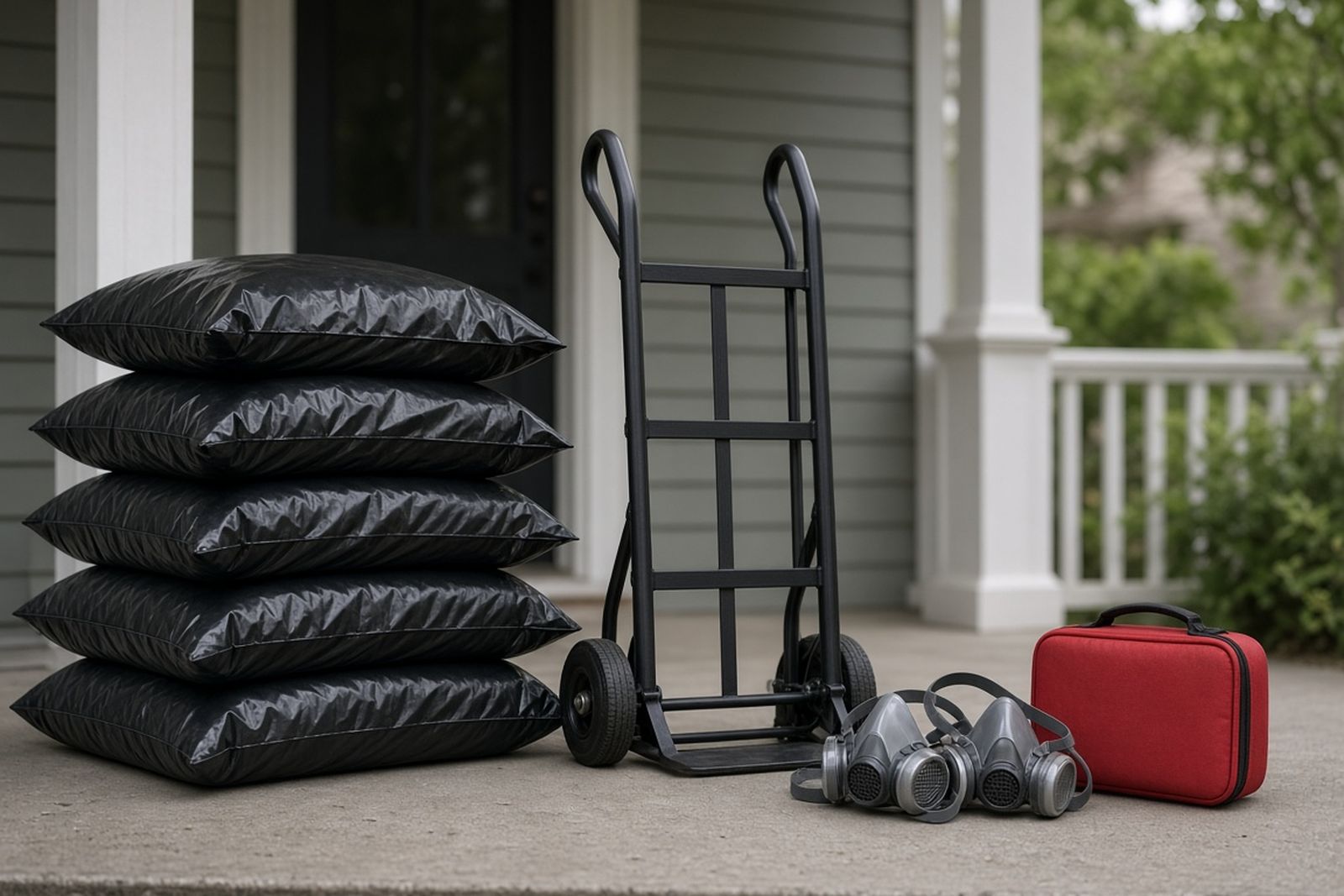
Contractor bags, a hand truck, respirators and a first-aid kit staged on a porch

Facts worth knowing

  • Claims professionals say standard home insurance policies have exclusions for neglect, failing to protect property and poor upkeep that can complicate hoarding-related claims.

    Why it matters: Read your policy's exclusions and ask your insurer before you assume damage in a hoarded home will be covered.

    Source: CLM Magazine (Claims and Litigation Management Alliance), 2011

  • In one online survey of 864 people who hoard, 8 to 12% had been evicted or threatened with eviction because of it.

    Why it matters: If you rent, hoarding may put your housing at risk, so starting cleanup before a landlord notice arrives may help.

    Source: Psychiatry Research (Tolin et al.), 2008

  • At one New York City eviction-prevention group, 20% of the 25 clients with hoarding said they had been evicted before.

    Why it matters: Eviction over hoarding does happen, so take your landlord's written warnings seriously and keep copies of them.

    Source: Rodriguez et al., 2012

Tools that help right now

What would you do?

Poll results

Vote to see how other people answered. You can change your answer at any time.

Your experience

If a relative's home had become unsafe, what would be your first step?

Be the first to vote
Process

How much control should the occupant keep over what leaves the home?

Be the first to vote

Need help in Darien?

Send a short message about the property to the follow-up inbox. A coordinator can reply by email with next steps.

Your request is sent to the follow-up inbox. A coordinator can reply by email.

If anyone is hurt or in danger, call 911 first.