Great Falls, VA

Hoarding Scene Cleanup Planning in Great Falls, VA

What to do, who to contact, and what to ask in Great Falls.

Great Falls, VA hoarding cleanup help: reopen exits in the house and barn loft, keep heavy bins off the septic field, and get the trustee's written word.

Get an email reply about hoarding scene cleanup

Send a short message to the follow-up inbox. A coordinator can reply by email. This form does not send emergency help; call 911 first if anyone is in danger.

Tell us what you need help with. Share a short description; please leave out medical details, access codes, and other sensitive information.

A request does not confirm a booking. For immediate danger, contact local emergency services.

Or email info@hoardingcleanup.online

The short answer for Great Falls, VA

Great Falls homes sit on big lots with wells, septic fields, and sometimes a barn loft where someone sleeps. First, reopen every exit for anyone who stays overnight. Then mark the septic field so heavy bins stay off it, and wait for the trustee's or owner's written word before anything leaves. Fairfax County's health pages can help.

What to do, step by step

  1. 1

    Walk out from the barn-loft bunk and the bluff house

    From each place someone sleeps, including a barn-loft bunk, walk to the outside door. Then walk to your driveway entrance. Write down each spot you can't get through. The smoke detectors get uncovered early, and tall stacks are brought down in stages. If a floor bends, pulling stops in that area. The trees that screen your house from Georgetown Pike offer no way out in an emergency.

  2. 2

    Stage the bins with the septic field in mind

    Heavy bins and packing equipment stay off your septic field and drain lines. Confirm where they are with property records or a licensed expert, since guessing is how pipes get crushed. Ask for the barns to be checked for fuel, solvents, spray cans, and needles. Your items are bagged inside first. Write down a backup driveway spot too, in case the one you wanted is blocked during busy times on the Pike.

  3. 3

    Get the trustee's letter and hold the tack room items

    Your barn manager runs the schedule, but the trustee or owner signs off. Your relative's prescriptions and IDs are found and boxed the first morning. Tack and heirlooms in dispute wait in boxes marked with the date, with their papers tucked inside. Relatives far away get photo sets with a date to reply. Anything left unanswered is held. Barn hands or relatives who lack masks and gloves should stay clear of droppings.

  4. 4

    Wrap up the lot with a plain to-do list

    Once the bulk is out, a good crew cleans the floors and counters in your house and in any loft where someone sleeps, and notes carpet or bedding that stays soiled. Wooded bluff lots invite mice and moisture. Expect a pest company or moisture check to be suggested when droppings or damp walls show up. Be clear with heirs that a cleared, hazard-free house isn't a repaired one. Don't accept a made-up county certificate. Scent can't stand in for moisture repair.

What cleanup is like in Great Falls

Bluff lots above the Potomac gorge, woods along the streams that feed Difficult Run, and horse outbuildings all shape hauling here. Your drive may have one narrow entrance. Septic drainfield markers have to be avoided, and someone may still sleep in a bunk room overnight. A well-kept lawn above the gorge can hide a loft bunk no one could escape from quickly. Overlook pull-offs on Georgetown Pike and busy park times cut your staging time. Mid-Atlantic humidity swells cardboard, and winter storm windows trap odor in closed dens.

For well water and septic questions on a rural lot, start with Fairfax County's health department and the state. Get fire safety rules straight from official sources, and check the limits for your land with county resources and licensed experts. Those offices don't label anyone, and they don't pick what you toss. Even your barn manager, keys in hand, can't send trust property away. Along with the official advice, keep a signed letter from whoever holds legal authority over the property.

Owners who live out of town, sibling trustees, and horse barn staff often disagree about bridle racks in the tack room or decades of files in the den. In the countryside, your work moves in modest daily goals. Ask for review crates that stay dry, so no cardboard meets your gravel unread. Droppings in barns and sheds are dampened before they're wiped up. Tractor fuel and spray cans stay far from bags of linens. Afterward, book separate visits for rodent sealing and any damp basement work.

Great Falls properties are spread out, and most run on well and septic systems. Before any container arrives, mark your drainfield and tank lids so heavy trucks and bins stay off them. Ask the hauler about trailer runs if your driveway is steep or gravel. Barns and workshops need their own chemical check. Write these site limits into your property file. For a county rule or permit, ask Fairfax County itself.
What to expect for your type of home

  • Bluff houses above the gorge: The lawn can look perfect while a bedroom is blocked. Ask for exits from every bedroom in the main house before the fullest keepsake rooms.
  • Barn-loft bunks: A bunk used overnight belongs on the first walk. Ask the crew to stop clearing if the loft floor sags or doors begin to bind.
  • Homes on septic systems: Heavy bins can crack what's underground. Confirm where the field is with property records or licensed experts, and don't let anyone guess.
  • Properties with a barn workshop: Fuel, solvents, and spray cans collect there. Ask for the workshop to get its own hazard check before anyone sorts the house papers.
  • Homes with decades of files in the den: Keep a dry table inside for going through money papers. Tell the company which papers must never leave without your say.
  • Estates with relatives far away: When they approve items from photos, put the reply deadline in writing. Add the rule that no answer means the item is held.

Papers and records to keep

  • The trustee's signed letter, plus how relatives elsewhere will weigh in
  • Exit records for each place someone sleeps, in the main house and the barn-loft bunk
  • Driveway and drainfield staging notes, checked against property records or by licensed experts
  • The chemical list for your barn and workshop
  • What the day-one box holds, starting with prescriptions and IDs
  • The station rules and a dated list of tack and heirlooms the family hasn't settled
  • A log of each waste type, including needles and barn or workshop chemicals
  • A site map marking your septic field, well, and truck route, plus open repairs

Local offices and official help

Common questions in Great Falls

Why does the barn-loft bunk go on the escape plan?

Because on a rural lot, EMS may take longer to get there, so a clear way out from every bed matters even more. Attic keepsakes can wait in dated hold boxes. Ask for a record of how each spot looked before clearing and after. A tidy front room doesn't mean your barn loft or guest cottage has a safe way out.

How do we keep trucks off the septic field?

Find it and mark it. Most Great Falls homes use septic systems, and a heavy container or truck parked over the drainfield or tank can crack pipes and cause costly damage. Learn where yours is from property records, a septic service company, or the county. Mark it clearly, and pick a staging spot on the driveway. Keep a copy of the site map in your property file.

Can the barn staff approve throwing out trust property?

No. A caretaker who arranges the hauler handles scheduling only. That role doesn't include choosing what goes. Get a signed letter from the person with legal authority before anything is let go. Saddles, ribbons, and keepsakes in dispute are set aside with a date. Prescriptions go straight into the sealed tote, whatever else is undecided.

How does traffic on Georgetown Pike affect hauling?

It narrows your hours. Georgetown Pike is a winding two-lane road, and weekend visitors to Great Falls Park add traffic that can slow trucks and block driveway entrances. Plan loading for weekday mornings when you can. Bags are tied inside so nothing waits in the drive, and a second loading spot is kept ready. A truck should never idle in the travel lane, since drivers can't see far around the curves.

What goes in the staging note for our lot?

It should show where your septic tank, drainfield, and well are. It should show where trucks and bins may and may not go, and the best times to avoid park traffic on Georgetown Pike. Include photos of the chosen loading spot. If anyone sleeps in a barn loft, the note should confirm that its exit is clear before any tack room sorting starts. Keep it with your property file.

We're far from stores and dump sites. How do we prepare?

Plan each day's supplies ahead: gloves, masks, bags, and water. Great Falls is more rural than many nearby areas, so dump sites, donation centers, and hardware stores may be a longer drive. Book trucks and containers with extra time for travel. Make sure there's cell service or a landline on site in case someone gets hurt, and know the route to the nearest urgent care.

Should we check the well and plumbing afterward?

Yes. A home on a private well may have water equipment that sat behind piles for years. Once the area is clear, check that the well pump, pressure tank, and water treatment gear work properly. If the water hasn't been used, or looks or smells odd, think about testing it before your relative drinks it again. The Fairfax County health department can explain well water testing options.

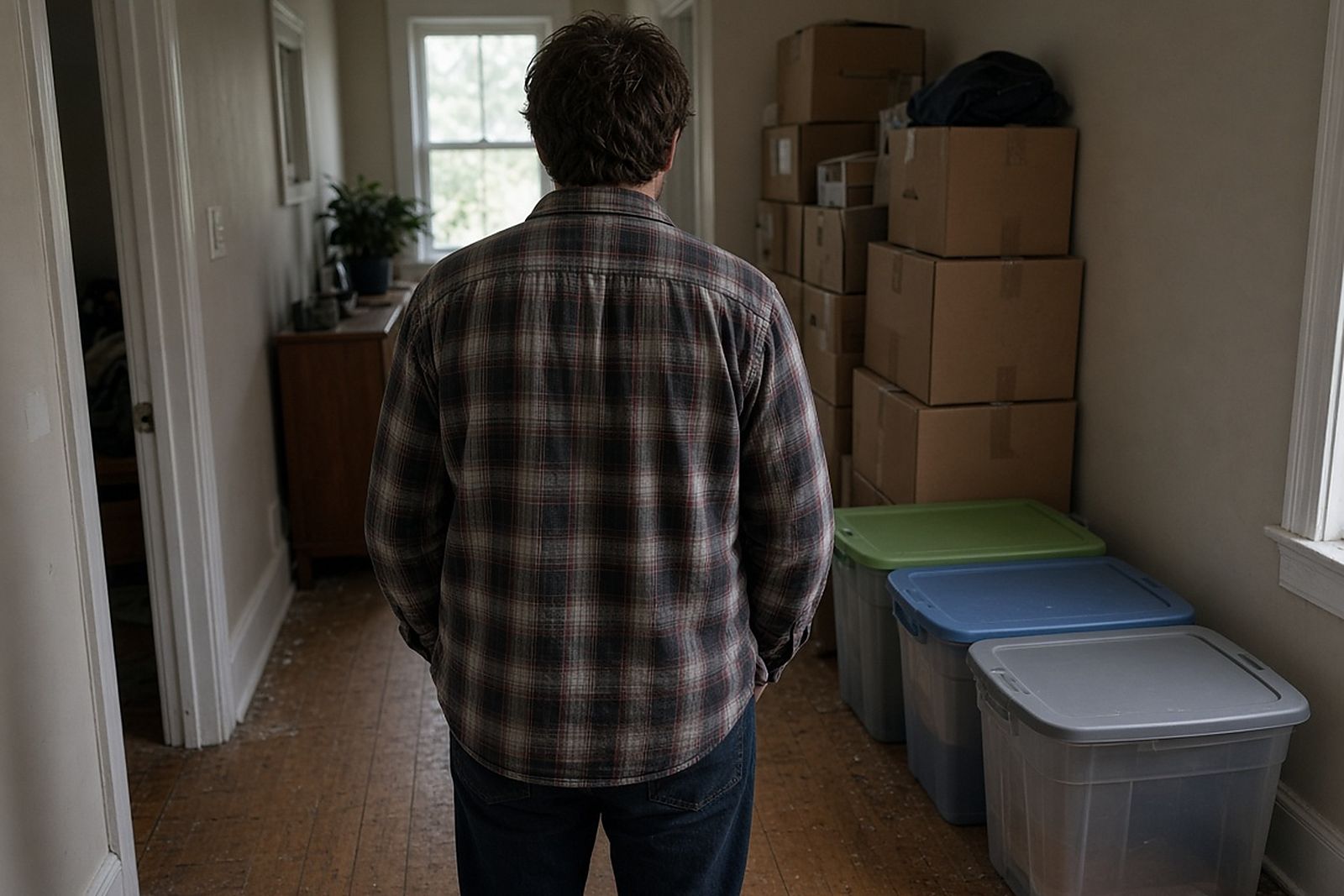
Person seen from behind in a hallway beside stacked boxes and three colored sorting bins
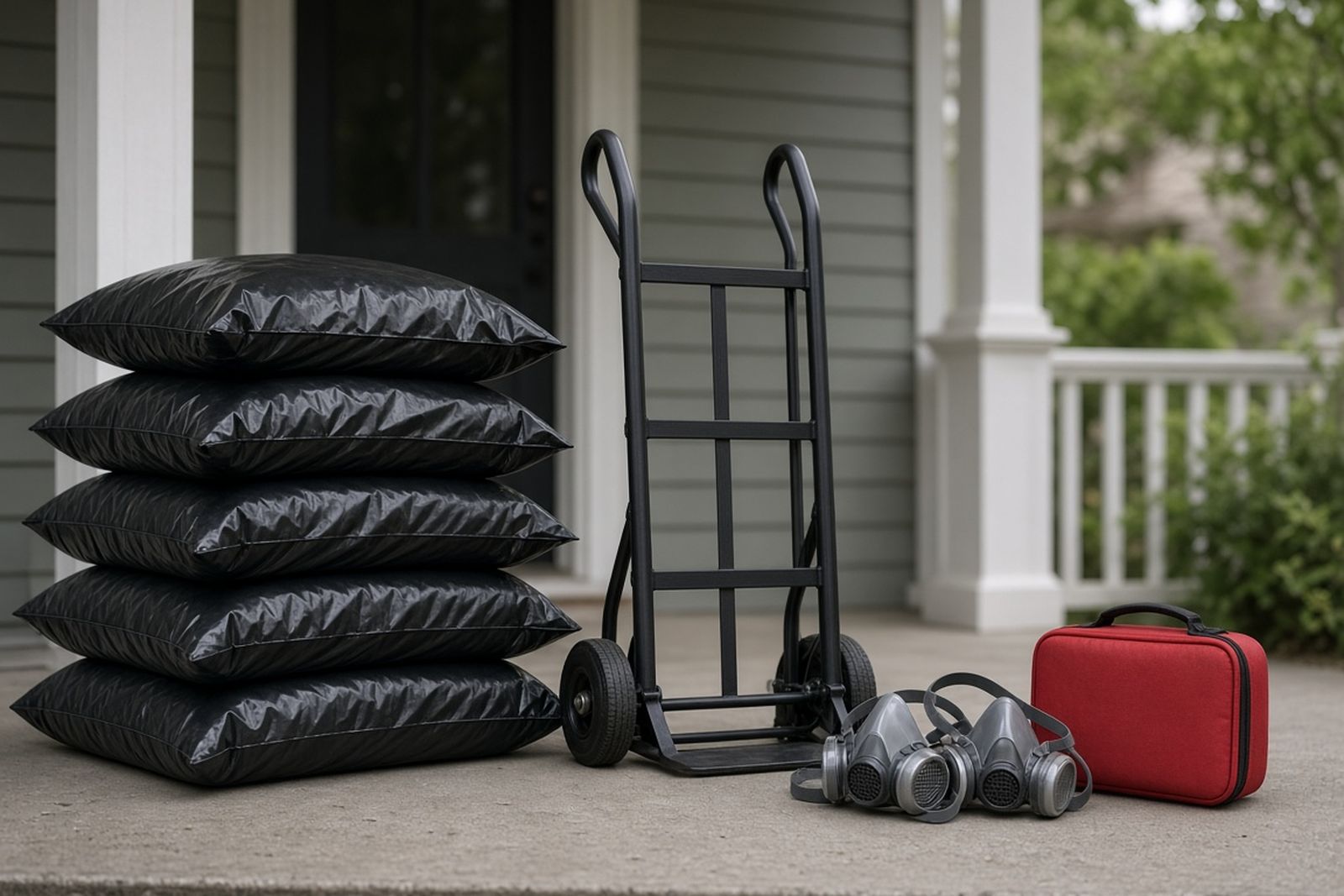
Contractor bags, a hand truck, respirators and a first-aid kit staged on a porch

Facts worth knowing

  • In interviews with 21 Australian widows over 65, paperwork and official tasks made the early period after a death harder.

    Why it matters: You may want to ask a relative or friend to help with forms, calls and claims in the first weeks.

    Source: DiGiacomo et al., 2015

  • In a large online survey, 8–12% of people who hoard and their family members reported an eviction or eviction threat due to hoarding.

    Why it matters: If you rent, hoarding may lead to an eviction notice, so ask your landlord exactly what must be fixed and by when.

    Source: Tolin et al., 2008

  • In a small UK interview study published in 2022, some bereaved families said they were given less than one week to clear the home.

    Why it matters: Ask the landlord or housing office early what the clearance deadline is, and whether you can have more time.

    Source: Hansford et al., 2022

Tools that help right now

What would you do?

Poll results

Vote to see how other people answered. You can change your answer at any time.

Your experience

If a relative's home had become unsafe, what would be your first step?

Be the first to vote
Process

How much control should the occupant keep over what leaves the home?

Be the first to vote

Need help in Great Falls?

Send a short message about the property to the follow-up inbox. A coordinator can reply by email with next steps.

Your request is sent to the follow-up inbox. A coordinator can reply by email.

If anyone is hurt or in danger, call 911 first.