Short answer
When a company proposes equipment for a hoarding cleanup, check that each item matches a real hazard in the home: containers and hauling sized to the volume, respirators and suits suited to mold, dust and waste, puncture-resistant gloves and sharps containers, HEPA filtration for dusty or moldy areas, and odor tools that follow source removal. Equipment should also support careful sorting, not just speed.
What makes equipment for hoarding cleanups different from ordinary junk removal?
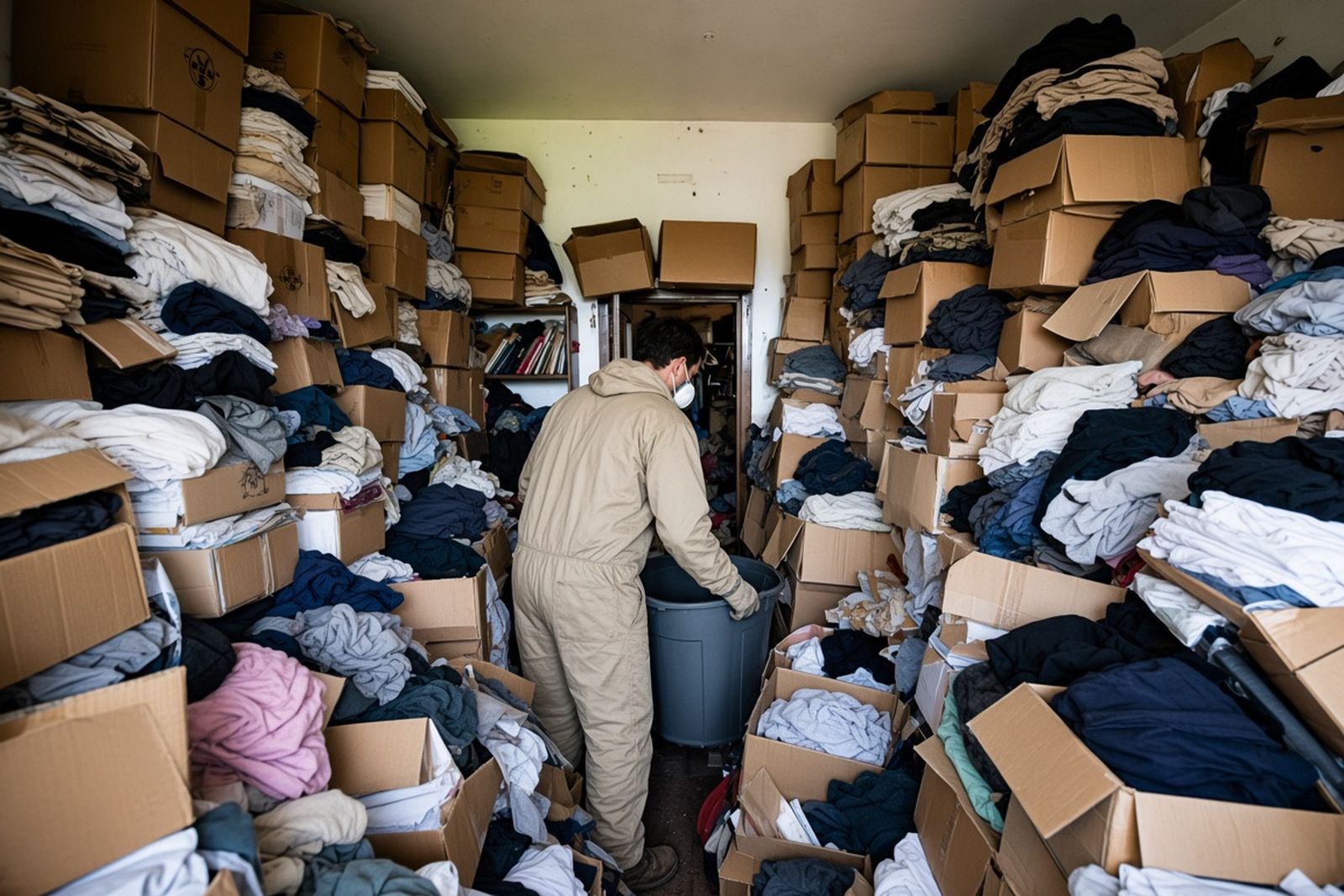
A junk removal crew brings a truck, a dolly and strong backs. That works for a garage full of old furniture. A hoarded home is often different because of what may be hidden inside the piles: mold, rodent droppings, animal waste, spoiled food, sharps, chemicals and structural damage.
Equipment for a hoarding scene has to handle two jobs at once. It must move a large volume of material efficiently, and it must protect workers and residents from the hazards mixed into that material. A proposal that addresses only the first job may leave the second unmanaged.
The best way to evaluate a proposal is to picture the home room by room and ask whether each piece of equipment answers a specific problem you know or suspect is there.
It also helps to remember who the equipment is for. Some tools protect the crew, some protect the building, some protect neighbors in shared walls or hallways, and some protect the resident's belongings. A balanced proposal covers all four groups rather than focusing only on getting material out the door.
Is the hauling equipment sized for the job?
Volume drives the hauling plan. Companies may propose a roll-off dumpster, a box truck, multiple trailer loads or a combination. Ask how they estimated the volume and what happens if there is more than expected.
Placement matters. A roll-off container may need a permit if it sits on a public street, and some homeowners associations restrict where containers can go. Your city's public works or permit office can tell you whether a permit is required and how long a container may stay in place.
Ask how the crew will separate materials. Recycling, donation, hazardous household waste such as paint or pesticides, electronics and regulated biohazard waste each need their own path. A plan that sends everything into one container may be faster but can violate disposal rules and throw away items the family wanted to keep.
Protection for the property is part of hauling too. Floor coverings, door jamb protectors and ramps help prevent damage to stairs and entryways that are about to see heavy traffic.
Protective gear the crew should wear
Protective equipment should match the conditions, and conditions can change from room to room. A living room full of dry newspapers is different from a bathroom with a failed toilet or a bedroom with a rodent infestation.
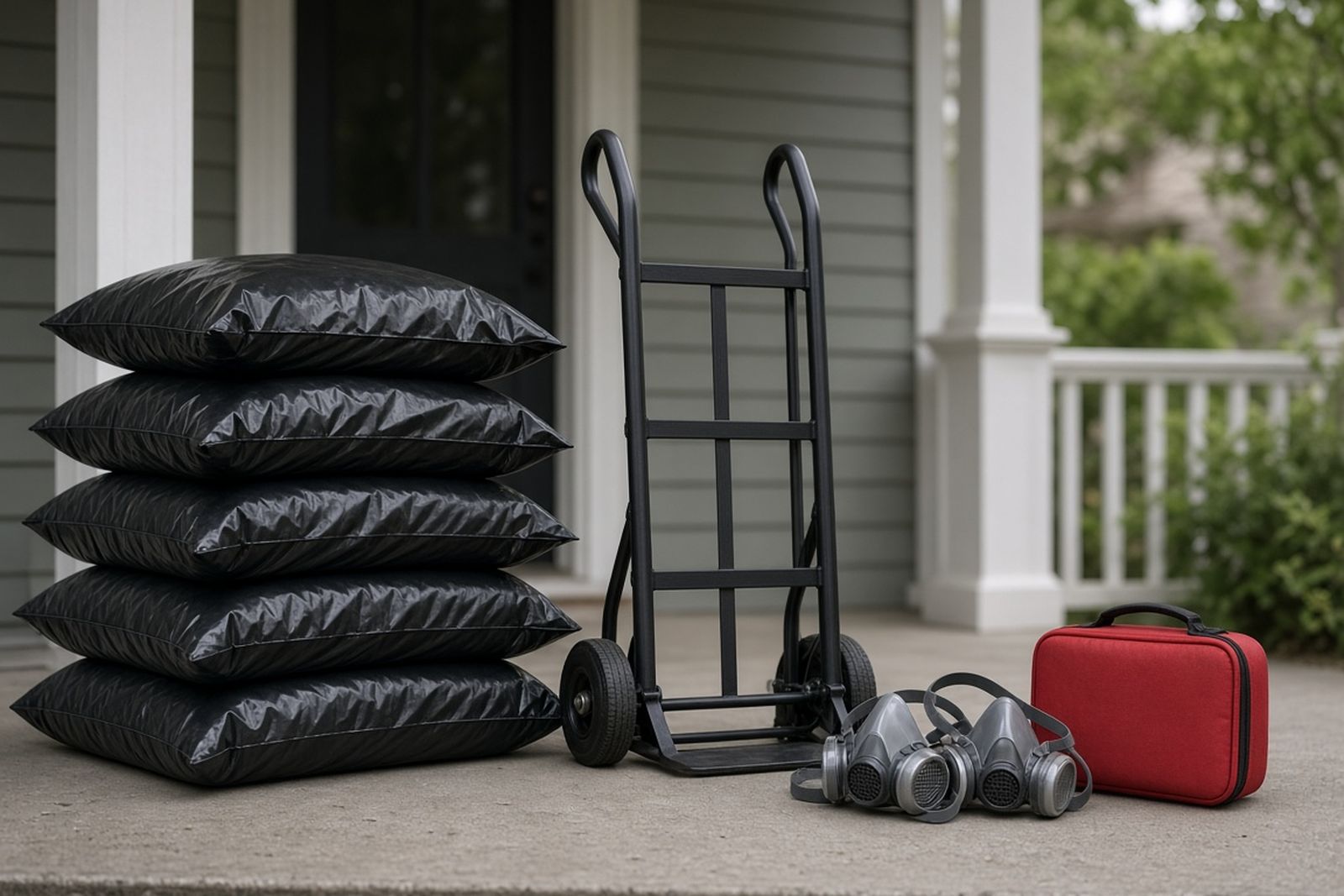
- Respirators suited to dust and mold at minimum, with higher protection where there is heavy mold growth, ammonia from animal urine or chemical fumes.
- Disposable coveralls, with fluid-resistant versions in areas with bodily fluids or waste.
- Cut- and puncture-resistant gloves for digging through piles where needles, glass or sharp metal may be hidden.
- Eye protection or face shields.
- Sturdy boots with puncture-resistant soles, or boot covers over work boots in contaminated areas.
- Hard hats in rooms where stacks are tall and unstable or ceilings may be damaged.
How should the crew handle sharps and other hidden hazards?
Needles and other sharps are one of the most serious risks in any cleanout. They may belong to someone with diabetes, come from past drug use or simply be old medical supplies. In a packed home, they can be buried anywhere.
Look for puncture-resistant sharps containers, tongs or grabbers for picking up needles and a protocol for what the crew does if they find one. Workers should never reach blindly into a pile with bare hands or thin gloves.
Other hidden hazards include propane cylinders, ammunition, firearms, pool chemicals and old medications. Ask what the company does when it finds these items. A thoughtful answer might include stopping work, contacting you or the appropriate authority and using proper containers for transport.
Lighting is an overlooked tool in this part of the job. Many hoarded homes have burned-out bulbs, blocked fixtures or no working power in some rooms. Portable work lights and headlamps let technicians see what they are reaching toward, which reduces both injuries and accidental disposal of valuables.
Air filtration and odor control
Moving decades of paper, cardboard and fabric can stir up a remarkable amount of dust. When mold or rodent droppings are present, that dust may carry spores and other contaminants. HEPA air scrubbers help capture those particles during the work.
In homes with significant mold, the crew may also use plastic sheeting to isolate a room and a negative air machine to keep contaminated air from spreading into cleaner areas. This is more common in rooms where water damage has been ongoing, such as bathrooms, basements and rooms against leaking exterior walls.
Misting materials lightly before moving them is another technique that reduces airborne dust. It uses simple equipment, but it is a sign that the crew is thinking about exposure rather than just speed.
Moisture meters and simple inspection tools belong in this conversation too. Checking floors and walls for hidden dampness as piles come down tells the crew where mold is likely and where subfloor or drywall may need to be opened. A company that brings these tools is planning to look beneath the surface, not just clear it.
Odor is often the complaint that brings neighbors, landlords or code enforcement into the picture. It is tempting to look for a machine that will simply make the smell disappear.
Odor control works best when the source is removed first. Urine-soaked carpet, spoiled food residue, moldy drywall and contaminated subfloor are sources. Once those are gone and surfaces are cleaned, equipment such as air scrubbers, hydroxyl generators or thermal foggers may help with residual odor.
Ozone generators deserve particular care. Ozone can irritate the lungs, and spaces must be unoccupied, including by people and pets, while it is used. Ask whether ozone is part of the plan, why, how long the home will need to be empty and how the crew will ventilate afterward. Be skeptical of any plan that relies on odor equipment before source removal.
Does the equipment support careful sorting?
Hoarding cleanups are not only about removal. Many residents and families want to keep photographs, documents, heirlooms and items with emotional meaning. The right equipment helps make that possible.
Look for plans that include labeled bins or boxes for keep, donate, recycle and discard categories, folding tables for sorting outside the most crowded rooms, and a way to protect saved items from contamination, such as clean staging areas or sealed totes. Some companies photograph items before discarding them so families can review decisions later.
Fire safety equipment can be part of the conversation as well. Some cleanup companies recommend or coordinate installation of working smoke alarms once clear pathways are restored.
Ask how long saved items will be held and where. Some families need a few days to go through recovered boxes, and a crew that can store them in a clean, dry location during the project removes pressure to make every decision on the spot.
Matching the equipment list to the house
Lay the proposal next to what you know about the home, room by room. Each known condition should have a matching line.
A proposal limited to a dumpster, laborers in dust masks and an ozone treatment on the last day leaves most of those lines blank. If a company says ozone will take care of animal waste or a damp basement, it is proposing to treat a symptom rather than the source.
- Dense clutter throughout: containers sized to the volume, plus separate containers for recycling and donations.
- Animal waste: fluid-resistant suits in those rooms, removal of urine-soaked flooring and cleaning before any odor treatment.
- A musty or damp basement: HEPA air scrubbers, containment and moisture checks.
- Unknown contents: puncture-resistant gloves, sharps containers and a stated protocol for firearms and chemicals.
- Family papers and photographs: sorting bins and a clean place to set items aside for review.
Questions to ask about equipment before hiring
These questions help you tell whether a proposal fits the home and the people involved.
- How did you estimate the volume, and what happens if there is more than expected?
- Will you separate donations, recycling, hazardous household waste and biohazard waste?
- What respirators and protective clothing will the crew wear in each area?
- How will you find and handle needles and other sharps?
- Will you use HEPA air filtration or containment, and where?
- What is your odor control plan, and will it include ozone?
- How will you protect items the family wants to keep?
- What will you do if you find firearms, chemicals or other dangerous items?