Hoarding Scene Cleanup: Education
Science and technology used in some hoarding scene cleanup scopes, with explicit limits for ATP, disinfectants, enzymes, fogging, air equipment, and moisture tools.
The education category explains the ideas behind a hoarding cleanup so that choices feel less confusing. You will find articles on what hoarding disorder is and is not. Others explain why clutter can hide hazards such as blocked vents, rodents, and hidden spoiled food. Some explain how professionals keep normal trash apart from materials that need special handling. Posts also cover the difference between a cleaning company, a professional organizer, and a hazard cleanup company. Each one brings different skills to a home where belongings have built up over time.
Get an email reply about hoarding scene cleanup
Send a short message to the follow-up inbox. A coordinator can reply by email. This form does not send emergency help; call 911 first if anyone is in danger.
Knowing these basics helps you ask sharper questions and notice when advice does not fit your situation. For example, learning how the weight of stacked paper can strain a floor explains why a crew may start in an unexpected room. Reading about how moisture trapped behind furniture feeds mold shows why a provider might suggest a mold check after sorting. Each piece aims to replace guesswork with background you can bring to a talk with family, a landlord, or a caseworker.
The Science Behind Hoarding Scene Cleanup
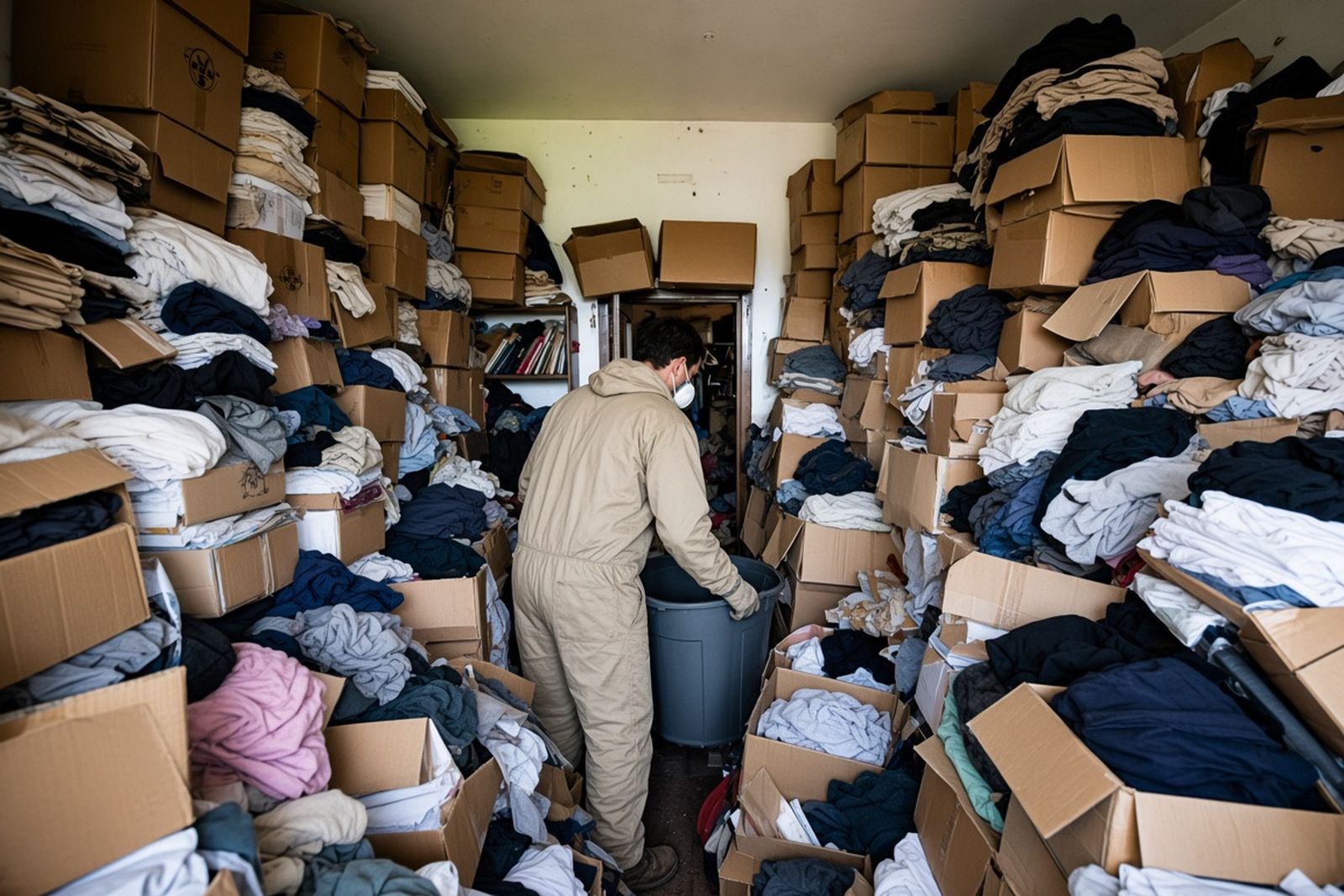
Moisture, decay, ammonia, mold, pests and fire load: the physical science inside a hoarded home, and why the psychology of hoarding shapes every cleanup step.
A hoarded home becomes hazardous through predictable processes: trapped moisture feeds mold, food and waste decompose, animal urine releases ammonia, pests breed in undisturbed layers, and dense paper and fabric raise fire risk while blocking exits. Professional cleanup addresses each process in order, while respecting that hoarding disorder is a mental health condition, not a housekeeping failure.
How to Evaluate Equipment Proposed for Hoarding Scene Cleanup
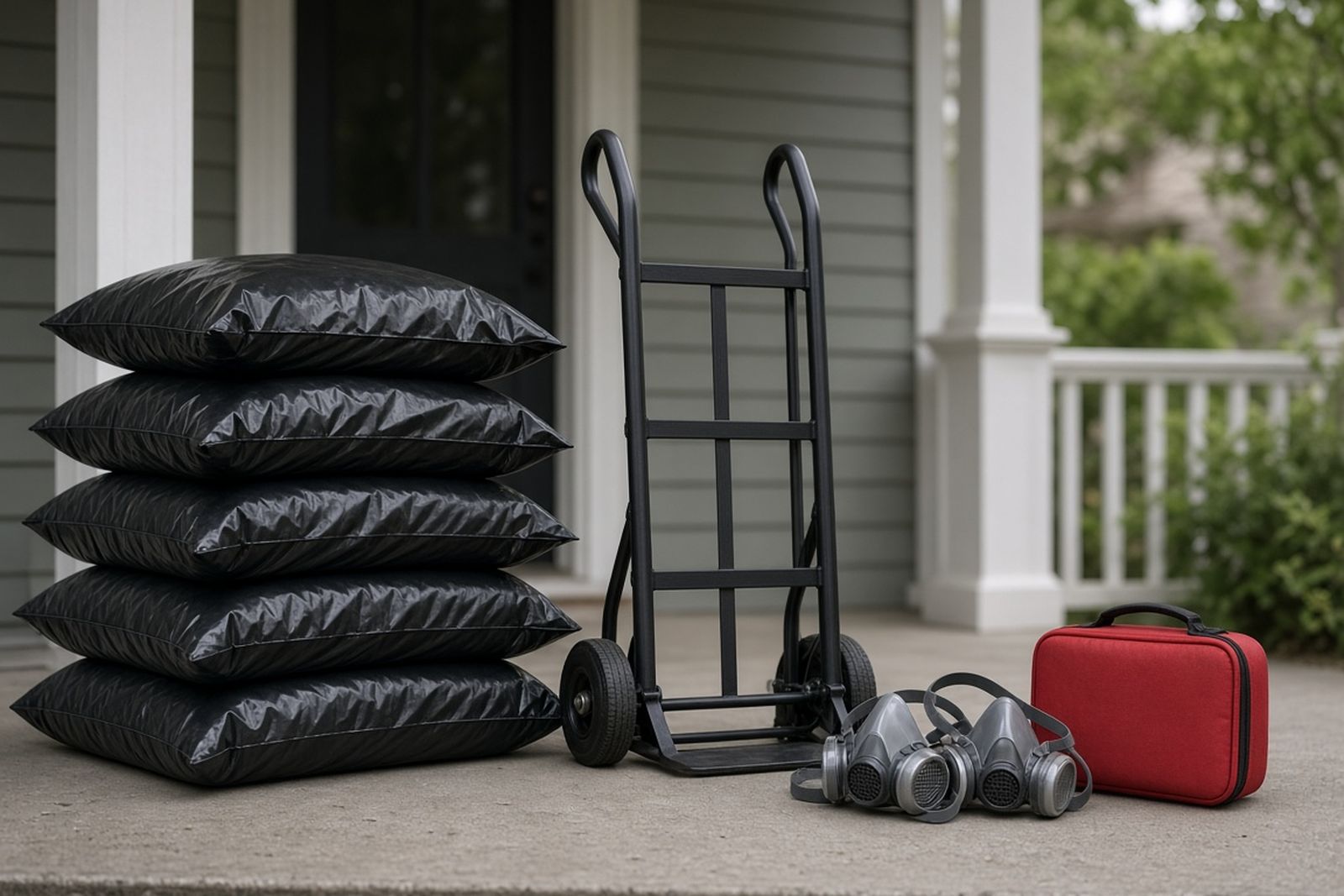
Roll-off containers, respirators, sharps gear, HEPA units and ozone machines: how to judge the equipment a hoarding cleanup crew proposes for a home you love.
When a company proposes equipment for a hoarding cleanup, check that each item matches a real hazard in the home: containers and hauling sized to the volume, respirators and suits suited to mold, dust and waste, puncture-resistant gloves and sharps containers, HEPA filtration for dusty or moldy areas, and odor tools that follow source removal. Equipment should also support careful sorting, not just speed.
The Difference Between Cleaning and Disinfection in Hoarding Scene Cleanup
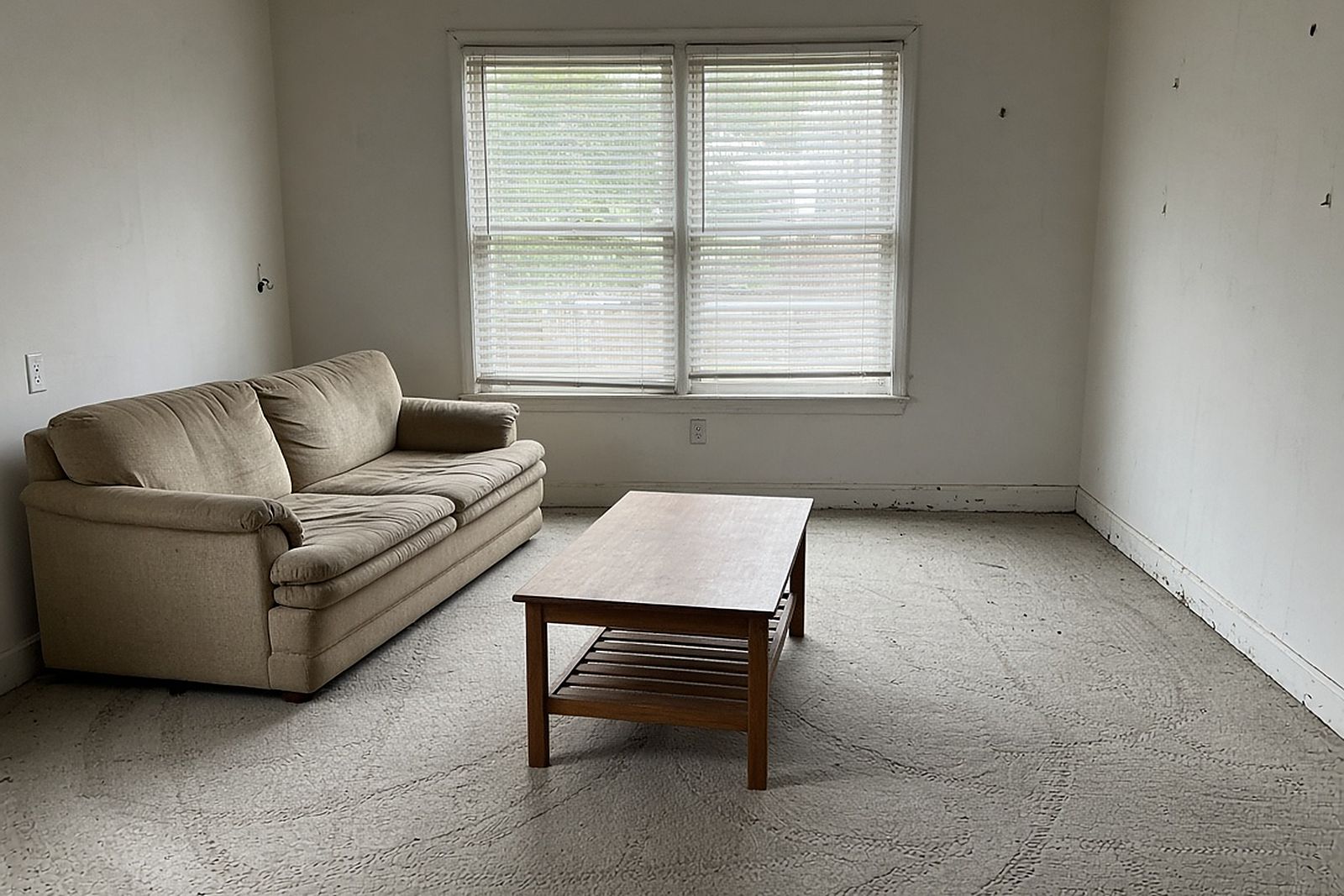
Clearing belongings is not cleaning, and cleaning is not disinfection. How hoarding crews handle animal waste, droppings, spoiled food and mold in order.
In hoarding cleanup, removing clutter is only the first stage. Cleaning then physically removes dust, spoiled food, animal waste, droppings and grime from exposed surfaces. Disinfection follows, using registered products at label contact times on areas touched by urine, feces, rodents or rotting food. Mold and deeply soaked materials usually need removal rather than disinfection. Skipping any stage can leave a home looking clear but still unhealthy.
When ATP Testing Helps—and When It Does Not—in Hoarding Scene Cleanup
What ATP swabs can and cannot tell you after a hoarding cleanup, where they help in kitchens and bathrooms, and why they never replace a careful visual check.
ATP testing measures leftover organic material on a surface, so in a hoarding cleanup it can help show whether kitchens, bathrooms and other food or waste areas were actually cleaned. It does not identify germs, prove disinfection, detect mold or pest allergens, or say anything about clutter. Use it as one verification tool alongside visual inspection and written records.
How to Evaluate Technology Used in Hoarding Scene Cleanup
Air scrubbers, ozone, thermal cameras, inventory apps and scanning: how to judge which tools truly improve a hoarding cleanup and which only add cost.
Judge any technology in a hoarding cleanup by the problem it solves, the evidence behind it, its safety for the resident and crew, and whether it supports or replaces human judgment. Useful tools include HEPA air filtration, moisture meters, thermal cameras, photo documentation and document scanning. Be cautious with ozone, broad fogging and anything promising to make sorting fast or painless.
When Enzymes or Microbial Products Fit Hoarding Scene Cleanup
Where enzyme and microbial cleaners help in a hoarded home, such as pet urine and food residue, where they fail, and how to sequence them with disinfection.
Enzyme and microbial products break down organic residue such as urine, feces, food and grease, so they can help with odor and staining in a hoarded home after soaked materials are removed. They are not disinfectants, they cannot rescue saturated carpet or subfloor, and they must be sequenced carefully with disinfectants. Ask what residue they target and how results will be checked.
Sourced figures on education
- 0.85%
A meta-analysis of 85,681 English households over 13 years estimated the point prevalence of domestic squalor at 0.85%, with rentals and lower-income homes at higher risk.
Read with care: Squalor overlaps with but is not identical to hoarding disorder; UK data.
Source: BMC Public Health (2024)English Housing Survey data
- 18.7%
18.7% with clinical hoarding symptoms reported moderate-to-extreme work/school difficulty versus 11.8% with reported depression history.
Read with care: Volunteer registry; symptom screens rather than universal clinical diagnoses; no causality.
Source: Nutley et al. (2022)16,312 adults in the internet-based Brain Health Registry.
- 11
11 of 14 enrolled participants completed the nine-month intervention.
Read with care: Small uncontrolled study; no promise of avoiding eviction.
Source: Millen et al. (2020)14 adults enrolled in a nine-month adapted case-management intervention.
These figures are public research and agency data, not this network's own job records. Keep each number with its population, year and limits; none of them predicts cost, timing or outcome at a specific property.
What research has found
Findings from published studies of people and properties in situations like this one. They describe what researchers observed in a specific group; they are not predictions for your case.
Families sometimes felt selfish raising future housing concerns before a relative's death.
Family informants described substantial hoarding even in relatives below the study's full-criteria threshold.
Education: common questions
Is hoarding the same as being messy or disorganized?
No. Hoarding disorder is known as a mental health condition. It involves lasting trouble getting rid of things and distress at the thought of parting with them. Normal clutter usually lacks that level of distress. Education posts explain the difference. That helps readers approach the person with patience. It also helps them see why a forced cleanout often leads to the home filling up again instead of lasting change.
Why does clutter create biohazards over time?
Stacked items block airflow, hide leaks, and create shelter for rodents and insects, which can leave droppings and nesting material. Spoiled food, pet waste, and used medical supplies may become buried and forgotten. None of this reflects a moral failing; it is a physical consequence of limited access to surfaces. Articles in this category explain how those conditions develop and why they change the cleanup approach.
Who else besides a cleanup crew can help a person who hoards?
Therapists who know hoarding, peer support groups, professional organizers, and social workers can all play a role. In some cases, so can adult protective services or aging services agencies. Education posts describe what each one usually offers. Then you can build a support plan that goes on after the physical cleanup ends. That ongoing support is often what helps a cleared home stay safe.
How is hoarding different from collecting?
Collectors usually organize and display items, take pride in showing them, and can keep living spaces usable. Hoarding involves lasting trouble letting go of items and distress when trying to throw things away. Things pile up until rooms are hard to use for their normal purpose. The difference is less about how many items there are. It is more about how they affect daily life and wellbeing.
Can hoarding develop later in life?
Many people say their saving habits started earlier and became more noticeable over time. This often follows losses, health changes, or living alone. Family members may only notice when the home becomes unsafe. Knowing that the pattern may have grown slowly can help relatives approach the person with patience, not surprise or blame.
Why do people who hoard often resist help?
Belongings can carry deep emotional meaning, a sense of safety, or plans for the future. Past experiences with forced cleanouts, fear of judgment, or feeling a loss of control can make offers of help feel threatening. Resistance is often a sign of fear, not stubbornness. Approaches that respect the person's choices tend to reduce resistance over time.
What is animal hoarding, and how is it different?
Animal hoarding means keeping more animals than a person can properly care for. The person often does not see the animals' poor condition. It adds animal welfare concerns, heavy waste, and ammonia fumes to the usual hazards. Cleanup usually means working with animal services or vets. The person may need extra support, since the animals often mean a great deal to them.
Related community polls
Every count is a real visitor vote; nothing is seeded or padded. One vote per poll per device, and you can change your answer.
If a relative's home had become unsafe, what would be your first step?
How much control should the occupant keep over what leaves the home?
More on hoarding scene cleanup
Hoarding Scene Cleanup services
Learn how a first look at the home, sorting with consent, biohazard handling, and deep cleaning fit together in a step-by-step plan.
Costs explained
What drives the price, published cost ranges, and how to read a written quote line by line.
Insurance and payment
Which policies may respond, how to document a claim, and what to do if coverage is denied.
Planning tools
Use planners made for families and caseworkers. Sort out costs, questions for providers, insurance steps, first-day actions, waste types, and DIY risk.
Community polls
See how relatives, landlords, people who hoard, and professionals think about consent, pace, and agency help. Compare your own gut feelings with theirs.
Knowledge quiz
Check what you know about hidden hazards, who can decide, dust control, cleaning and killing germs, waste, and records before you start to help.
City guides
Find providers near you who know hoarding cases. Before you hire anyone, check their training, insurance, and way of working yourself.